


Antique Brass Feet Tub
These antique brass feet tub pieces combine robust copper and timber with metal mounts, offering practical fireside storage and display for the home.
Antique Brass Feet Tub
When you search for an antique brass feet tub, you encounter vessels primarily used as log bins, coal buckets, wine coolers, and jardiniere planters. These domestic containers originate predominantly from the Victorian, Georgian, and Regency periods, spanning the eighteenth and nineteenth centuries.
The most common forms on this page pair hammered or riveted copper bodies with brass feet, bands, or lids, alongside timber wine coolers on stands. They serve both functional hearth storage and decorative display roles within traditional and rustic farmhouse interiors.
How they were made
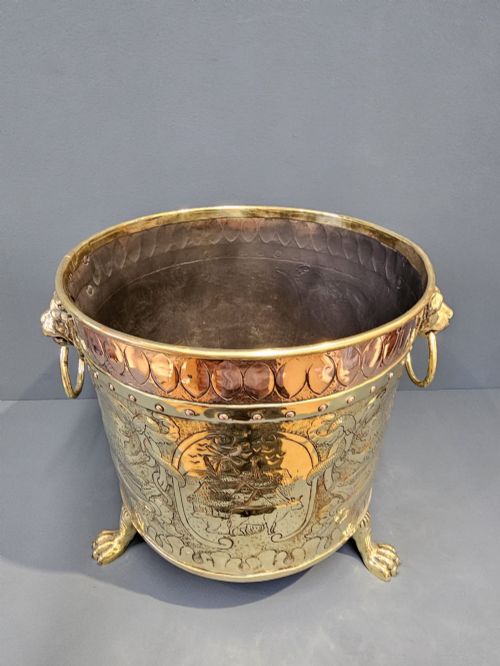
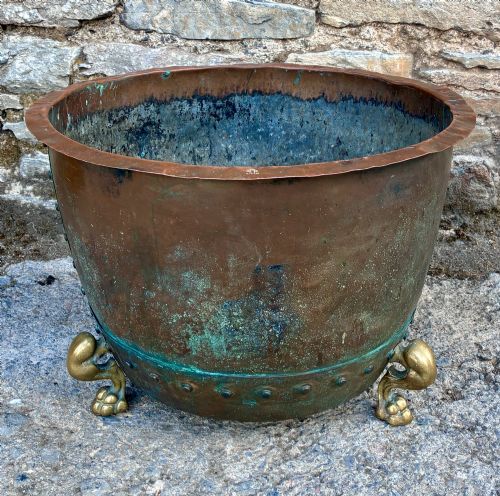
Maker construction relies heavily on handbeaten copper sheets joined with visible rivets, paired with cast brass handles, paw feet, and decorative bands. Artisans also utilised solid mahogany for framed wine coolers, incorporating metal linings to hold ice and bottles safely.
Surface treatments range from embossed floral motifs to plain polished copper finishes that contrast with dark patinated brass mounts. Riveted seams and soldered joints reflect traditional metalworking techniques used to ensure waterproof and durable service.
Listings span the eighteenth and nineteenth centuries, featuring materials such as copper, brass, and mahogany across various styles.
What varies in quality
Quality rests in the crispness of hand-embossed decoration, the weight of the cast brass feet, and the structural integrity of the metal seams. Finer examples display harmonious proportions and heavier gauges of copper that resist denting during daily hearth use.
The integration of materials also defines the tier of craftsmanship, such as cleanly fitted timber joinery on mahogany coolers versus simple riveted plate construction on utility buckets. Original patination and intact handles elevate the visual cohesion of a piece.
The Antique Brass Feet Tub Glossary
- Jardiniere
- An ornamental pot or stand for holding plants and flowers. These are frequently fashioned from beaten copper with brass feet.
- Cellarette
- A lockable container or stand designed for holding wine bottles near the dining table. Eighteenth-century versions often feature mahogany construction.
- Patina
- The surface sheen and colour acquired by metal and wood through age and handling. Good examples show deep, undisturbed tones on copper and brass.
- Embossed
- Decorated with raised patterns or designs pressed into the metal sheet. Victorian bins often utilise this technique for floral or geometric borders.
Antique Brass Feet Tub: Frequently Asked Questions
What were brass feet tubs used for?
These vessels served diverse utilitarian roles around the home, primarily holding firewood, coal, or turf beside the fireplace. They also functioned as wine coolers and planters in domestic interiors.
Waterproof metal linings allowed owners to pack ice around bottles in dining rooms without damaging the surrounding floors.
How do I clean an antique copper tub?
Maintenance requires gentle dusting and occasional cleaning with appropriate metal care products if you prefer a bright shine. Many collectors prefer to leave the aged surface untouched.
Avoid abrasive pads that can strip away the historical patination and scratch the soft copper surface.
Are these pieces waterproof?
Many copper and brass vessels were constructed to hold water, ice, or wet fuel without leaking. Riveted and soldered seams kept liquids contained during use.
It remains wise to check the base for historical repairs or corrosion before using them for fresh plants or water.
How do I date an antique brass feet tub?
Dating relies on observing construction methods, material choices, and stylistic cues associated with specific eras like the Georgian or Victorian periods. Hand-beaten work and specific foot designs often point to nineteenth-century production.
Mahogany wine coolers with internal lead linings typically align with eighteenth-century dining room customs.