
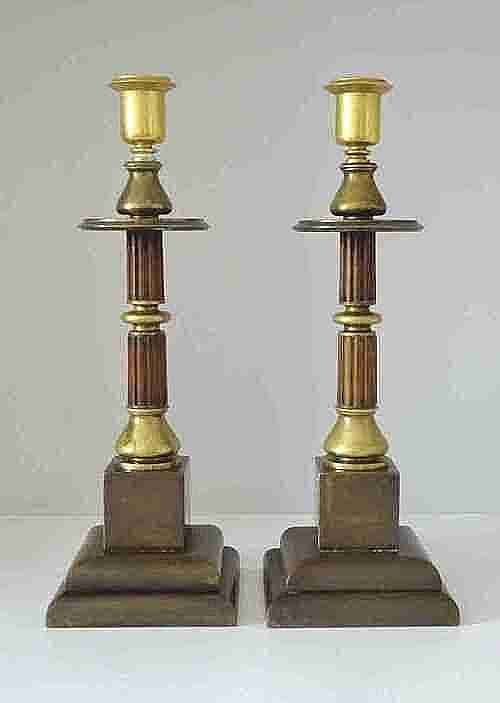


Antique Brass Column Stand
An antique brass column stand brings architectural dignity to a room, supporting lighting or plants with classical proportions.
Antique Brass Column Stand
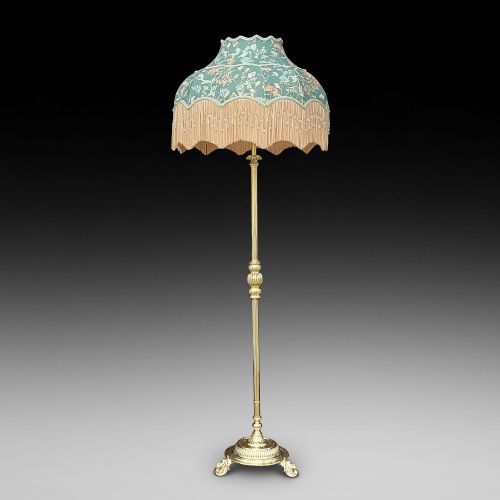
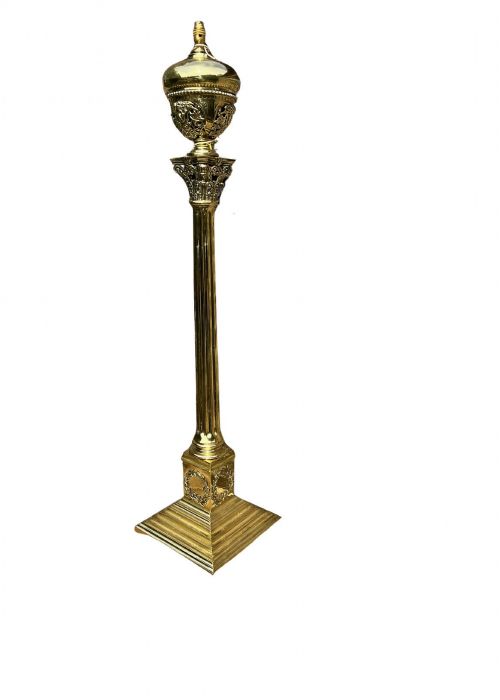
When searching for an antique brass column stand, buyers encounter floor lamps, standard lamps, and plant stands rooted in Victorian, Edwardian, and nineteenth-century design. The Corinthian column standard lamp dominates the historical record on this page, frequently appearing in solid brass with adjustable stems.
Beyond lighting, the selection encompasses plant stands, torchere stands, and occasional tables that combine brass with mahogany, marble, onyx, or fabric. These vertical forms draw the eye upward, serving both utilitarian and decorative roles in traditional interiors.
How they were made
Maker's workshops cast brass components, often turning columns with fluting or Corinthian capitals, and combined them with heavy weighted bases for stability. Many standard lamps incorporated telescopic mechanisms of brass to allow height adjustment for oil fonts or electric conversions.
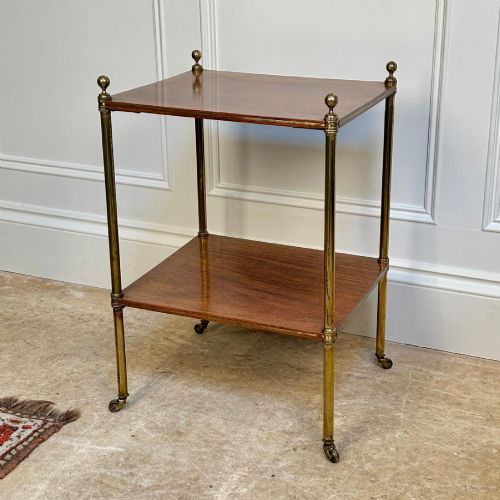
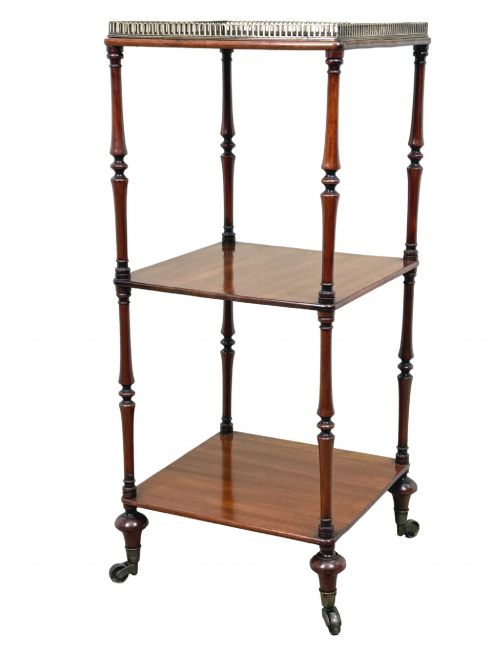
Makers integrated brass mounts, galleries, and paw feet with secondary materials such as mahogany, rosewood, oak, marble, and onyx. Surface enrichment relied on chased detailing, polishing, and occasional ebonising to contrast with the warm metal.
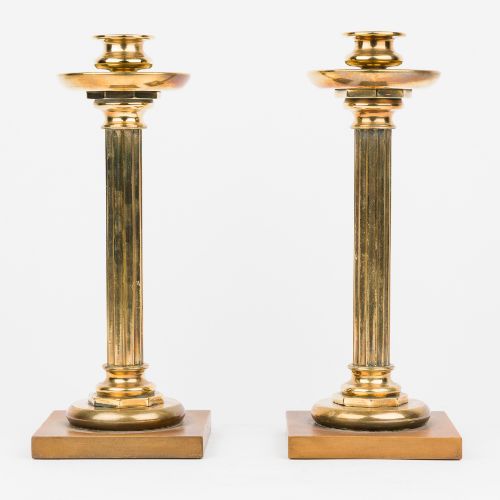
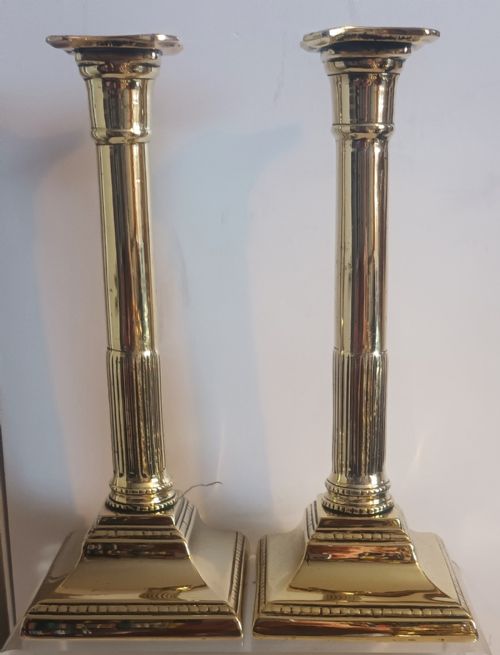
Masonic lodges commissioned specialised tall decorated brass Corinthian column candlesticks, proving that even ritual spaces appreciated a good architectural flourish.
What varies in quality
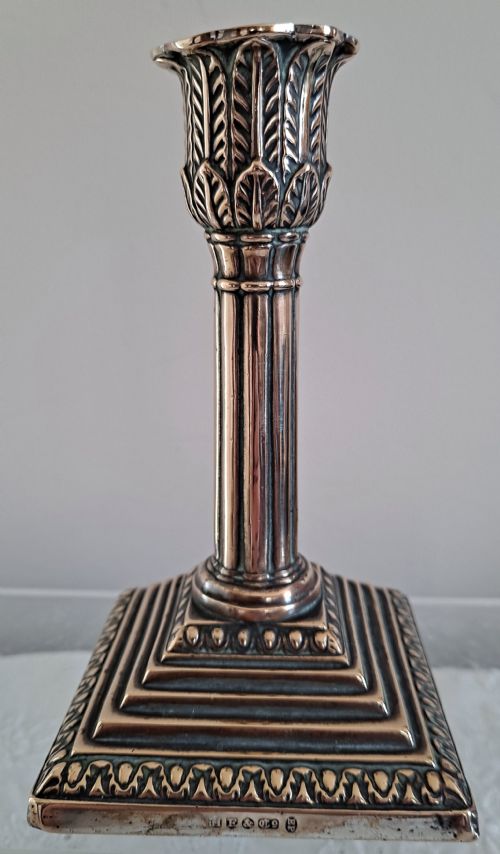
The distinction between ordinary and superior pieces rests upon the crispness of the brass casting and the weight of the metal utilised. Well-modelled acanthus leaves on a Corinthian capital and substantial wall thickness in the column distinguish finer examples from lighter commercial production.
Material pairing also dictates distinction, where figured flame mahogany, genuine marble, or onyx tops elevate a standard support into a decorative centrepiece. The precision of telescopic adjustment mechanisms and the stability of the weighted base reflect the original maker's investment in labour.
The Antique Brass Column Stand Glossary
- Corinthian column
- A classical architectural column style featuring an ornate capital decorated with rows of carved acanthus leaves. This motif frequently defines the upper section of Victorian standard lamps.
- Standard lamp
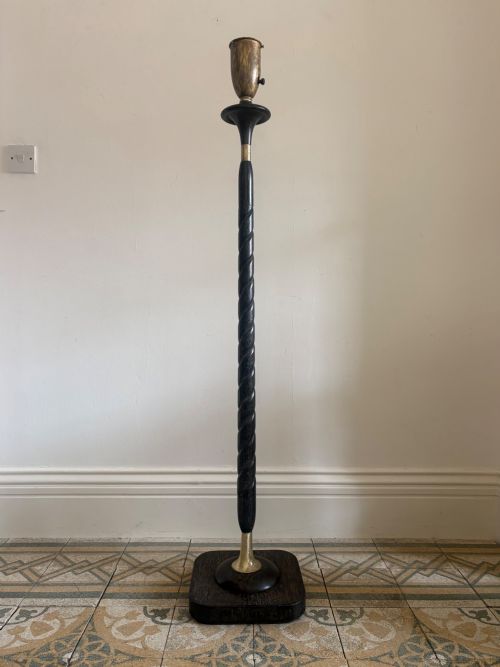
- A tall floor-standing lamp designed to illuminate a room from standing height rather than a table. Many antique examples started as oil lamps before conversion to electricity.
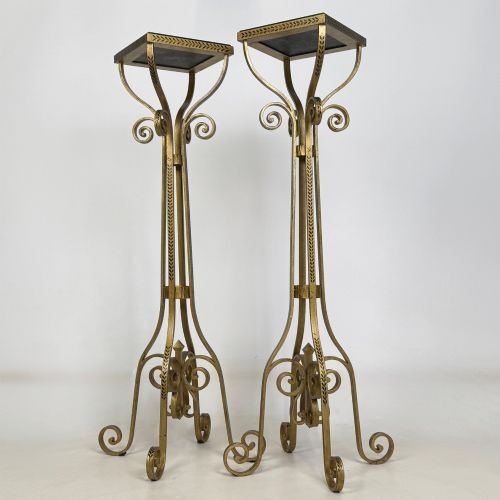
- Torchere
- A tall stand or pedestal originally designed to hold a torch or candle, later adapted for lamps or decorative urns. They are typically executed in timber or combined with brass mounts.
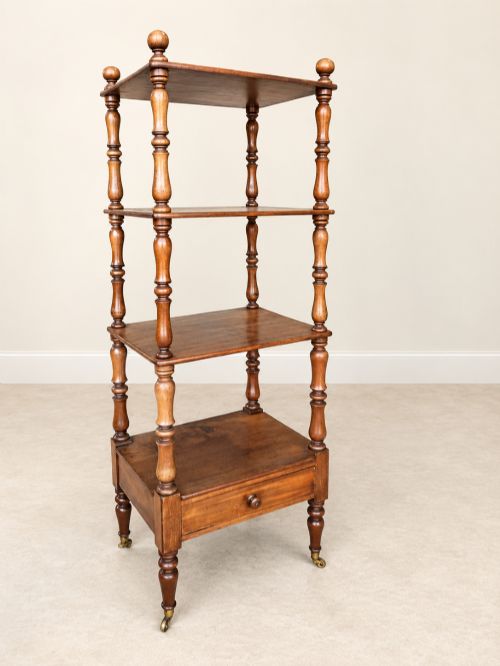
- Étagère
- A piece of furniture consisting of a set of open shelves for displaying small objects. Examples in the evidence combine exotic woods with brass detailing.
- Chased
- A metalworking technique where a design is hammered into the front surface to sink the metal rather than cut it away. This adds fine decorative texture to brass bases and columns.
Antique Brass Column Stand: Frequently Asked Questions
How do I date a brass column stand?
Dating relies on stylistic clues, manufacturing methods, and material combinations seen across the Victorian and Edwardian periods. Corinthian column standard lamps, for instance, frequently date to the late nineteenth century.
Examine the construction of the base and any adjustment mechanisms. Earlier nineteenth-century examples often display heavy cast components and hand-finished chasing, whereas twentieth-century pieces can show more standardised industrial assembly.
How do I incorporate a column stand into a modern room?
A brass column stand provides vertical punctuation in a room, working effectively beside seating or in empty corners. Their slender profiles allow them to occupy minimal floor space while introducing classical texture.
Pairing a brass standard lamp with dark wood furniture or neutral upholstery highlights the warm metallic finish. Plant stands suit corners where height variation breaks up horizontal sightlines.
What is the difference between a torchere and a plant stand?
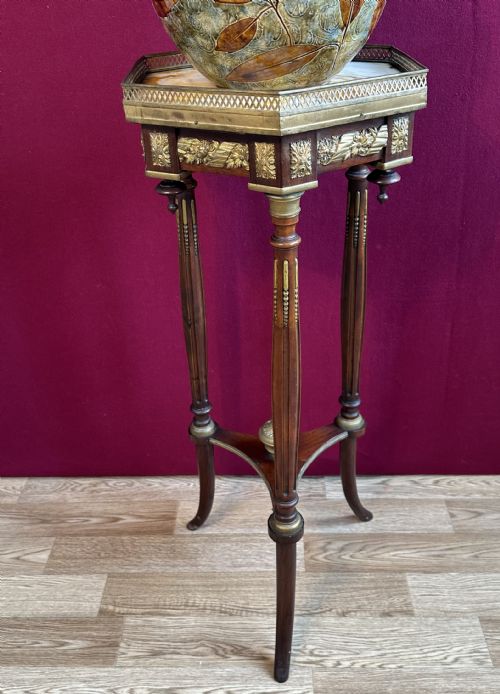
A torchere traditionally references a tall, slender stand designed for illumination or display, often featuring a small circular top. Plant stands are built with similar verticality but frequently incorporate marble, onyx, or tiled surfaces to resist moisture.
Both forms utilise materials like brass, mahogany, and oak, but their intended domestic function dictated the durability of the upper surface.