
Antique Bracelet
An antique bracelet wraps the wrist in the physical weight and precise metalwork of the Victorian, Edwardian, and Art Deco eras.
Antique Bracelet
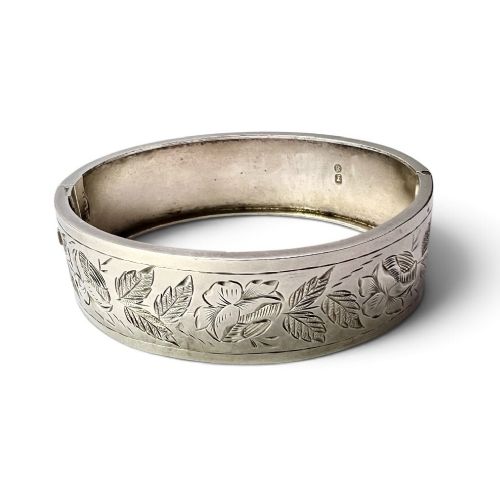
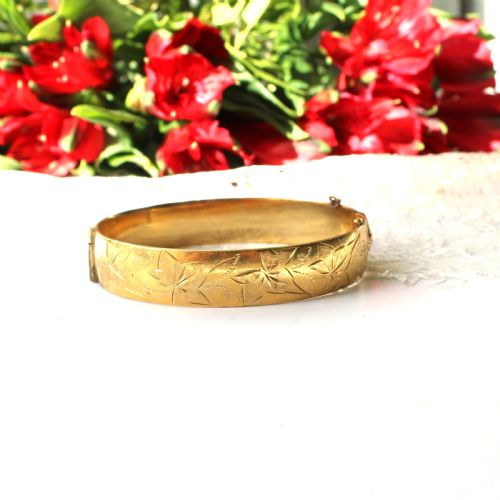
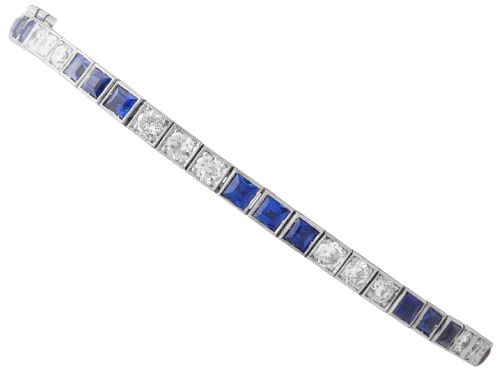
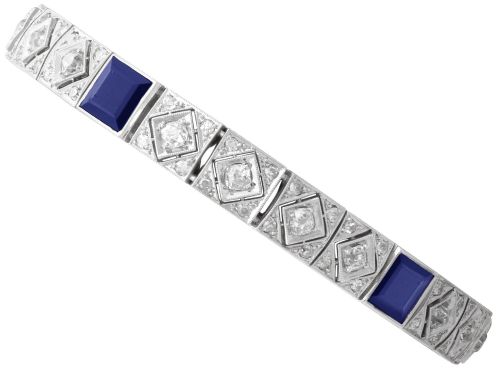
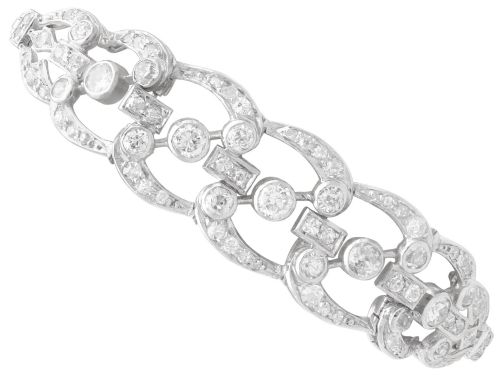
When you search for an antique bracelet, you encounter a varied selection of arm ornaments spanning rigid bangles, hinged cuffs, and flexible link chains. The pieces found here range from nineteenth-century sterling silver floral bangles to early twentieth-century platinum line creations set with diamonds and sapphires.
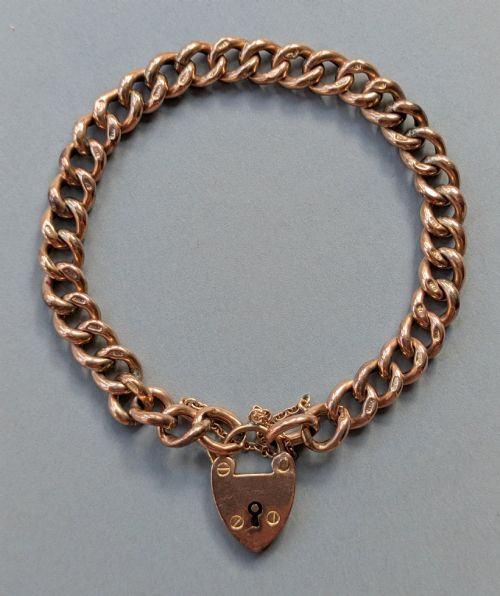
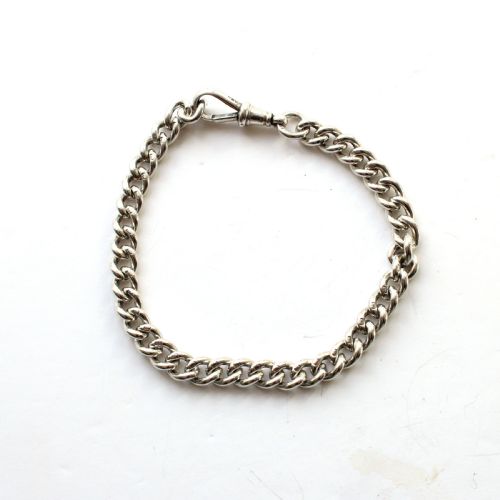
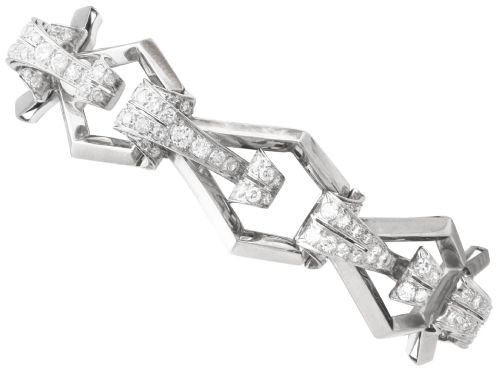
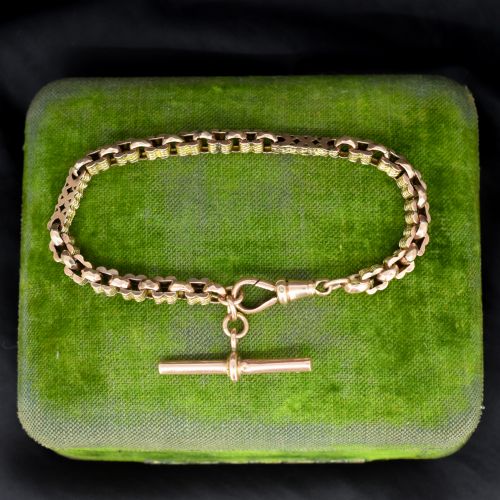
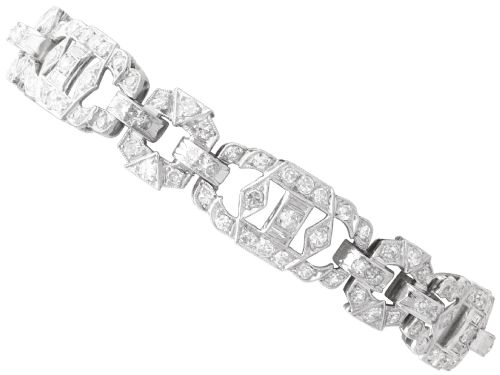
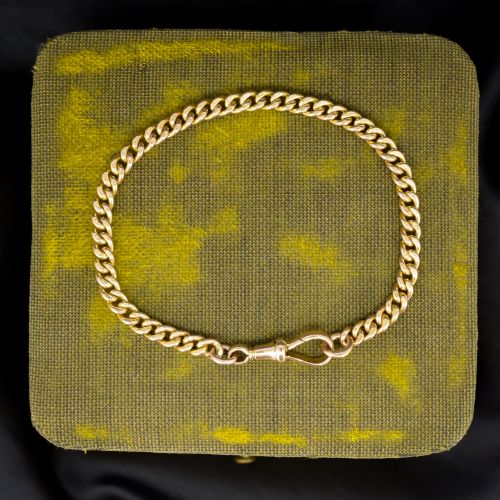
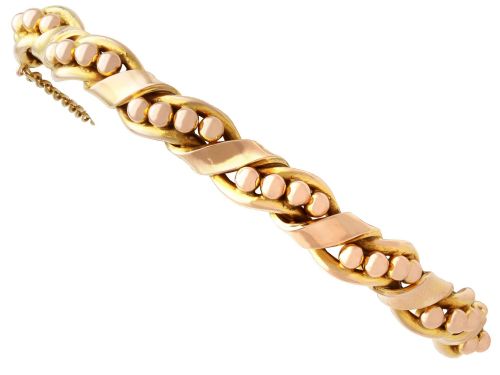
You are most likely to meet 9ct rose gold curb chain bracelets fitted with padlocks or dog clips, alongside solid gold bangles and diamond-set Art Deco geometric designs. These items originate from periods including the Victorian era, Edwardian decades, and the 1920s and 1930s.
Beyond standard link chains and bangles, the selections incorporate specific decorative arts movements, featuring Arts and Crafts silver work, Art Nouveau peridot settings, and Italian micro mosaic panels. Each form reflects the prevailing aesthetic and technological capabilities of its manufacturing decade.
Materials and construction methods
Gold forms the backbone of these pieces, appearing predominantly in 9ct rose and yellow hues, alongside 15ct and 18ct variations, frequently shaped into hollow or solid curb links, gate structures, and tubular bars. Platinum emerges particularly in twentieth-century pieces, providing a strong, bright white metal setting for diamonds, sapphires, and rubies.
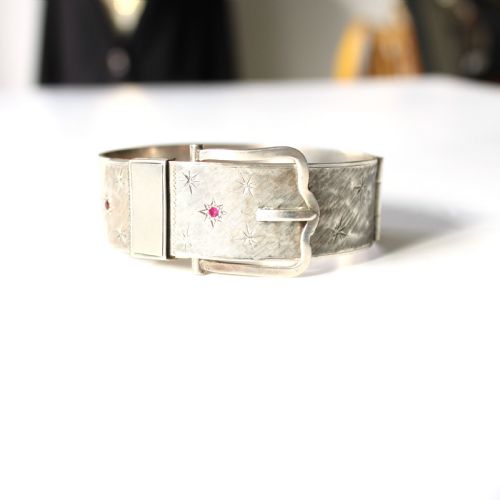
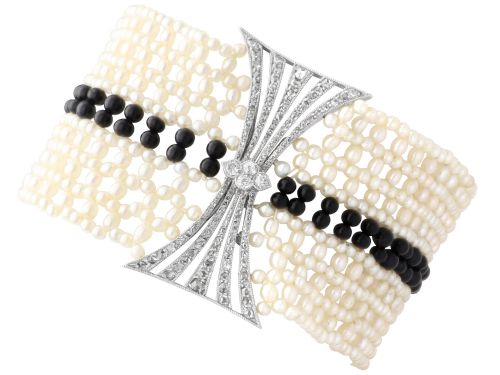
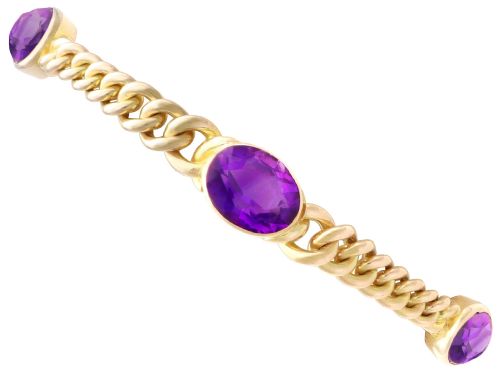
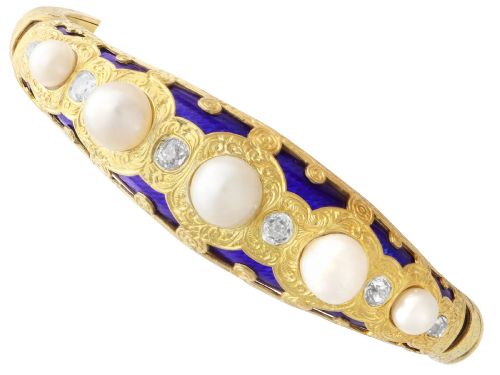
Silver serves as a primary material for both sterling bangles and chunky cuffs, often decorated through hand engraving, chasing, or enamel work. Gemstone integration relies on traditional setting techniques, securing old-cut diamonds, pearls, citrines, amethysts, and turquoise directly into the precious metal framework.
Materials span 9ct rose gold, sterling silver, platinum, and yellow gold, paired with diamonds, sapphires, pearls, and garnets.
Assessing craftsmanship and condition
Quality separates through the integrity of the structural metalwork and the crispness of hand-engraved details on links and bangles. Superior pieces maintain robust hinges, secure clasps such as original dog clips and box closures, and substantial metal weight without thinning from decades of wear.
The standard of gemstone selection and precision in stone setting elevates finer jewellery, where diamonds and coloured stones match uniformly in cut and colour grade. Maker attribution and well-preserved hallmarks provide additional markers of superior provenance and workshop execution.
Amy Sandheim·Bulova·Omega
The Antique Bracelet Glossary
- Bangle
- A rigid circular or oval bracelet that slips over the hand or opens via a hinged mechanism with a secure clasp.
- Dog clip
- A spring-loaded fastening hook commonly found on Victorian and Edwardian watch chains and charm bracelets.
- Line bracelet
- A flexible, symmetrical bracelet featuring a continuous straight row of identical gemstones, typically diamonds.
- Micro mosaic
- Tiny coloured glass tesserae assembled by hand to form intricate pictorial scenes, frequently associated with Grand Tour souvenirs.
- T-bar
- A transverse metal bar attached to a short chain length, originally designed to secure a pocket watch through a waistcoat buttonhole.
Antique Bracelet: Frequently Asked Questions
How do I secure a dog clip bracelet?
The spring-loaded lever on the dog clip must be pressed inward to open the gate, allowing it to hook onto a jump ring, padlock, or loop.
Ensure the internal spring mechanism snaps firmly shut to prevent the bracelet from slipping off the wrist during wear.
Can I wear a hinged bangle every day?
Hinged sterling silver and gold bangles suit regular wear provided the hinge pin and tongue clasp remain structurally sound and tight.
It remains wise to remove delicate antique bracelets before engaging in heavy manual tasks to protect old metalwork and stone settings.
How do I identify platinum settings?
Platinum appears as a dense, bright white metal that does not tarnish and maintains its cool tone without requiring rhodium plating.
Examination with a loupe often reveals tiny rubbed hallmarks or purity stamps specific to early twentieth-century precious metals.