



Antique Box Chairs
These antique box chairs conceal storage beneath the seat or enclose the sitter, offering sturdy utility and enduring form.
Antique Box Chairs
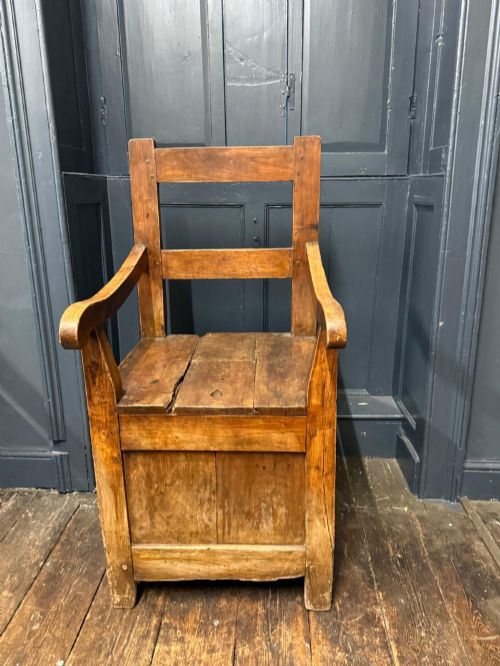
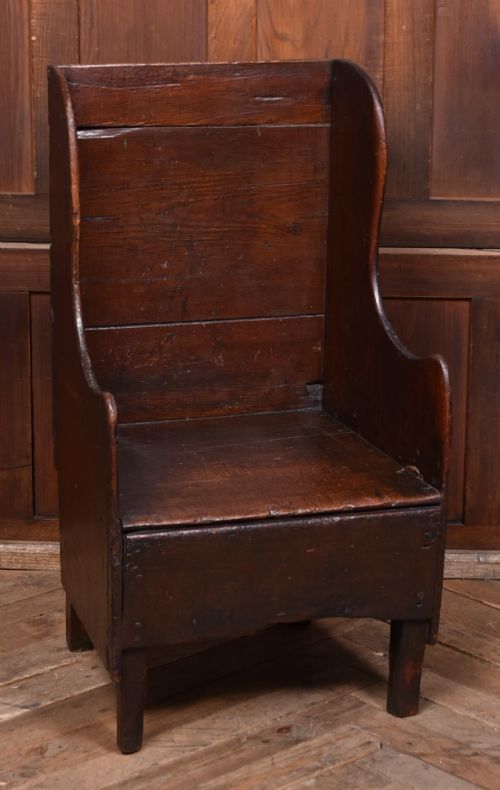
Antique box chairs unite seating with enclosed storage or draught-excluding wings, spanning forms from robust monks benches to vernacular childs chairs. The selection here ranges widely across centuries, featuring enclosed armchairs, settles, and lambing chairs designed for domestic comfort.
Most examples you encounter date from the seventeenth, eighteenth, and nineteenth centuries, constructed predominantly in regional timbers like oak and fruitwood. Makers across English, Welsh, Scottish, and continental traditions adapted these closed forms for halls, parlours, and nurseries.
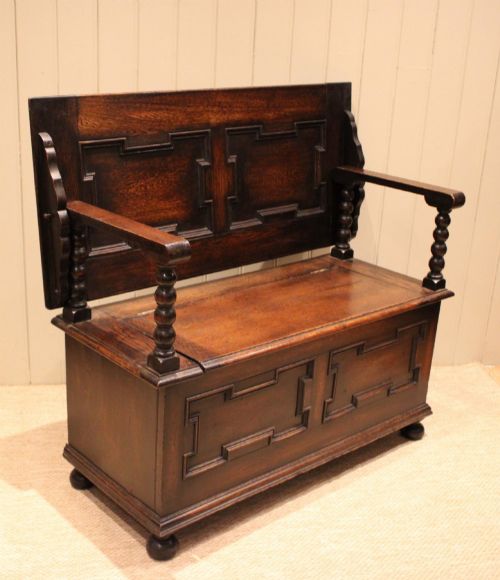
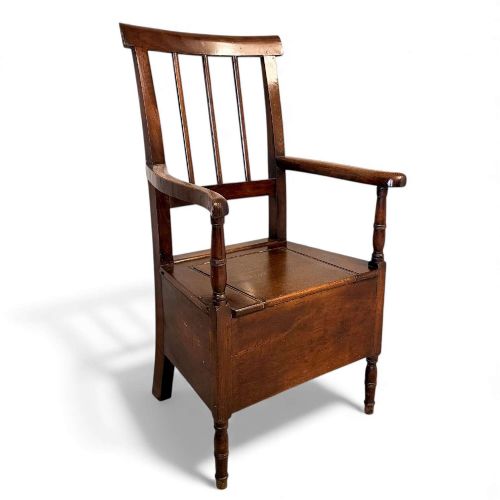
Functional variants include commode chairs with concealed seats, monks benches with fold-over tops, and ceremonial armchairs. These pieces served practical daily roles before evolving into decorative seating for period interiors.
Materials and construction
Makers relied heavily on solid oak, walnut, fruitwood, and pine, shaping panels and framing joints with traditional hand tools. Timbers were selected for density and local availability, resulting in heavy, durable constructions that withstand centuries of use.
Joinery methods involved pegged mortise and tenon frames, panelled backs, and hinged box seats designed to bear weight while providing secure storage. Surface finishes range from natural waxed polishes to historic painted layers and delicate wood inlay.
Specialised variations incorporate carved details, turned spindles, and upholstered fabric elements where appropriate for the period style, from Jacobean revival to Arts and Crafts designs.
Antique Box Chairs Retail Price Guide 2026
Typical asking prices for box chairs among the pieces listed under this phrase on Sellingantiques today, from the lower quarter to the upper quarter. They describe what is for sale here now, not the wider market.
Listings feature oak, walnut, pine, and fruitwood spanning the seventeenth to the twentieth centuries.
Assessing quality and character
Quality rests in the integrity of the original timber, the crispness of any carved or turned detail, and the retention of working hinges on box seats and fold-over tops. Pieces displaying honest patination and minimal structural alteration command greater respect from collectors.
Proportion and regional character distinguish finer examples from standard vernacular pieces, particularly in provincial lambing chairs and enclosed settles. The harmony between the enclosed lower box and the upper seating structure dictates visual balance.
James Shoolbred & Co.
The Antique Box Chairs Glossary
- Lambing chair
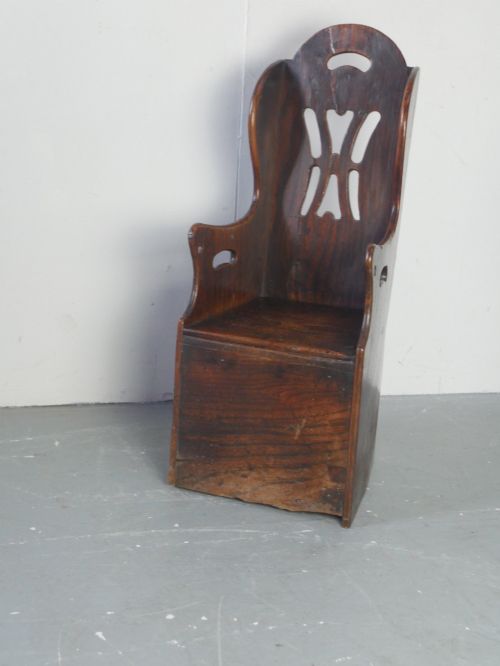
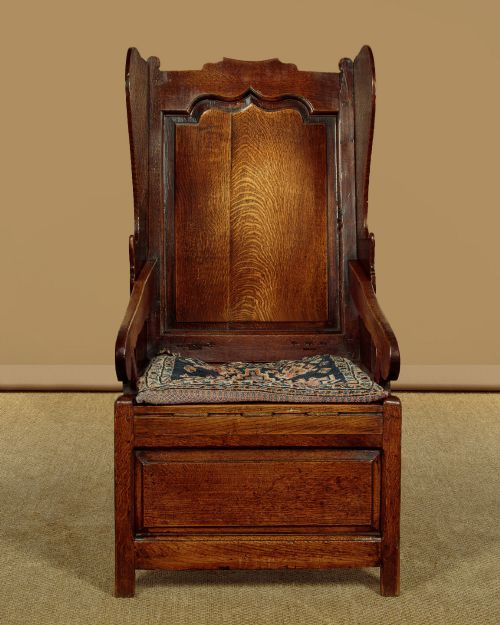
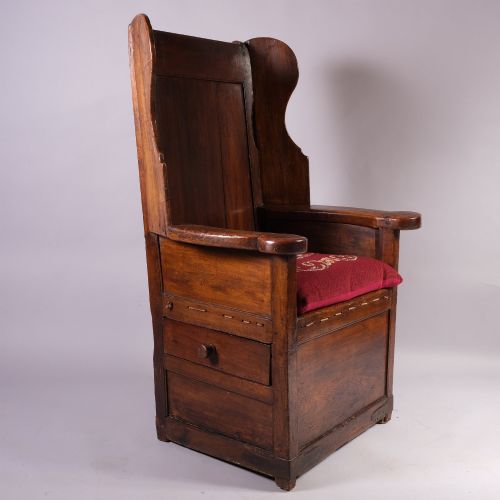
- A vernacular armchair featuring high wings and a fully enclosed lower box or commode base designed to keep draughts away from the sitter. These traditional seats originate primarily from rural farming districts during the seventeenth and eighteenth centuries.
- Monks bench
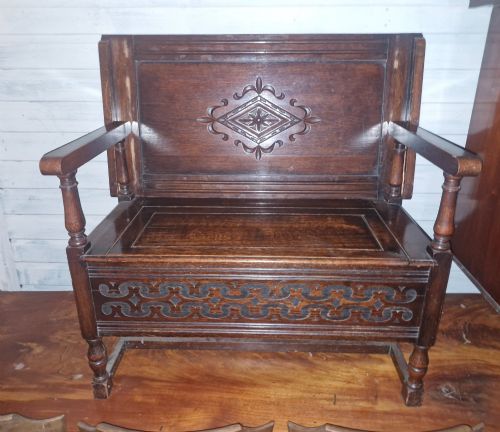
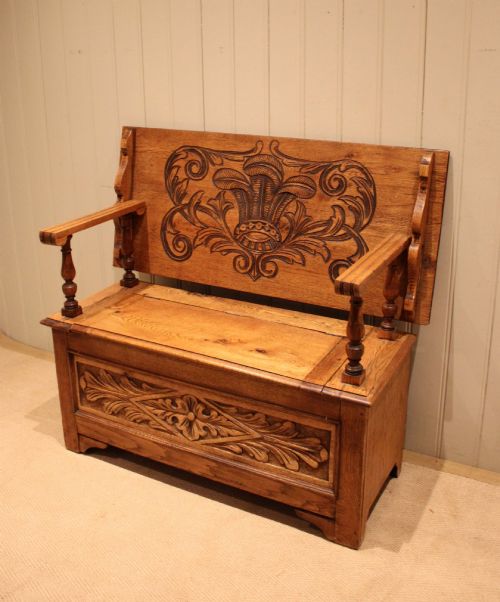
- A multifunctional seat with a hinged back that folds down onto the arms to form a table. This clever convertible design suited compact domestic spaces in historic homes.
- Commode chair
- An enclosed chair fitted with a concealed interior receptacle beneath a removable seat. These practical items combine disguised sanitation with standard seating utility.
- Settle
- A wooden bench with a high panelled back and enclosed arms, frequently positioned near hearths to block cold air. Larger examples provide bench seating for multiple occupants.
- Marquetry
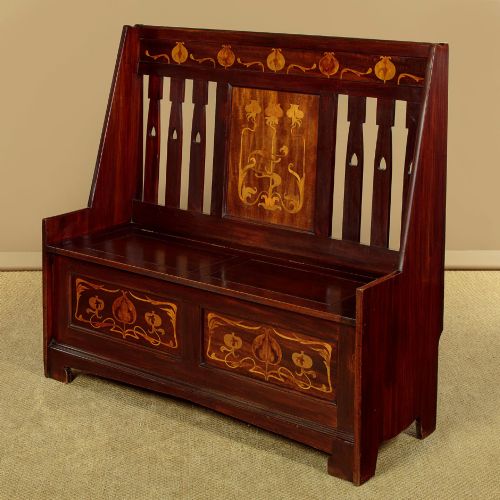
- The art of applying decorative veneer pieces in various woods to create pictorial or geometric surface patterns. This technique appears on finer nineteenth-century walnut and musical variants.
Antique Box Chairs: Frequently Asked Questions
What is a box chair?
A box chair is a historic seating form that integrates a compartment or enclosed base beneath the seat, functioning as storage or draught exclusion.
These pieces include lambing chairs, monks benches, and commode seats designed for heavy daily utility in past centuries.
How were lambing chairs used?
Lambing chairs were placed near hearths to protect sitters from cold draughts using their high wings and enclosed lower sections.
The integrated box beneath the seat often held warming pans, knitting supplies, or served as a commode.
How do I date an oak box chair?
Dating relies on examining construction marks, timber shrinkage, joinery techniques, and regional style evolution from the seventeenth century onward.
Hand-cut peg fastenings, board thickness, and surface patination provide reliable physical indicators of age.
Can I use an antique box chair daily?
Most antique box chairs are structurally robust and suited for careful everyday use in modern living spaces.
Their sturdy timber frames and practical storage compartments remain as useful today as they were centuries ago.