




Antique Bowl Pendant
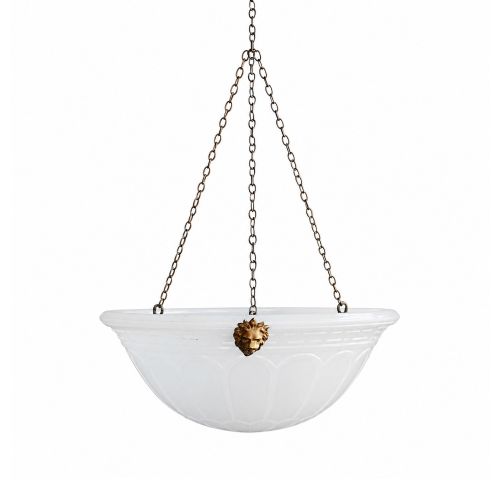
An antique bowl pendant suspends a shallow glass, alabaster or crystal basin from the ceiling to cast a diffused, warm light across a room.
Antique Bowl Pendant
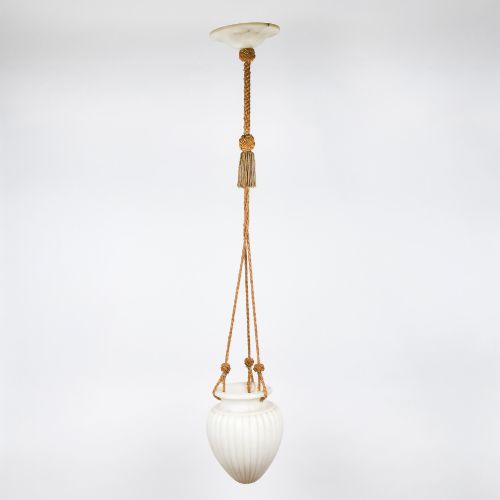
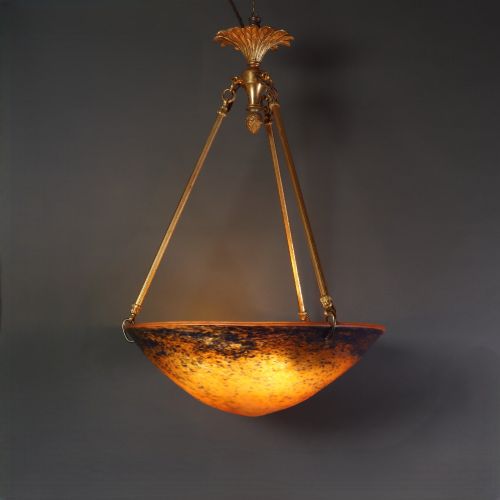
An antique bowl pendant is a ceiling-hung lighting fixture featuring a suspended basin or dish that cradles the bulb while softening the glare. When you search for an antique bowl pendant, you encounter forms that range from simple Victorian glass dishes to elaborate Art Deco alabaster plafonniers.
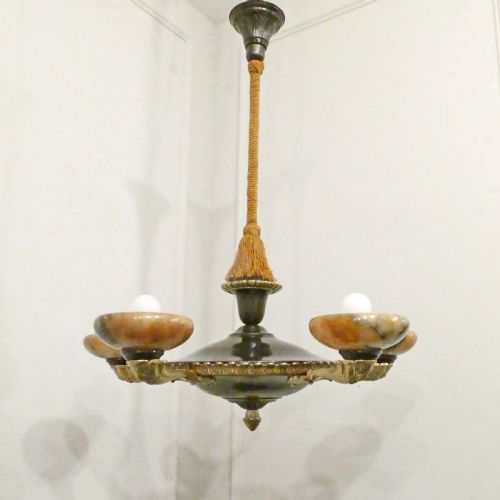
The most common examples on this page date from the early twentieth century, heavily influenced by Art Deco, Edwardian and Arts and Crafts aesthetics. These pieces typically hang on fabric cords, metal chains or decorative rods, anchoring the centre of a room with period character.
The materials span moulded glass, cut crystal and carved stone, reflecting the interior priorities of their respective eras from the late nineteenth century onward. Whether styled as a shallow ceiling light or a substantial chandelier, the core function remains the distribution of ambient illumination.
Materials and construction methods
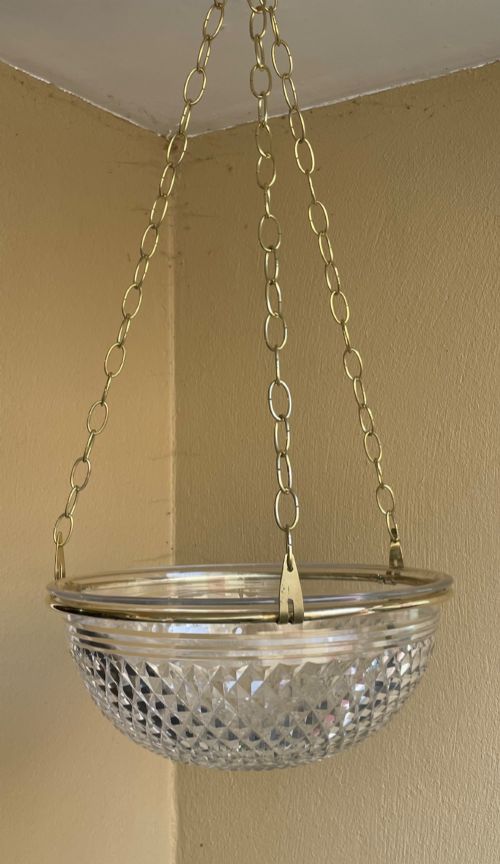
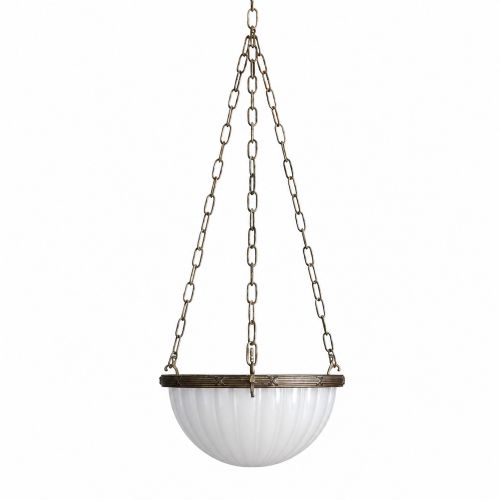
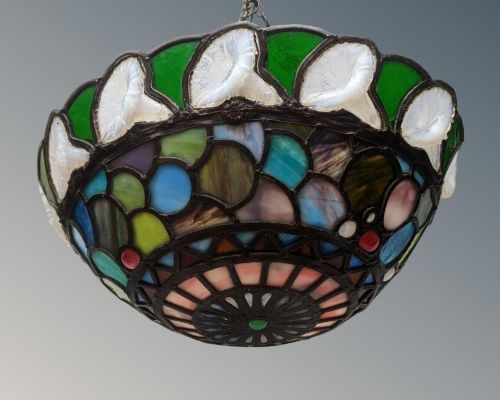
The bodies of these fixtures rely primarily on glass, alabaster and bronze, paired with brass, copper or silver-plated mounts. Glass bowls are often mould-blown, frosted, opaline or cut, while stone examples utilise natural white alabaster carved into shallow suspended basins.
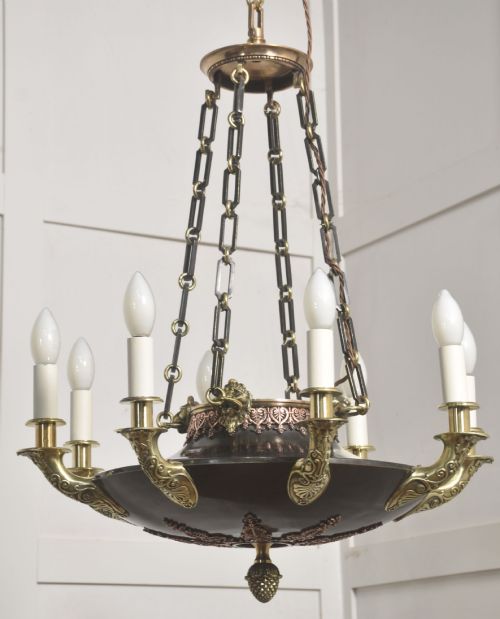
Metal components such as rams head ornamentation, suspension chains and ceiling roses are cast in bronze or brass, providing structural integrity to support the heavy glass and stone bowls. Fabric cords and metal rods complete the hanging mechanism, securing the fixture safely to the ceiling suspension.
Antique Bowl Pendant Retail Price Guide 2026
Typical asking prices for bowl pendant among the pieces listed under this phrase on Sellingantiques today, from the lower quarter to the upper quarter. They describe what is for sale here now, not the wider market.
Several bowls feature cast rams heads keeping a silent, neoclassical watch over your dining table.
Judging quality and craftsmanship
Quality in an antique bowl pendant rests in the depth of material manipulation, from the crispness of hand-cut crystal facets to the subtle translucency of genuine carved alabaster. Superior pieces demonstrate uniform thickness in the glass and refined detailing in the metal mountings rather than simple mass production.
The integrity of the hardware, including cast bronze fittings and original suspension chains, distinguishes a finer fixture from a utilitarian one. Maker attribution, evident in signed glass or documented foundry work, elevates the standing of a piece considerably.
Charles Schneider·Jefferson Light·Verrerie Des Vosge
The Antique Bowl Pendant Glossary
- Plafonnier
- A ceiling-mounted or closely suspended bowl light designed to sit flush or near-flush to the ceiling. This French term is frequently used for decorative glass or alabaster bowl pendants from the early twentieth century.
- Alabaster
- A fine-grained, translucent stone carved into bowls and dishes for soft light diffusion. Its natural veining patterns make each pendant visually distinct.
- Moonstone glass
- An opalescent, milky glass type popular in early twentieth-century lighting. It produces a soft, ethereal glow when illuminated.
- Opaline glass
- An opaque or semi-translucent glass developed in the nineteenth century. It scatters light evenly without harsh spots.
- Ceiling suspension
- The hardware assembly comprising cords, chains and ceiling roses that holds the bowl pendant aloft. It secures the fixture safely to the overhead structure.
Antique Bowl Pendant: Frequently Asked Questions
How do I hang a heavy bowl pendant?
These fixtures require secure anchoring directly into ceiling joists using appropriate hooks and brackets to bear the substantial weight of glass or stone.
Professional electrical installation is recommended to ensure the internal wiring and suspension chains safely support the pendant.
What rooms suit an antique bowl pendant?
Pendant lights with bowls excel in hallways, dining rooms and bedrooms where diffused, downward illumination creates an intimate atmosphere.
Their low profile relative to multi-tiered chandeliers makes them practical for rooms with standard ceiling heights.
How do I clean an alabaster bowl?
Alabaster is porous and sensitive to moisture, so cleaning requires a dry microfibre cloth or a very slightly damp sponge without harsh chemicals.
Avoid soaking the stone or using abrasive detergents that can strip the natural finish.
Are these lights wired for modern use?
Most antique fixtures require rewiring by a qualified electrician to meet modern safety standards and accommodate standard modern bulb fittings.
Original metalwork and glass shades are typically retained while the internal electrical components are updated.