




Antique Bookcase C1880
These antique bookcase c1880 pieces are substantial Victorian and French furnishings built to hold libraries and display prized volumes with enduring style.
Antique Bookcase C1880
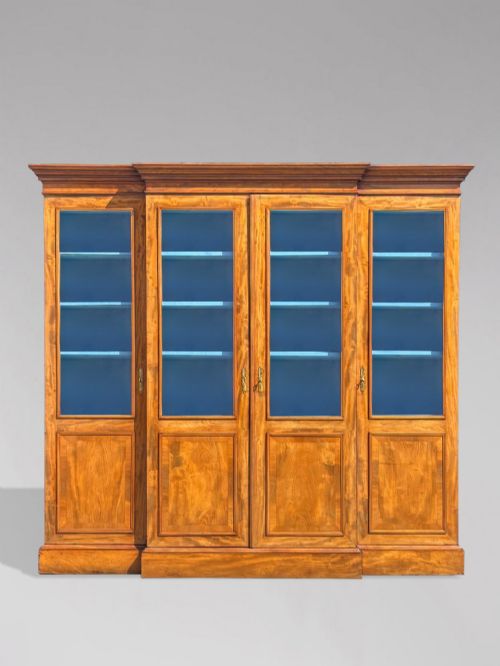
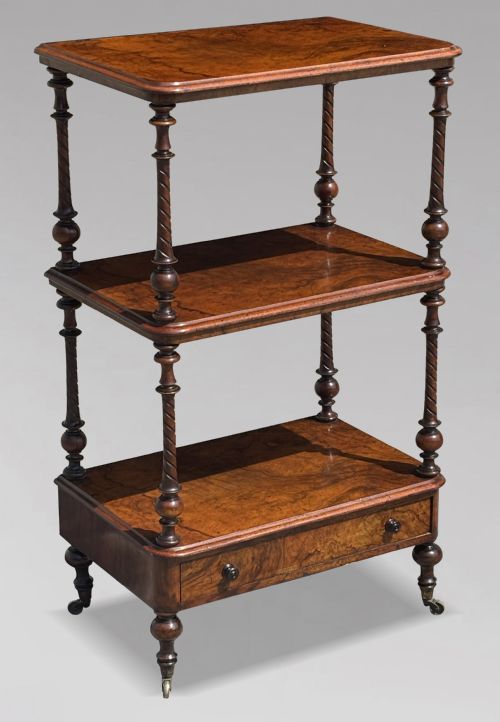
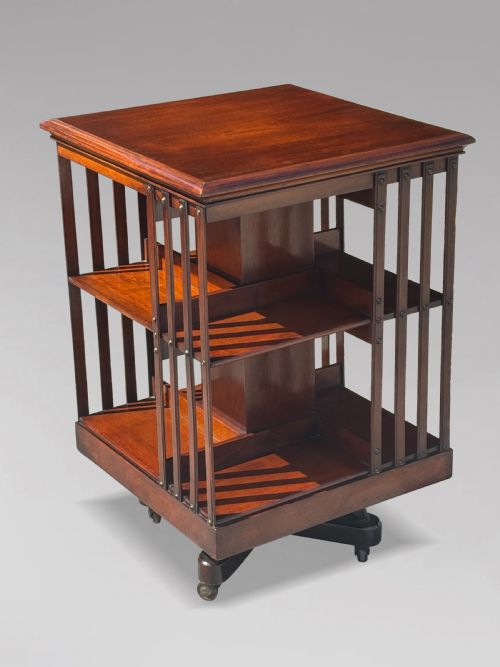
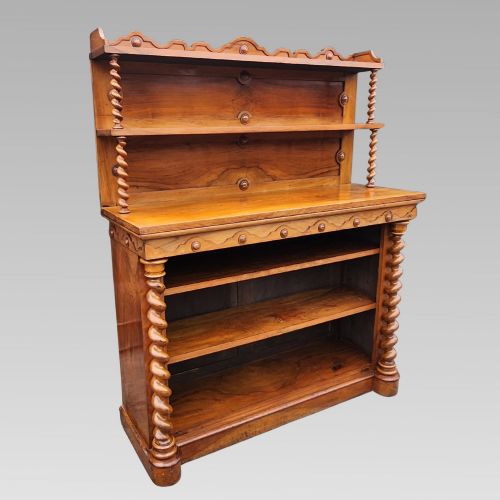
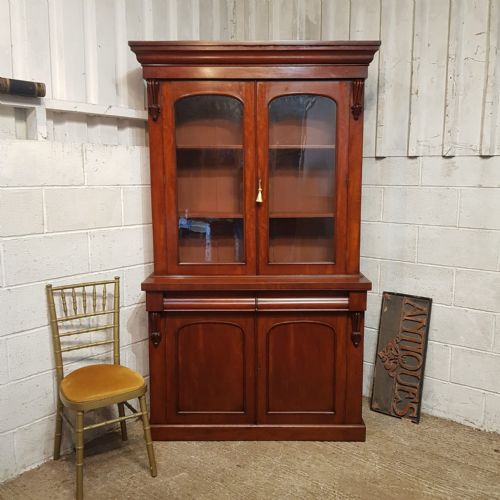
When you search for an antique bookcase c1880, you encounter robust Victorian and 19th Century French furniture designed for serious book storage and display. The selection on this page ranges from revolving table models and open shelves to grand glazed cabinets and bureau bookcases.
Mahogany and walnut dominate the offerings, often complemented by burr walnut veneers, rosewood, or ebonised wood with gold inlay. Pieces span styles from traditional Victorian and Louis Philippe to the Aesthetic Movement and Arts & Crafts, reflecting the varied tastes of the period.
How they were made
Cabinetmakers of this era utilised solid timbers alongside rich veneers like burr walnut, rosewood, and mahogany, applying them over stable secondary woods. Glass panels were hand-set into doors, while interior shelving was constructed to hold the considerable weight of heavy volumes.
Metal components such as brass hinges, locks, and cast iron mechanisms were integrated into functional elements like revolving stands and multi-door cabinetry. Inlaid details in gold and contrasting woods demonstrated precision woodwork during the late nineteenth century.
Antique Bookcase C1880 Retail Price Guide 2026
Typical asking prices for bookcase c1880 among the pieces listed under this phrase on Sellingantiques today, from the lower quarter to the upper quarter. They describe what is for sale here now, not the wider market.
Listings show walnut, burr walnut, mahogany, rosewood, oak, and ebonised wood used across Victorian, French, and Arts & Crafts bookcases.
What varies in quality
The refinement of the timber selection distinguishes standard utility pieces from exceptional examples, particularly in the figuring of burr walnut, amboyna, or mahogany veneers. Superior items display meticulous grain matching across large surfaces and doors.
Construction intricacy also marks the range of quality, seen in the smooth operation of revolving mechanisms, the quality of brass hardware, and the execution of inlaid work. Structural integrity in joints and the weight of the timber used for shelving separate workshop standards.
Harris Lebus
The Antique Bookcase C1880 Glossary
- Burr walnut
- A prized timber harvested from the tree's root growth, producing intricate, swirling grain patterns. It was frequently used for veneering prominent surfaces on display cabinets and bookcases.
- Aesthetic Movement
- A late nineteenth century design style emphasising art for art's sake, often characterised by ebonised wood surfaces with contrasting gold inlay and geometric lines.
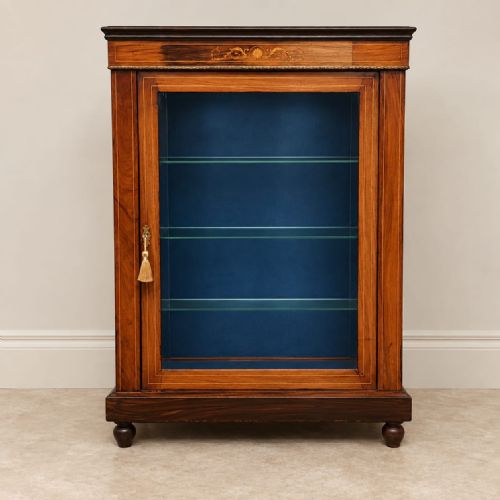
- Pier cabinet
- A low cabinet designed specifically to fit the wall space between windows, frequently featuring glazed doors for the display of books or collections.
- Louis Philippe
- A mid to late nineteenth century French style favouring clean, understated architectural lines and rich walnut timbers rather than heavy ornamentation.
- Ebonised wood
- Timber treated with a dark stain or finish to imitate expensive ebony, popular in Aesthetic Movement and late Victorian cabinetmaking.
Antique Bookcase C1880: Frequently Asked Questions
What styles define an antique bookcase c1880?
These pieces primarily reflect Victorian, 19th Century French, Louis Philippe, Aesthetic Movement, and Arts & Crafts designs. Each style brings distinct timber choices and decorative treatments to the form.
Cabinetmakers of the era adapted traditional library furniture to suit both formal sitting rooms and compact domestic spaces through varied formats.
Which woods were used for these bookcases?
Mahogany and walnut are the most common woods found in this period, often paired with decorative veneers such as burr walnut and amboyna. Rosewood, oak, and ebonised wood also appear.
Makers selected these dense timbers to ensure the furniture could support heavy collections of books without warping or sagging over time.
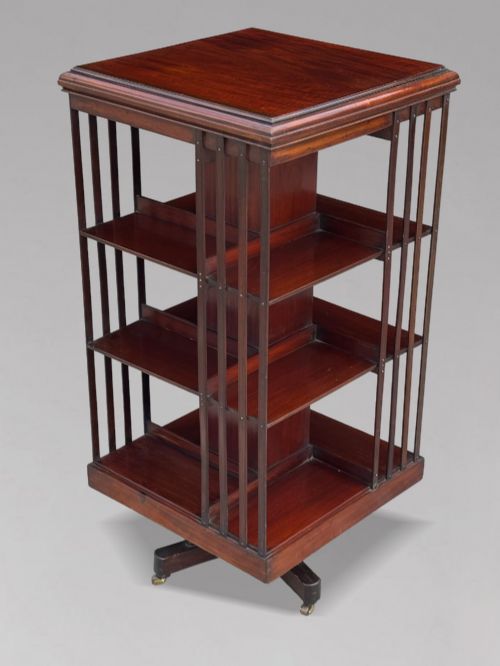
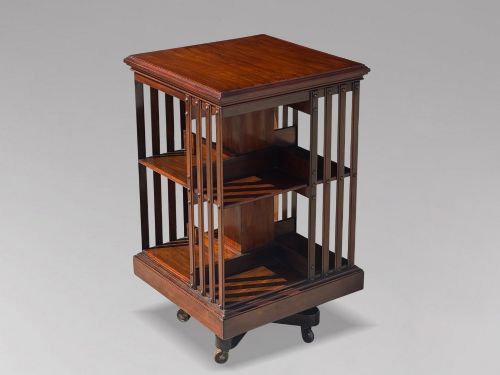
How do revolving bookcases function?
Revolving bookcases utilise a concealed internal mechanism of wood and iron that allows the entire tier of shelves to spin smoothly on a central base. This permitted easy access to a collection from a seated position.
These compact table or floor-standing units became popular in late Victorian libraries and studies for storing frequently consulted volumes.
What is a pier cabinet?
A pier cabinet is a low display piece designed to sit against the narrow wall space between tall windows. They typically feature single or double glazed doors to protect contents from dust.
In late nineteenth century interiors, these cabinets served as both bookcases and display surfaces for decorative objects and fine bindings.