



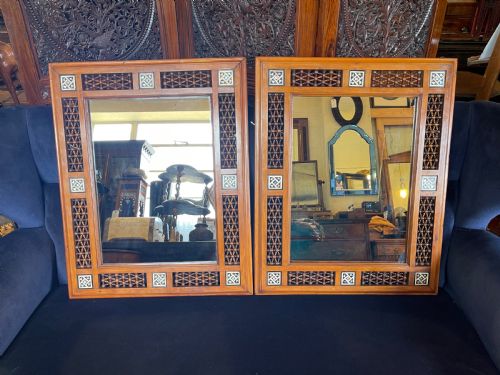


Antique Bone Inlaid Mirror
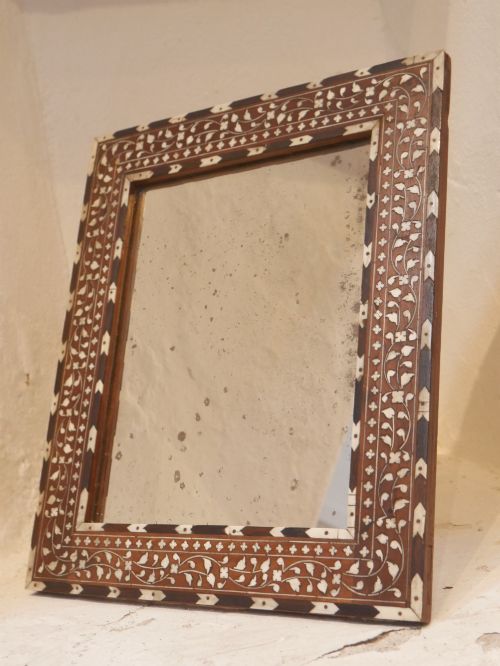
An antique bone inlaid mirror brings intricate geometric patterning and luminous surface texture to a room, drawing the eye instantly.
Antique Bone Inlaid Mirror
When you search for an antique bone inlaid mirror, you encounter pieces spanning the nineteenth century through the early twentieth century. These furnishings range from compact wall mirrors to elements within larger bedroom suites.
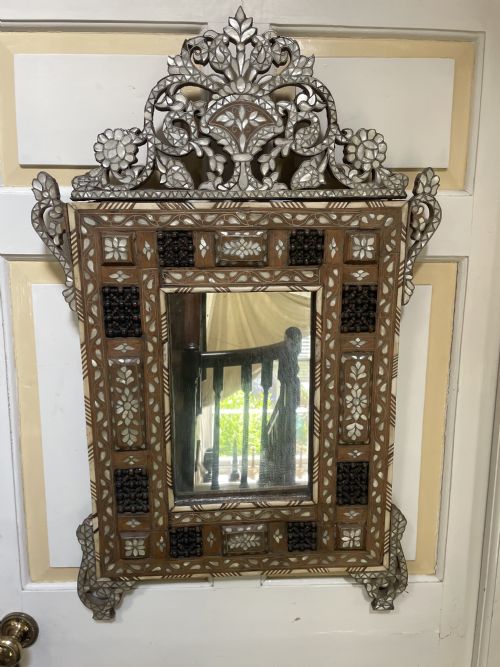
The styles encompass Anglo-Indian, Syrian and Ottoman, Levantine, and Moorish or Islamic revivals. Many examples originate from centres such as Hoshiarpur or Damascus, alongside European interpretations in an Italian Renaissance or Victorian Aesthetic taste.
Materials and construction
Makers built these frames using hardwoods including walnut, shisham, and fruitwood, sometimes applying ebonised finishes. Sections of bone and mother-of-pearl or nacre shell were shaped by hand and set flush into the timber substrate.
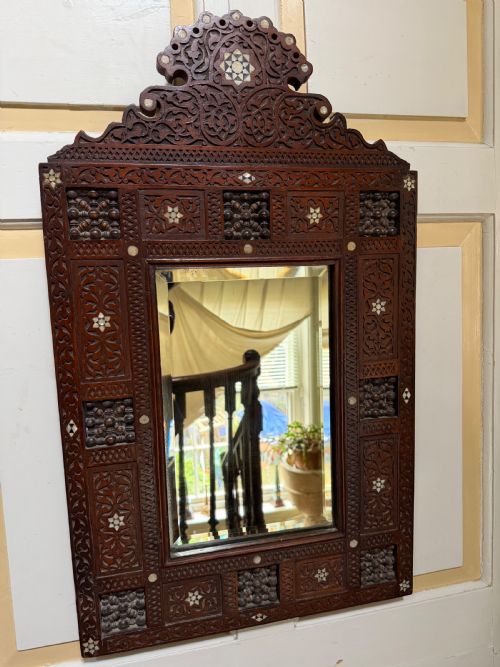
Intricate detailing often involved carved wooden frames, geometric inlay patterns, and mashrabiya turned panels. The reflective glass is typically set within these elaborate multi-material borders.
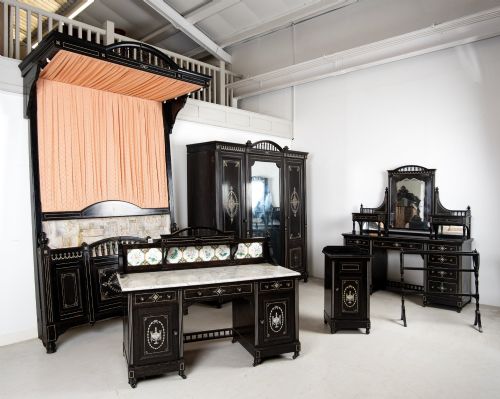
One grand Victorian bedroom suite c.1880 includes an inlaid mirror alongside five matching companions.
Judgements of quality
Quality rests upon the precision and complexity of the inlay work and the depth of the woodcarving. Pieces featuring dense, symmetrical geometric patterns and intact mother-of-pearl elements display superior craftsmanship.
The choice of dense hardwoods and the integration of delicate turned wooden panels further distinguish finer examples from simpler productions.
The Antique Bone Inlaid Mirror Glossary
- Bone inlay
- A decorative technique where small pieces of animal bone are shaped and embedded into a wooden surface to form intricate patterns. This method creates striking contrast against dark hardwoods.
- Mother-of-pearl
- The iridescent inner layer of certain mollusk shells, used alongside bone to add shimmer and varied tones to the frame. It is frequently utilised in Syrian and Levantine pieces.
- Mashrabiya
- An architectural element featuring turned wood panels arranged in intricate lattice networks. These appear within several Levantine frames on this page.
- Shisham
- A dense Indian rosewood traditionally employed for fine furniture and decorative objects. It provides a durable, richly grained foundation for complex inlay.
- Aesthetic Movement
- A nineteenth-century artistic style that prioritised visual beauty over narrative content, influencing furniture design towards eclectic global motifs. This period produced several ebonised and inlaid examples.
Antique Bone Inlaid Mirror: Frequently Asked Questions
Where were these mirrors made?
The pieces originate from diverse regions, including workshops in Hoshiarpur, Damascus, and the wider Levant. European makers also produced revival pieces influenced by Islamic and Moorish design.
Craftsmen utilised local hardwoods such as walnut and shisham, combining traditional regional carving techniques with intricate surface ornamentation.
How do I style an inlaid mirror?
These mirrors function effectively as focal points in hallways, bedrooms, or living spaces. Their reflective glass and detailed borders contrast well against plain painted walls.
Pairing them with simple surrounding decor allows the complex bone and mother-of-pearl patterns to remain the primary visual element.
Are these mirrors fragile?
The combination of timber, bone, and shell requires stable indoor humidity and temperature to prevent movement in the wood. Regular dusting with a soft, dry cloth preserves the intricate surface.
Avoid placing them in areas subject to direct moisture or significant climate fluctuations, which can affect the small inlaid sections.