




Antique Bobbin Corner Chair
An antique bobbin corner chair brings distinctive turned woodwork and a compact footprint to any room.
Antique Bobbin Corner Chair
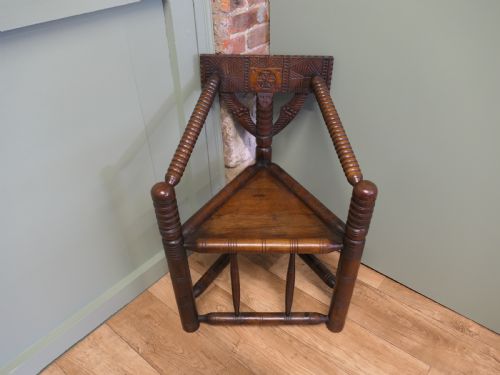
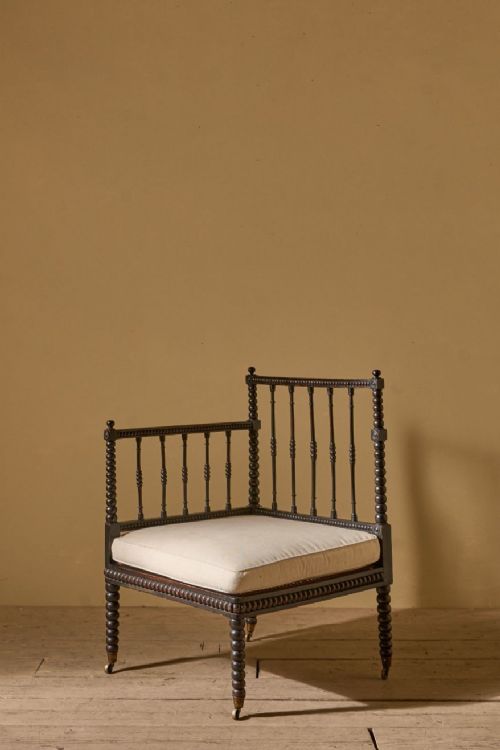
An antique bobbin corner chair is a specialised seating form designed to fit neatly into the angle of a room. These pieces appear in forms such as corner chairs, armchairs, and accent chairs, spanning periods including the nineteenth century and the early twentieth century. Listings regularly feature variants connected to English country, Gothic revival, and Saxon revival styles.
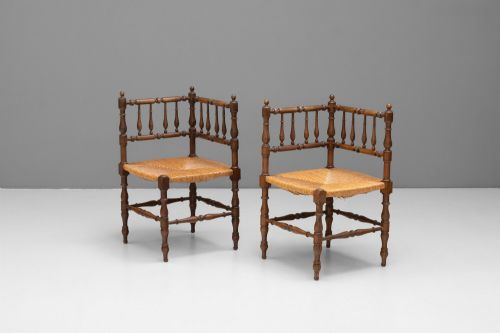
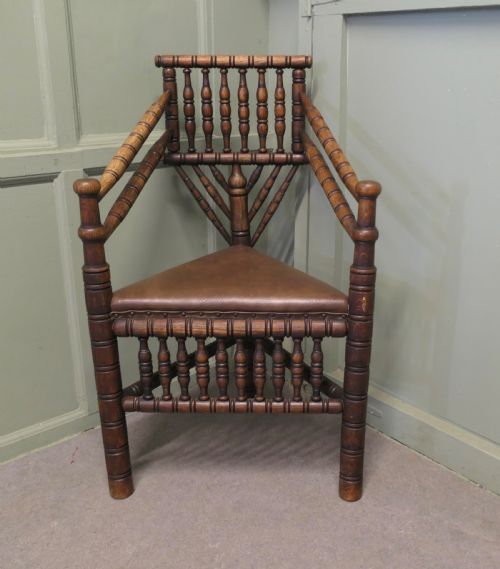
Buyers encounter examples shaped from oak, beech, and ebonised timber, often paired with rush, cane, fabric, or leather seating. Many pieces draw inspiration from vernacular traditions, showing up under designations like turner's chairs or Warwick library armchairs. The primary appeal lies in the rhythm of the turned spindles and the resourceful use of space.
How they were made
The construction relies on timber turning, utilising lathes to shape oak and beech into repetitive rounded segments resembling bobbins or spools. Ebonised finishes darken the wood to imitate costlier materials, while other examples display the natural grain of English oak. Frame joints depend on traditional pegging and carpentry methods suited to structural turning.
Seating inserts incorporate natural rush, woven cane, stretched leather, or upholstered fabric. These materials demand precise tension and attachment to withstand the stresses placed upon corner furniture. The synthesis of turned spindles and supportive seats creates a sturdy framework without excessive weight.
Antique Bobbin Corner Chair Retail Price Guide 2026
Typical asking prices for bobbin corner chair among the pieces listed under this phrase on Sellingantiques today, from the lower quarter to the upper quarter. They describe what is for sale here now, not the wider market.
Every bobbin spindle requires the lathe operator to maintain an identical rhythm, turning simple wood into a riot of wooden beads.
What varies in quality
Quality rests primarily on the crispness and consistency of the spindle turnings across the entire frame. Superior examples display uniform spool profiles and tight, stable joinery that resists movement under weight. Lesser pieces might show clumsy repairs, mismatched turnings, or replacement stretchers that disrupt the visual harmony.
The choice of primary timber and the preservation of original surfaces also distinguish better specimens. Oak and ebonised timber with intact patination hold greater character than stripped or heavily altered frames. Furthermore, the condition of woven rush or cane inserts plays a significant part in the integrity of the piece.
The Antique Bobbin Corner Chair Glossary
- Bobbin turning
- A form of woodturning characterised by a sequence of rounded swellings resembling spools of thread. This technique creates a decorative, tactile surface across the legs and stretchers.
- Turner's chair
- A traditional armchair constructed almost entirely from turned wooden members. These pieces often reference historical vernacular forms from earlier centuries.
- Ebonised timber
- Wood treated with a dark stain or finish to simulate expensive ebony. This treatment was particularly popular during the Victorian era for formal and decorative seating.
- Rush seating
- Woven seat construction using dried marsh grasses. This traditional method provides a flexible and durable surface for vernacular chairs.
Antique Bobbin Corner Chair: Frequently Asked Questions
What is a bobbin corner chair?
A bobbin corner chair is a seating item defined by its spool-turned woodwork and diagonal frame built for room corners.
These pieces combine functional space-saving geometry with decorative turned spindles popular during the nineteenth century.
How were turners chairs used?
Turners chairs served as sturdy seating options in studies, libraries, and parlours. Their solid wooden construction made them durable for daily use.
They often occupied corners or functioned as accent seating alongside larger library armchairs.
Where should I place an antique corner chair?
These chairs fit naturally into neglected room angles or dead space where standard square furniture fails. Their compact footprint allows them to serve as functional accents without crowding a floor.
They also work effectively paired with small desks or occasional tables.
How do I identify Victorian turned chairs?
Victorian turned chairs are identified by dense oak or ebonised construction, bobbin spindles, and vernacular styling references. Many carry labels or stylistic traits linked to nineteenth-century revival movements.
Comparing the turning patterns helps distinguish genuine period pieces from later interpretations.