






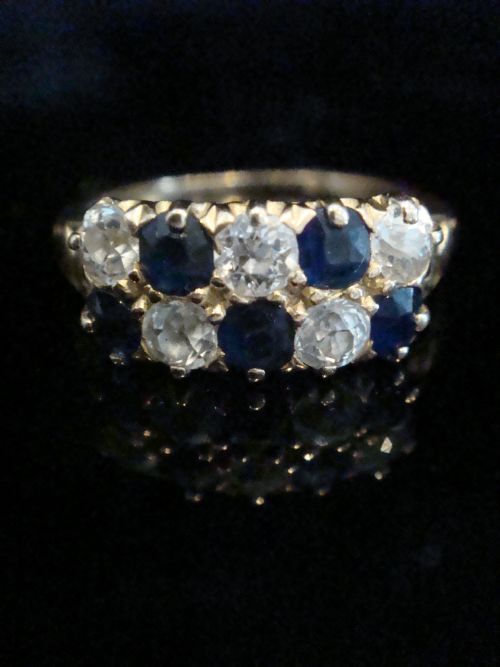


Antique Boat Shape Ring
An antique boat shape ring holds the finger with a graceful, elongated silhouette that bridges late Victorian and Edwardian elegance.
Antique Boat Shape Ring
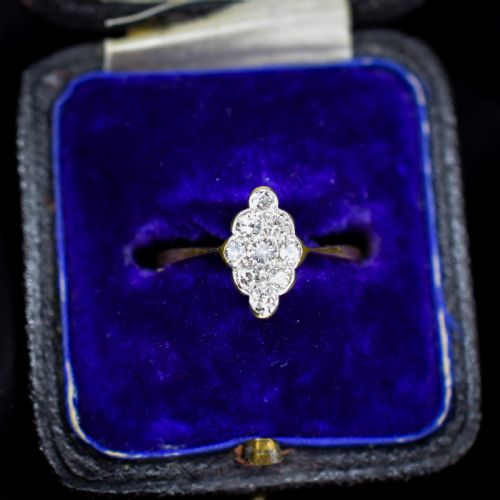
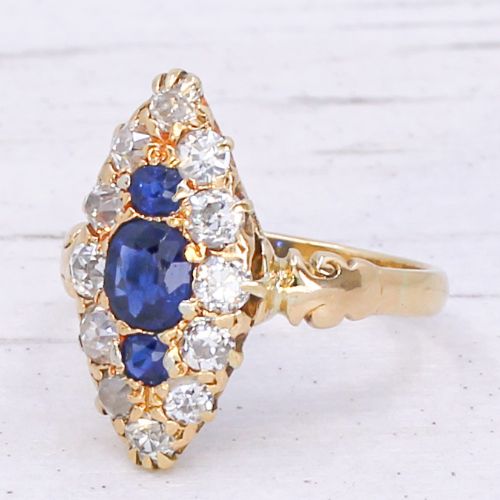
An antique boat shape ring presents a curved, tapering face that sits low along the finger, drawing the eye with its distinctive silhouette. These pieces encompass navette and marquise clusters alongside traditional boat settings, spanning the late Victorian, Edwardian, and Art Deco periods.
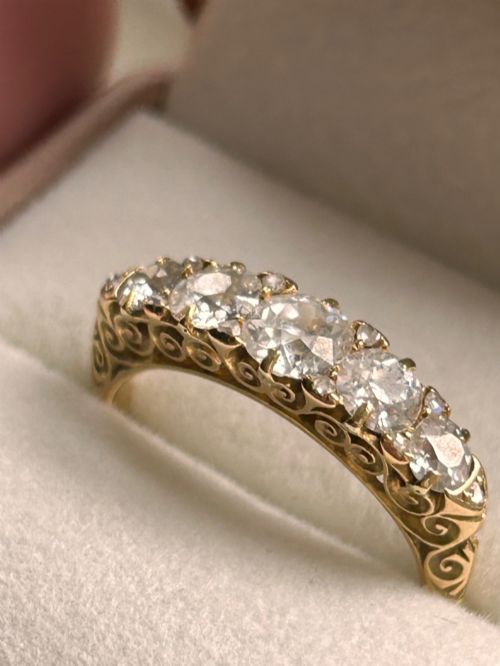
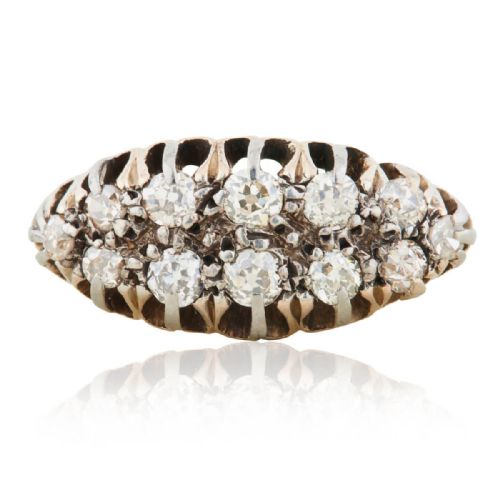
Most examples encountered on this page pair 18ct yellow gold shanks with platinum settings that hold old cut diamonds, sapphires, or rubies. The design makes the hand appear slender while securely displaying multiple stones across the finger.
Materials and construction methods
Goldsmiths of the late nineteenth and early twentieth centuries utilised 18ct gold for the structural shank and mount. Platinum emerges by the Edwardian era, offering a bright, durable white metal that required less bulk to secure small stones.
Settings rely on hand cut diamonds, notably old mine and old European cuts, paired with natural sapphires and Burmese rubies. Gemstones are meticulously flush set, star set in gypsy rings, or clustered in close array within claw or millegrain borders.
Antique Boat Shape Ring Retail Price Guide 2026
Typical asking prices for boat shape ring among the pieces listed under this phrase on Sellingantiques today, from the lower quarter to the upper quarter. They describe what is for sale here now, not the wider market.
Some Victorian makers hid secret initials beneath the boat gallery, letting the wearer keep a private message pressed against the skin all day.
Evaluating craftsmanship and distinction
Superior quality rests in the crispness of the gallery work and the symmetry of the tapering navette or boat outline. Finer pieces demonstrate precise stone matching, where colour and cut blend without awkward gaps in the cluster.
The integration of platinum with yellow gold indicates careful period craftsmanship designed to maximise the brilliance of old cut diamonds. Wear to the underlying gallery or thinning claws separates well preserved survivals from those altered by later repairs.
The Antique Boat Shape Ring Glossary
- Navette
- A pointed, boat shaped cluster setting resembling a small little ship or shuttle. This French term describes rings with an elongated profile.
- Marquise
- A gemstone cut or cluster outline featuring pointed ends and curved sides. It creates a similar elongated footprint on the finger to the boat shape.
- Millegrain
- A decorative technique involving tiny raised metal beads along the edge of a setting. Edwardian jewellers utilised this to soften platinum borders with texture.
- Gypsy set
- A style where stones are flush mounted directly into the solid metal band. The metal is hammered around the girdle of the diamond to hold it secure.
Antique Boat Shape Ring: Frequently Asked Questions
How do I wear a boat shape ring?
The elongated profile of a boat shape ring looks striking worn alone on the ring finger or middle finger. Its tapered ends allow it to sit comfortably alongside straight wedding bands.
Because the face extends along the finger, consider your hand shape and finger length when choosing the overall length of the navette cluster.
Are these rings suitable for daily wear?
These pieces were built with solid 18ct gold and durable platinum settings, making them robust enough for regular use. Old cut diamonds and sapphires handle everyday activities well.
Take care to remove the ring during heavy manual tasks to protect the delicate claw work or millegrain edges from undue friction.
How do I date an antique boat ring?
Dating relies on stylistic shifts and hallmarks found inside the gold band. Victorian examples often feature warm yellow gold clusters, while Edwardian pieces introduce platinum to brighten diamond settings.
Assay office marks and date letters stamped into the 18ct gold shank provide precise years of origin, linking pieces to Birmingham or Chester workshops.
What is the difference between navette and boat shapes?
Navette designs specifically feature sharply pointed ends in a symmetrical shuttle form. Boat shapes often curve gently at the ends, mimicking the hull of a vessel.
Both terms describe an elongated silhouette that sits horizontally across the finger, though individual makers interpreted the outline with varying degrees of taper.