




Antique Boat Landscape Picture
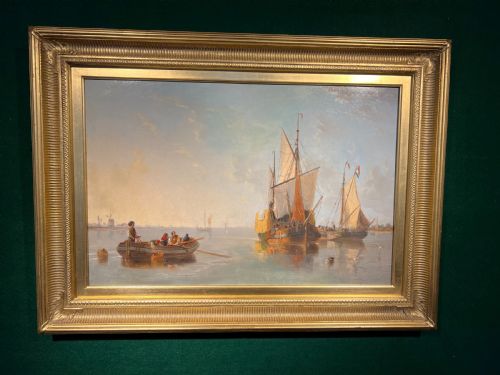
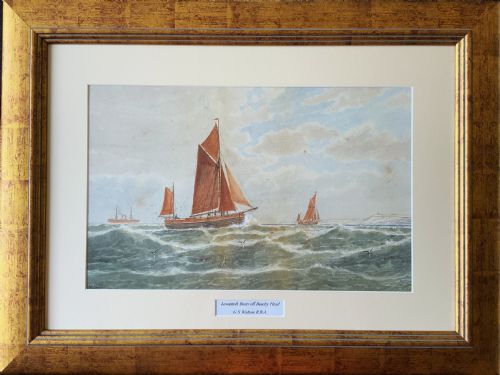
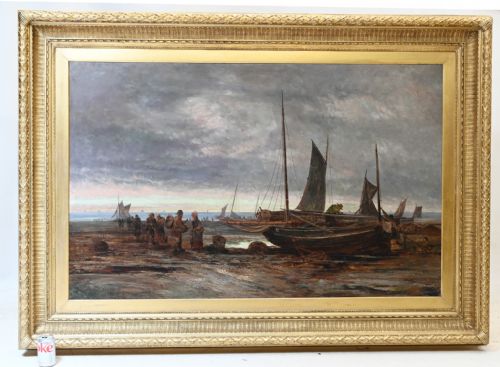
These antique boat landscape pictures record maritime scenes, rivers and harbours painted in oil or watercolour during the nineteenth and early twentieth centuries.
Antique Boat Landscape Picture
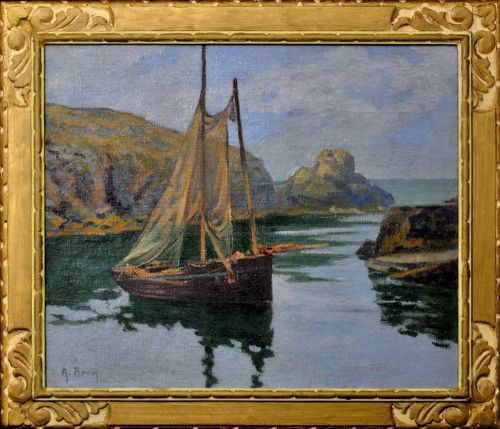
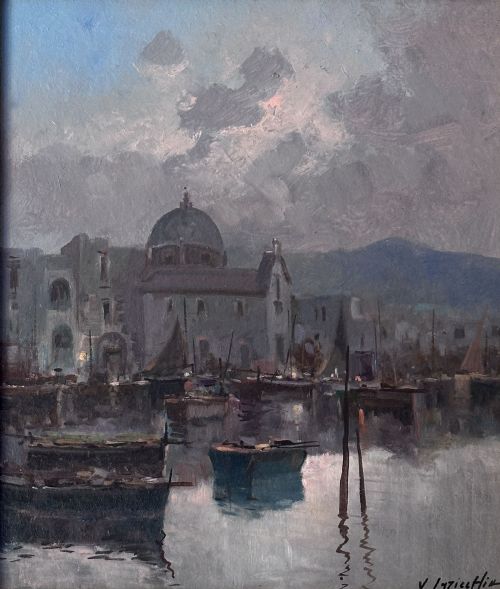
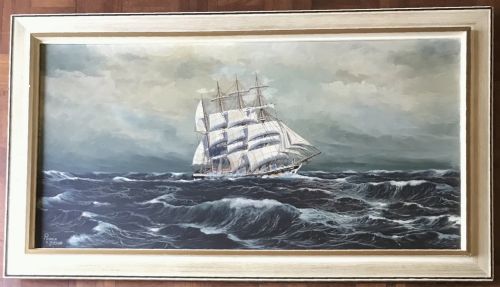
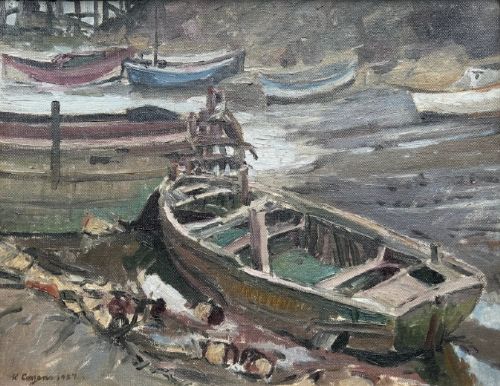
An antique boat landscape picture places vessels within coastal, river or harbour views, capturing working craft, sailing yachts and fishing boats alongside water. These works document maritime life, coastal towns and inland rivers from the Victorian era onwards, reflecting a widespread nineteenth-century fascination with the sea and shipping.
The most common examples on this page are nineteenth-century oil paintings and watercolours depicting British and European coastal scenes. Viewers frequently encounter depictions of local harbours, tidal rivers and moored vessels rendered by regional artists working in Victorian maritime or impressionist styles.
Materials and techniques
Artists painted these works primarily in oil on canvas or applied watercolour to paper, often framing the finished pictures in carved or moulded giltwood. Canvas supports allowed for heavily textured oil applications, while paper suited the lighter, translucent washes characteristic of traditional watercolours.
Makers utilised traditional pigments mixed with oils or water-soluble binders, applying paint with brushes or occasionally palette knives to build up coastal light and water reflections. Many surviving works retain their original gilt frames, which protect the edges of the canvas or paper and complement the palette of the painting.
Antique Boat Landscape Picture Retail Price Guide 2026
Typical asking prices for boat landscape picture among the pieces listed under this phrase on Sellingantiques today, from the lower quarter to the upper quarter. They describe what is for sale here now, not the wider market.
Geographical subjects across the inventory range from British coastal ports in Norfolk and Cornwall to Mediterranean harbours in Italy.
What separates the finest works
Quality rests upon the artist's handling of atmospheric light, water movement and vessel perspective rather than the mere inclusion of a boat. The finest examples demonstrate a confident command of tone, capturing the specific weight of sea mist, shifting cloud formations and the precise rigging of a sailing ship.
Compositional balance and the vitality of the brushwork distinguish superior paintings from standard decorative output. Works by named nineteenth-century artists often exhibit more deliberate draughtsmanship and a nuanced understanding of coastal topography compared to anonymous studio pieces.
John Wilson Carmichael·George Stanfield Walters·William Lee Hankey·Gustave De Bréanski·Thomas Bush Hardy·Alfred Henry Vickers·Edward Henry Holder·Arthur Severn·Henry Bright·Thomas Lound
The Antique Boat Landscape Picture Glossary
- Giltwood
- Wood carved and coated with a thin layer of gold leaf or metallic paint. This material forms the traditional ornate framing common on nineteenth-century paintings.
- Watercolour
- A painting method where fine pigment is suspended in a water-based solution and applied to paper. It yields translucent washes that capture bright daylight and soft atmospheric conditions.
- Oil on canvas
- Pigment bound in drying oil applied to a stretched woven fabric surface. This technique allows for rich colour depth and visible brush texture.
- Impressionism
- A style of painting emphasising spontaneous brushwork and the shifting effects of light. In these listings, it describes late nineteenth and early twentieth-century coastal works.
- Seascape
- A work of art depicting the sea, coastal views or marine vessels. These compositions focus primarily on maritime environments rather than inland terrain.
Antique Boat Landscape Picture: Frequently Asked Questions
How do I identify a Victorian marine painting?
Victorian marine paintings typically feature nineteenth-century sailing vessels, steamships or fishing boats rendered in oil or watercolour. They often display detailed rigging and traditional coastal architecture characteristic of the period.
Many works bear signatures, dates or framing styles specific to the late nineteenth century, alongside subject matter focusing on British or European ports and shipping routes.
What is the difference between an oil and a watercolour?
Oil paintings utilise pigment suspended in drying oil applied to stretched canvas or wooden boards, resulting in a textured and opaque surface. Watercolours employ water-soluble pigments on paper, creating translucent washes and lighter effects.
Oils are generally heavier and require protective frames without glass, whereas watercolours must be kept behind glass to prevent moisture and surface damage.
Where were these coastal scenes usually painted?
Artists painted these scenes directly at busy ports, fishing villages and riverbanks across Britain and continental Europe. Popular locations included Norfolk coastal towns, Venetian lagoons and French harbours.
Creators often worked outdoors to capture accurate light and tidal conditions before finishing the canvases or papers within their studios.
How should I display an antique painting?
Antique paintings require placement away from direct sunlight and excessive humidity to protect fragile canvas fibres, paper supports and gilt frames. Stable indoor temperatures prevent the warping of wood and the cracking of oil paint.
Maintaining adequate clearance from heating sources preserves the integrity of both the artwork and its historical framing.