





Antique Boat Landscape Art
Antique boat landscape art captures maritime life and coastal scenery through traditional paintings and watercolours.
Antique Boat Landscape Art
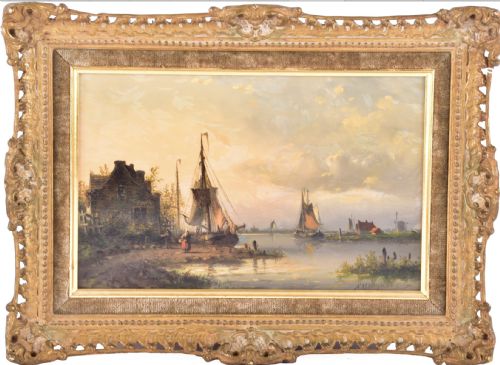
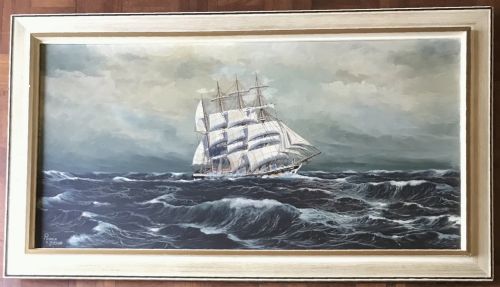
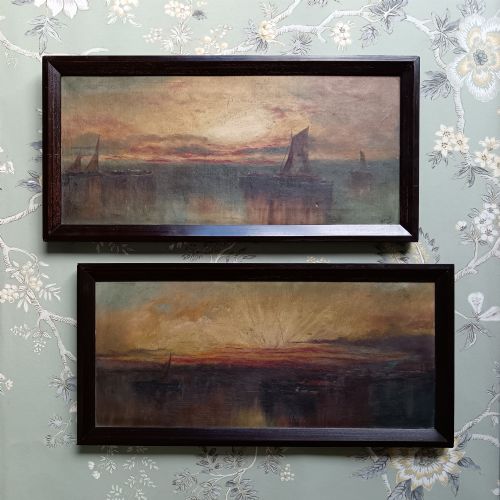
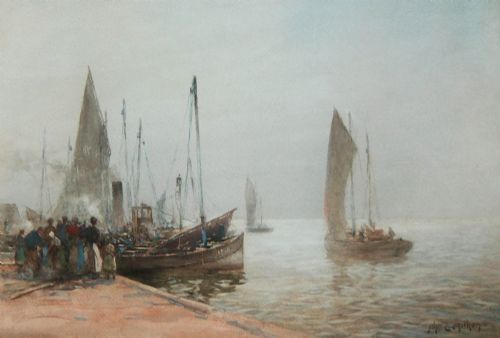
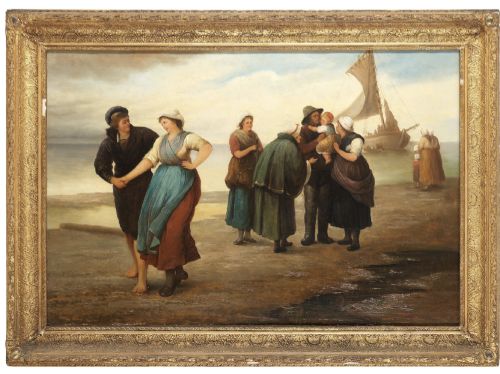
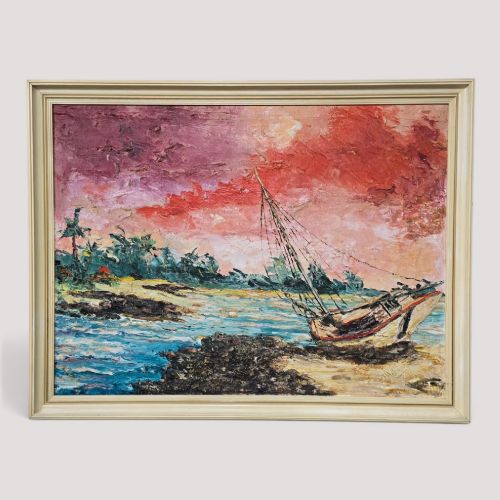
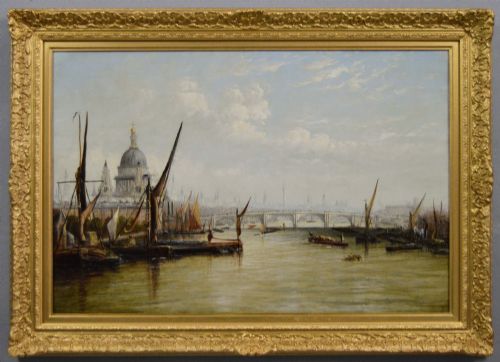
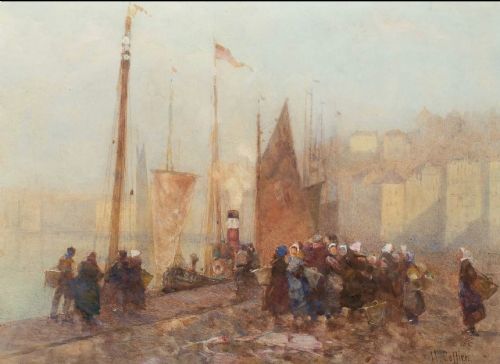
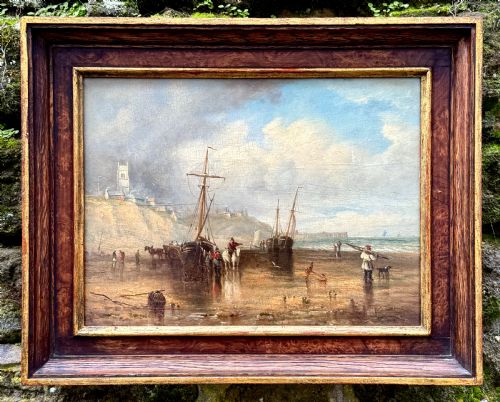
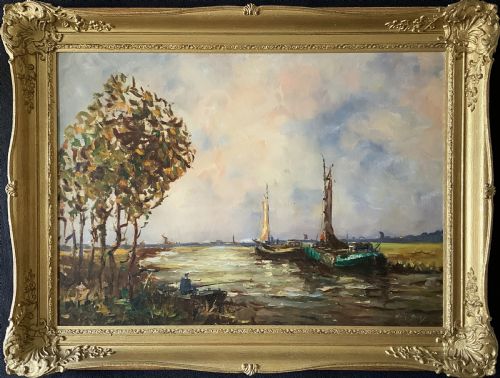
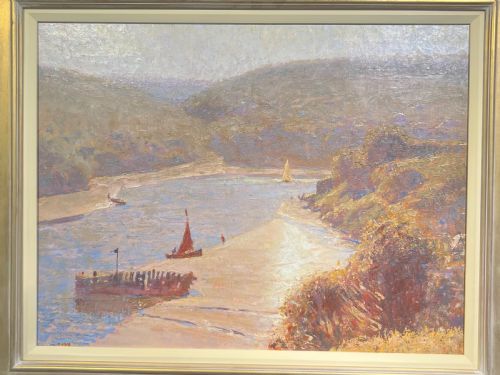
When you search for antique boat landscape art, you encounter oil paintings and watercolours depicting rivers, harbours, and coastal scenes. These works range from small studies on board to large canvases set within gilt wood frames.
The selection here draws heavily from nineteenth-century and Edwardian traditions, including British and French marine works. You will find depictions of fishing vessels, townscapes with river traffic, and open sea gales.
Alongside traditional paintings, the selection spans periods from the 1800s through to the mid-twentieth century, capturing changing maritime architecture and coastal working life.
How they were made
Artists painted primarily in oil on canvas or board, and in watercolour on paper, utilising pigments to capture shifting coastal light and weather. Many works are housed in their original gilt, gesso, and gold leaf frames.
Support materials varied from heavy woven canvas to prepared wood panels and paper, depending on whether the artist worked in the studio or outdoors on location.
Listings feature oil on canvas, wood, paper, and gilt gesso frames across the nineteenth and early twentieth centuries.
What varies in quality
Quality rests upon the artist's command of light, atmosphere, and proportion, particularly in the rendering of water and rigging. A confident handling of brushwork distinguishes a master's observation from a stiffer studio copy.
The preservation of the original surface and the integrity of the period frame contribute significantly to the standing of any given piece.
James Orrock·Thomas Creswick·John Moore of Ipswich·George Stanfield Walters·Thomas Bush Hardy
The Antique Boat Landscape Art Glossary
- Seascape
- A work of art depicting the sea, coastlines, or marine vessels in various weather conditions. These compositions focus heavily on water and atmospheric effects.
- Gilt wood
- Wood coated with a thin layer of gold leaf or gilt paste, commonly used for nineteenth-century picture frames. It adds reflective warmth to the presentation of a painting.
- Watercolour
- A paint consisting of water-soluble pigments used on paper, favouring rapid application and translucent washes. It was frequently utilised for coastal and harbour sketches.
- Impressionism
- A style of painting emphasising light and its changing qualities rather than precise detail. Practitioners sought to capture immediate visual impressions of scenes.
- Provenance
- The documented history of ownership of an art piece. It establishes authenticity and traces the journey of the work through time.
Antique Boat Landscape Art: Frequently Asked Questions
What periods do these paintings date from?
The works span from the early nineteenth century through the Edwardian era and into the mid-twentieth century. Most examples cluster in the Victorian and Edwardian periods.
During these decades, marine and coastal painting flourished across Britain and Europe, driven by a strong public interest in maritime trade and seaside leisure.
Are these works usually framed?
Many pieces retain their period frames, often constructed from gilt wood, gesso, and gold leaf. These frames are frequently contemporary to the artwork itself.
A matching period frame enhances the historical context and visual impact of an oil painting or watercolour.
How do I care for an antique oil painting?
Keep paintings away from direct sunlight, excessive moisture, and rapid temperature fluctuations. Displaying them on stable interior walls helps protect both the canvas and the wooden stretcher.
Dust the surface gently with a soft, dry brush, and avoid using any liquid cleaners or chemical agents on the paint layer.
What is the difference between an oil and a watercolour?
Oil paintings use pigments suspended in drying oil on canvas or board, allowing for rich textures and deep colour blending. Watercolours use water-soluble pigments on paper, creating lighter, translucent effects.
Oils were traditionally favoured for grander, durable compositions, while watercolours often served for rapid plein air studies.