






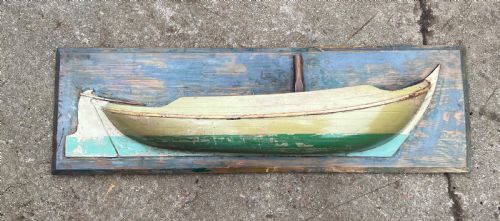
Antique Boat Hull
An antique boat hull brings the character of the nineteenth-century coast directly into a room, offering the weathered texture of timber and canvas that collectors prize.
Antique Boat Hull
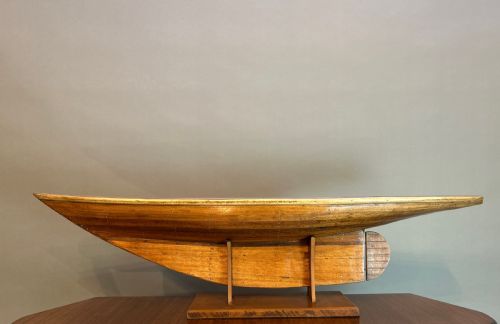
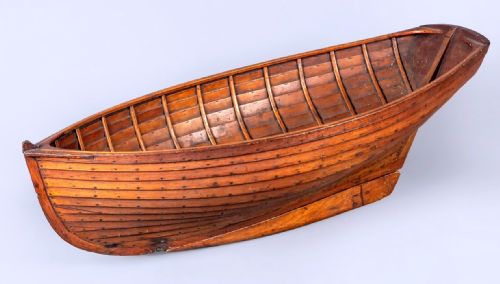
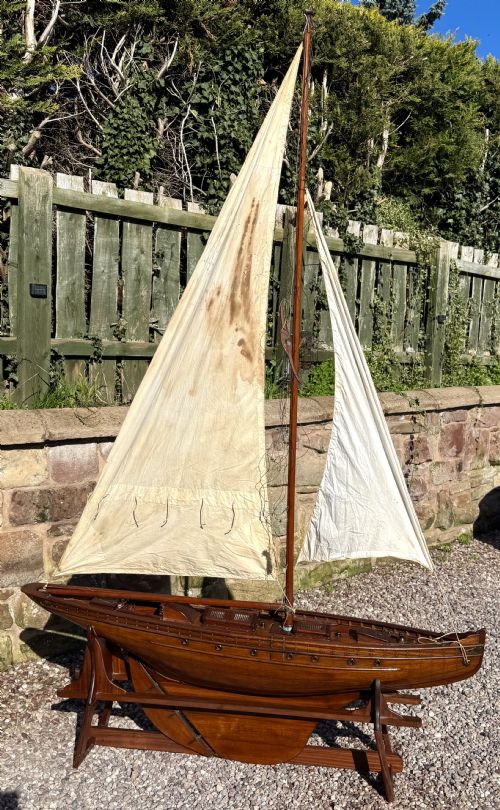
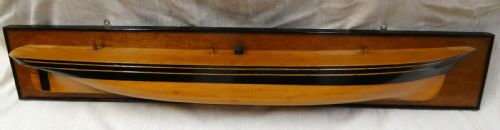
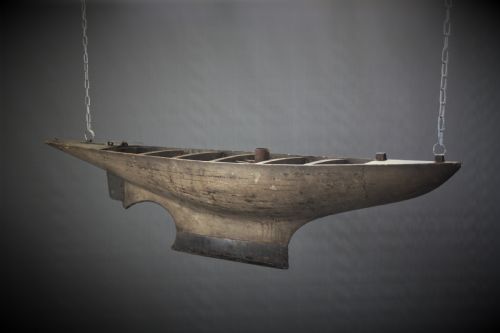
An antique boat hull captures the sculptural form of historical maritime vessels, ranging from large pond yachts and scratch-built ketches to shipbuilders' half models. These pieces bridge the gap between working maritime heritage and decorative folk art, reflecting the practical craftsmanship of coastal trades.
The pieces on this page span the Victorian and Edwardian eras, including works from the nineteenth century up to 1920. Buyers frequently encounter half-hull models designed for wall display alongside full wooden hulls mounted on stands or cradles.
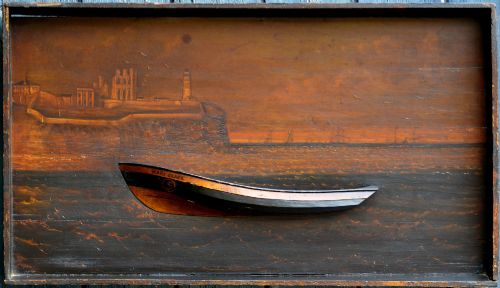
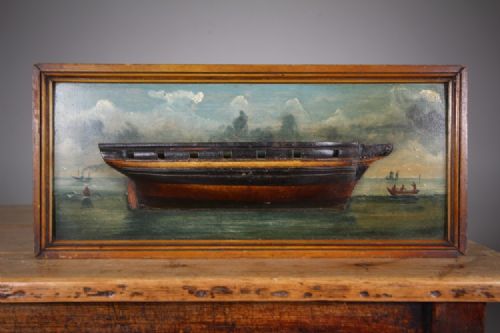
Originating from maritime traditions, these objects include folk art carvings of specific vessels like the coble with Tynemouth Castle or trawlers such as the Caeneus. They serve as tactile reminders of historical sailing ships and local port scenes.
How they were made
Makers shaped these hulls primarily from timber, utilising woods such as pine, mahogany, and sycamore to achieve durable yet buoyant forms. Shipwrights and vernacular carvers constructed them using techniques like carvel planking for scratch-built pond yachts and solid blocks for half-hull displays.
Surfaces were frequently finished with paint, brass fittings, and canvas sails to mimic full-sized vessels with precision. The addition of painted backgrounds, marble bases, or oil paintings provided context for the hulls, grounding them in their maritime environment.
Antique Boat Hull Retail Price Guide 2026
Typical asking prices for boat hull among the pieces listed under this phrase on Sellingantiques today, from the lower quarter to the upper quarter. They describe what is for sale here now, not the wider market.
Listings feature woods like pine, mahogany, and sycamore alongside brass, canvas, and paint across the nineteenth century and 1920.
What varies in quality
The distinction between standard items and superior examples lies in the precision of the carving and the originality of the materials. Pieces featuring documented shipbuilders' origins or intricate folk art details demonstrate a higher level of historical engagement.
Proportion, scale, and the preservation of original painted surfaces dictate the visual impact of each hull. Items retaining their original stands, rigging, or associated coastal backdrops command stronger attention from collectors.
The Antique Boat Hull Glossary
- Half model
- A three-dimensional representation of one side of a ship's hull, traditionally used by shipbuilders to visualise hull shape before full-scale construction. These were frequently mounted on boards for wall display.
- Carvel hull
- A method of boat building where hull planks are laid edge-to-edge flush against a supporting framework, creating a smooth exterior surface. This technique appears on scratch-built pond yachts from the nineteenth century.
- Pond yacht
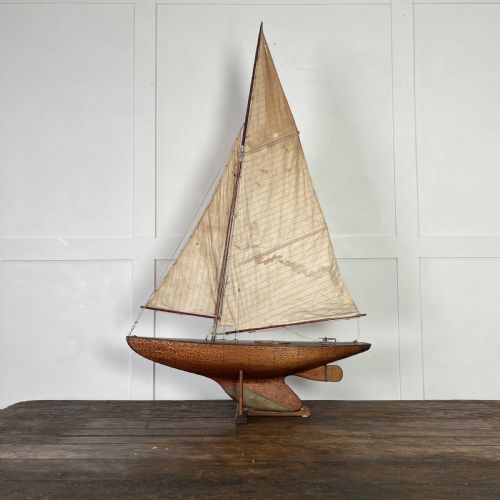
- A model sailing boat designed for recreational sailing on park lakes and ponds, often equipped with keels and rudders. They range in size from small mantelpieces to massive vessels standing several feet high.
- Coble
- A traditional type of open fishing boat with a high bow and flat stern, native to the north-east coast of England. They are frequently depicted in nineteenth-century maritime folk art and half-hull carvings.
- Maritime diorama
- A three-dimensional display combining a ship model or hull with a painted background and physical elements like water or port structures. These pieces create a sense of depth and narrative.
Antique Boat Hull: Frequently Asked Questions
What is the difference between a half hull and a full model?
A half hull represents just one side of a vessel, traditionally used by shipbuilders for design work or mounted flat on a board as wall art. A full model presents the entire hull and deck structure, often equipped with masts, rigging, and stands.
Full models require shelf or floor space for display, whereas half models function much like framed paintings on a wall. Both types capture the maritime aesthetics of the nineteenth and early twentieth centuries.
How were antique pond yachts used originally?
Antique pond yachts were built for recreation, sailed by enthusiasts on park lakes and ornamental ponds during the Victorian and Edwardian periods. They were functional toys or working models designed to catch the wind and track across open water.
Today, they are collected as decorative objects and folk art rather than sailed. Their weathered hulls and original painted finishes record decades of past leisure.
How can I tell the age of a boat hull?
Dating relies on the materials, construction methods, and hardware styles visible in the piece. Nineteenth-century examples often display hand-carved wooden bodies, period pigments, and early brass fittings.
Documentation, such as inscribed names of trawlers or shipyards, can also help narrow down the period. Comparing the form to dated examples helps establish whether a piece belongs to the Victorian era or the early twentieth century.
Where should I display a large pond yacht?
Large pond yachts require stable floor or tabletop placement, often supported by custom wooden stands or cradles. Because some examples measure several feet high, they need adequate clearance to be viewed properly.
Placing them away from direct heat sources helps preserve the old wood and painted surfaces. They suit rooms with high ceilings or spaces dedicated to maritime and coastal decor.