





Antique Boardroom Furniture
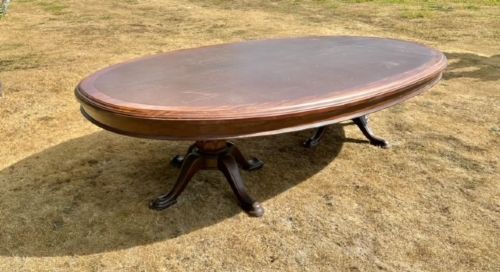
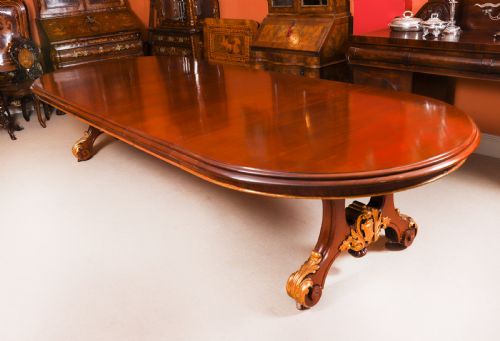
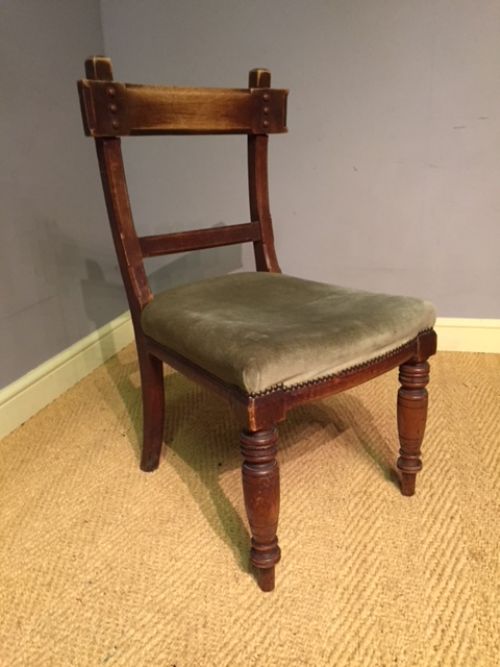
Antique boardroom furniture brings together substantial mahogany, oak and rosewood tables with matching chairs designed for large gatherings.
Antique Boardroom Furniture
When you search for antique boardroom furniture, you encounter large scale seating and expansive tables designed to command a substantial room. The pieces on this page span the nineteenth century, the Edwardian era and the 1920s, reflecting the grand scale demanded by formal meeting spaces and large dining rooms.
Origins and styles range widely across the selection, featuring Regency, Victorian, William IV and French Art Deco aesthetics. Makers such as Wylie & Lochead, Whytock & Reid and Gillows occasionally appear, grounding the category in historic cabinet-making traditions.
Materials and construction
Timber selection dictated the gravity of boardroom pieces, with solid mahogany, oak and rosewood providing both structural strength and visual presence. Workshops utilised brass for castors and mechanisms, alongside leather for upholstery and gold leaf for decorative accents.
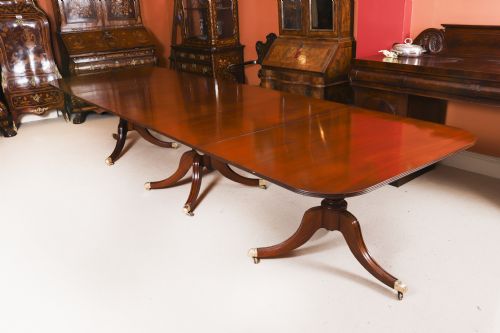
Tables were engineered with multiple pillars, pedestals or extending leaves to support immense weight while allowing the surface area to expand. Chairs were built in large sets from durable hardwoods to withstand frequent use in communal settings.
One monumental Irish Regency table listed here seats twenty-six guests and requires five separate leaves to reach its full extent.
Assessing quality and proportion
The distinction between standard utility and finer achievement lies in the ambition of the timber grain and the integrity of the extending mechanism. Superior examples display carefully chosen mahogany or rosewood veneers and well-balanced proportions that manage great length without sagging.
Carving and decorative detailing separate basic workshop output from master cabinet-making. Pieces bearing attributed or known maker marks, alongside harmonious matching chair sets, represent the upper tier of the category.
Wylie & Lochead·Whytock & Reid·Gillows
The Antique Boardroom Furniture Glossary
- Pedestal table
- A table supported by one or more central columns rather than four corner legs. This construction allowed greater legroom for seated participants.
- Extending dining table
- A table fitted with internal runners and removable leaves to alter its length. It allowed nineteenth-century hosts to adapt furniture for larger gatherings.
- Reformed Gothic
- A nineteenth-century design style reviving medieval architectural motifs with a geometric, rationalised approach. It appeared on oak tables and seating of the period.
- Triple pillar
- A table base configuration utilising three separate pedestals placed along the central axis. This arrangement provided necessary structural support for exceptionally long surfaces.
- Regency revival
- A twentieth-century movement recreating the classical elegance of the early nineteenth century. Pieces in this style often utilised traditional mahogany construction methods.
Antique Boardroom Furniture: Frequently Asked Questions
How do extending tables work?
Extending tables utilise internal wooden runners that pull apart to create a gap in the centre. Additional removable leaves are then inserted into this space to increase the surface area.
This mechanism allowed large tables to shrink for daily use and expand significantly when hosting formal gatherings.
Which woods were used most often?
Mahogany remains the dominant timber across the selection, valued for its deep colour and structural stability. Oak and rosewood also appear frequently, particularly in Gothic and Art Deco pieces.
Secondary materials include brass for mechanical hardware and leather for chair upholstery.
How can I identify different stylistic periods?
Stylistic periods are identified through specific decorative vocabulary and structural proportions. Regency and William IV pieces often display classical architectural influences, while Victorian examples embrace heavier carved details.
Edwardian and 1920s pieces introduce lighter proportions or geometric Art Deco lines while retaining traditional timber construction.