
Antique Blue Sapphire
Antique blue sapphire jewellery gathers deep corundum stones into platinum and gold settings spanning Victorian, Edwardian, Art Deco and mid-century eras.
Antique Blue Sapphire
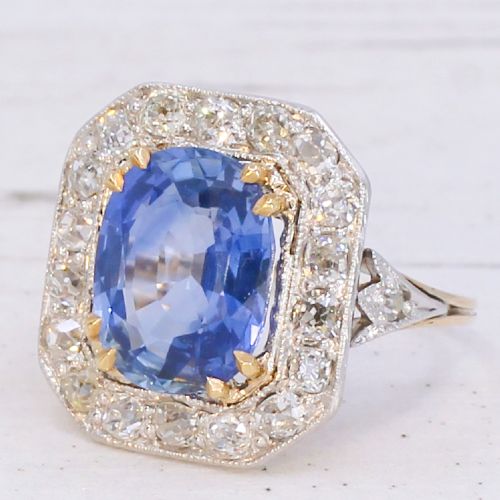
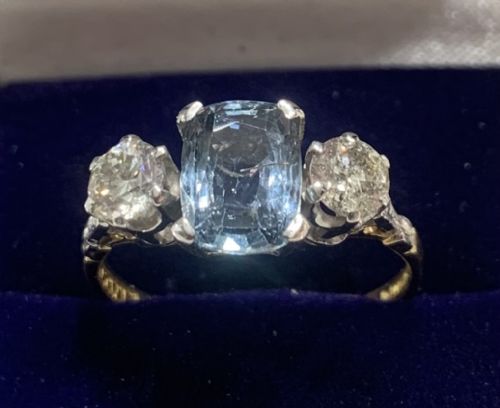
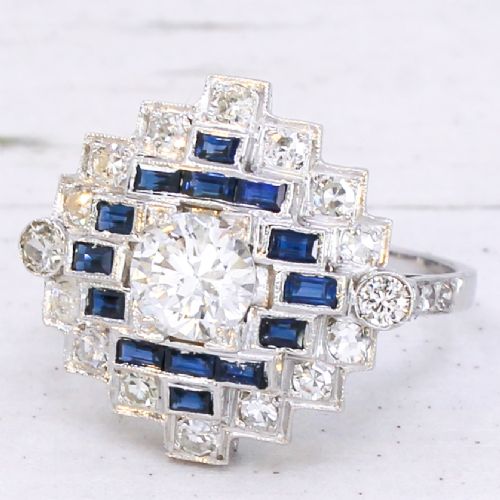
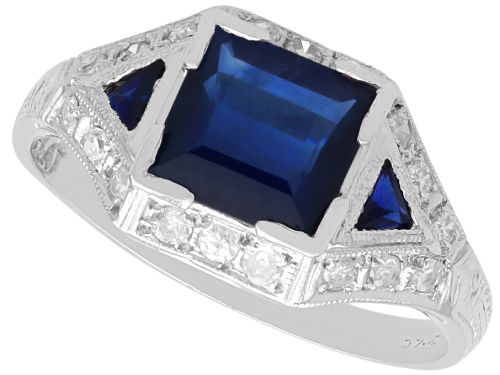
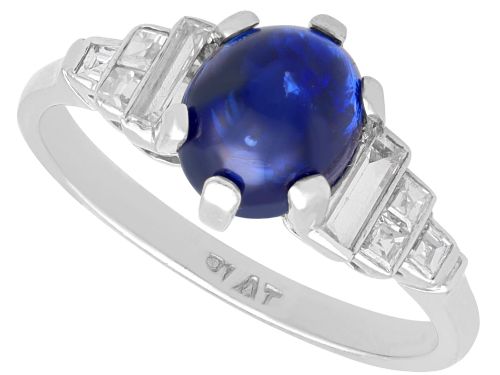
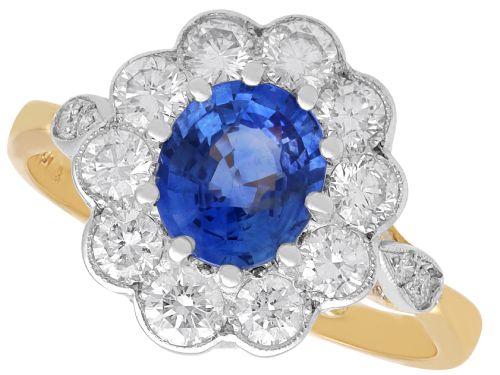
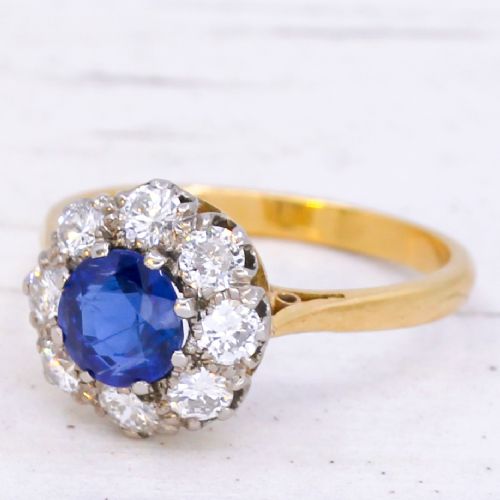
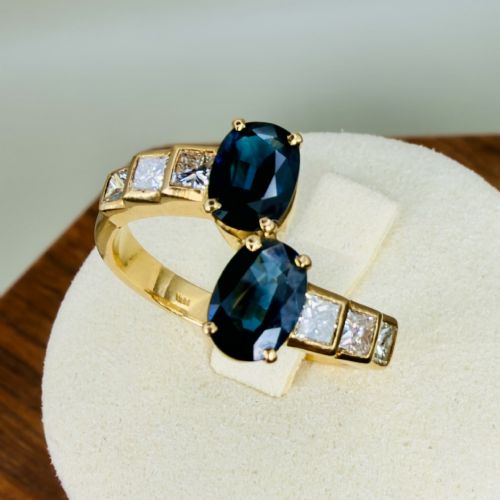
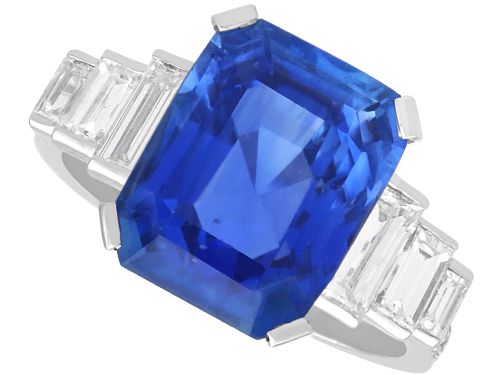
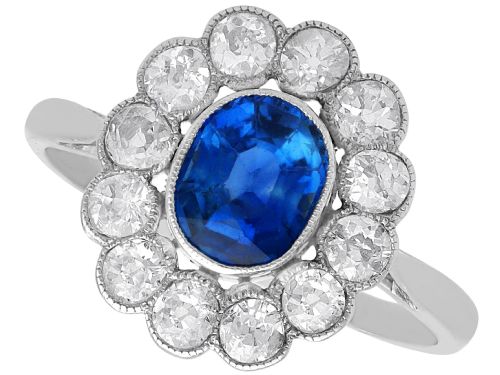
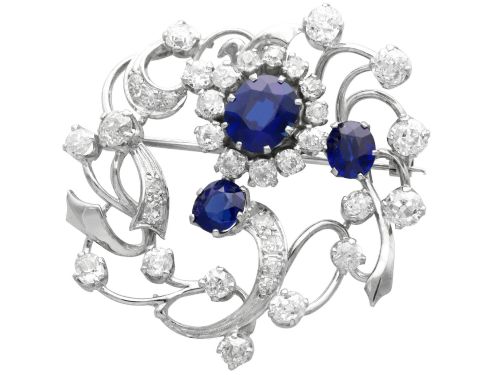
An antique blue sapphire search uncovers a diverse array of jewellery forms including rings, pendants, bracelets, earrings, brooches and complete sets. Cluster rings dominate the selection, pairing central blue stones with surrounding diamond halos in geometric Art Deco or delicate Edwardian layouts.
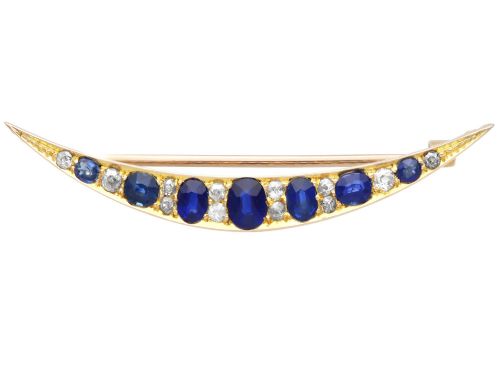
The objects span from late Victorian boat rings and crescent brooches through to 1960s modern cocktail pieces. Makers of the early twentieth century utilised platinum frames to mount substantial Ceylon, Burmese and basaltic sapphires alongside old-cut diamonds.
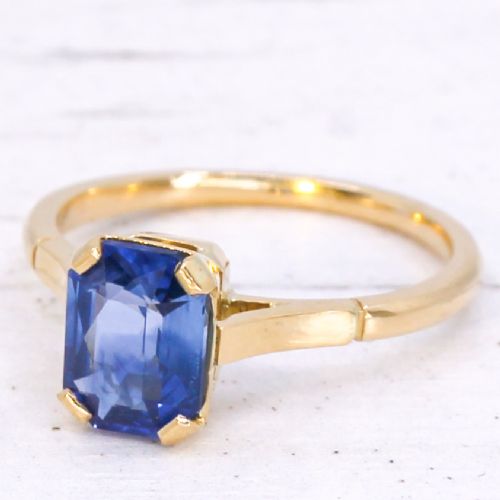
Buyers encounter pieces ranging from delicate gold daisy rings to heavy platinum line bracelets and drop earrings. Each era brings distinct characteristics, from the low-profile yellow gold work of the nineteenth century to the stark white metal geometry of the 1920s and 1930s.
How they were made
Goldsmiths and platinumsmiths constructed these pieces by hand, mounting stones into milled settings, claw mounts and bezel frames. Platinum gained widespread favour during the Edwardian and Art Deco periods for its strength, allowing intricate wirework and knife-edge bars that maximised light exposure to the stones.
Yellow gold and white gold served as primary metals for Victorian, mid-century and certain Art Deco designs, often combined with silvered tops to enhance diamond sparkle. Stones were hand-cut into old mine cuts, oval facets and transitional cuts, tailored precisely to the natural shape of the rough crystal.
Victorian makers occasionally hid secret love messages within multi-stone cluster rings by spelling out words using gemstone initials.
What varies in quality
Quality separates through the saturation and origin of the sapphire itself, alongside the precision of the surrounding metalwork. Stones originating from Ceylon or Burma with unheated natural status command attention for their vivid saturation and inner fire, whereas basaltic stones show darker, heavier tones.
The craftsmanship of the setting distinguishes finer workshops from standard production. Master jewellers executed micro-pavé grain settings and pierced gallery work with absolute symmetry, ensuring that structural metal remained minimal while securing substantial carat weights of sapphire and diamond.
The Antique Blue Sapphire Glossary
- Cluster ring
- A ring featuring a central gemstone framed by a cluster of smaller surrounding stones, typically diamonds.
- Basaltic sapphire
- A sapphire originating from alkali basaltic volcanic terrains, often characterised by a deeper, inky blue colour.
- Ceylon sapphire
- A sapphire originating from Sri Lanka, traditionally noted for a bright, vivid blue coloration and high clarity.
- Old cut diamond
- A diamond cut by hand before the standardisation of modern brilliant cutting, featuring a smaller table and larger culet.
- Platinum
- A dense, durable white metal widely utilised in fine jewellery manufacture during the Edwardian and Art Deco eras.
Antique Blue Sapphire: Frequently Asked Questions
How do I care for an antique sapphire ring?
Sapphires score nine on the Mohs hardness scale, making them durable for regular wear, though antique settings require gentle handling. Clean the metal and stones using warm soapy water and a soft brush, avoiding harsh chemical dips that might harm surrounding gold or silver.
Store pieces individually in padded boxes to prevent diamonds from scratching softer adjacent metals. Regular checks by a jeweller ensure antique claws and platinum settings remain secure around the central sapphire.
Can I wear an antique blue sapphire bracelet daily?
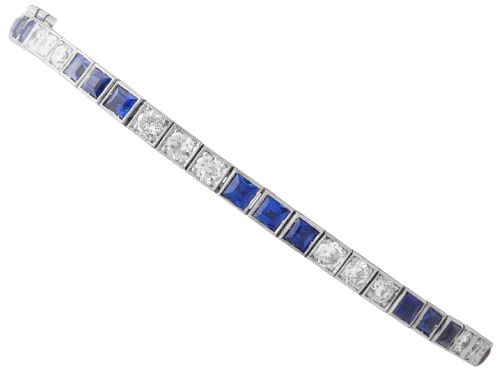
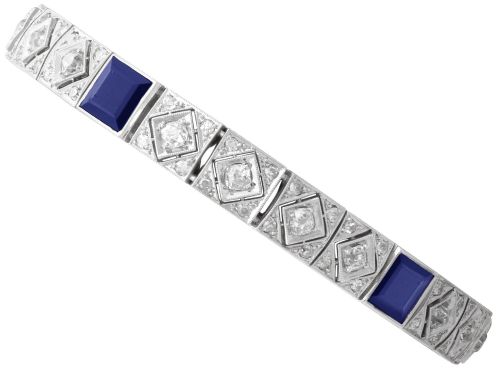
Platinum and gold line bracelets from the Art Deco period were engineered for durability, yet historic clasps and articulated links demand mindful wear. Removing the bracelet during heavy manual tasks protects the structural integrity of old settings and delicate hinge mechanisms.
Inspect the safety chains and box clasps periodically to safeguard against accidental loss during social wear. Treating these survivals with care preserves their original craftsmanship for future decades.
How do I identify an Art Deco sapphire piece?
Art Deco jewellery relies on geometric symmetry, strong lines and widespread utilisation of platinum alongside white gold. Cluster rings and bracelets from this era often feature calibré-cut stones or structured diamond halos framing deep blue sapphires.
The aesthetic rejects flowing Victorian curves in favour of architectural motifs, step-cut facets and sharp angles. Makers balanced heavy central carat weights with precise openwork galleries characteristic of the 1920s and 1930s.
What distinguishes an Edwardian sapphire pendant?
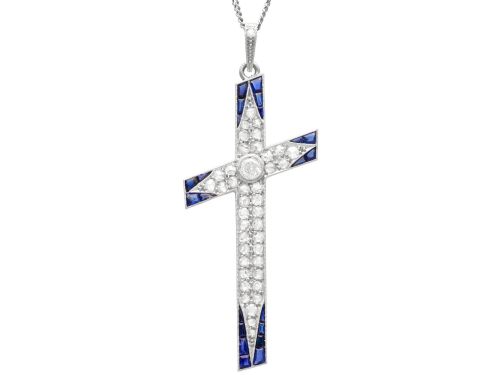
Edwardian pendants incorporate delicate platinum and yellow gold wirework, often taking the form of garlands, bows or open geometric drops. These pieces frequently pair pale or vivid blue sapphires with old-cut diamonds suspended on fine metallic chains.
The style emphasises lightness and lace-like intricacy, reflecting the technical capacity of platinum to support stones with minimal visible metal. Makers created airy, graceful compositions that contrast sharply with heavier Victorian cluster designs.