



Antique Blue Chaise
An antique blue chaise brings nineteenth-century French and Victorian elegance to a room, offering a long seat designed for comfortable daytime reclining.
Antique Blue Chaise
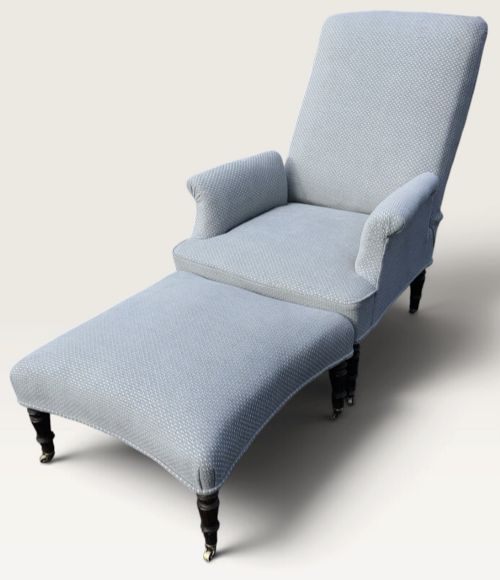
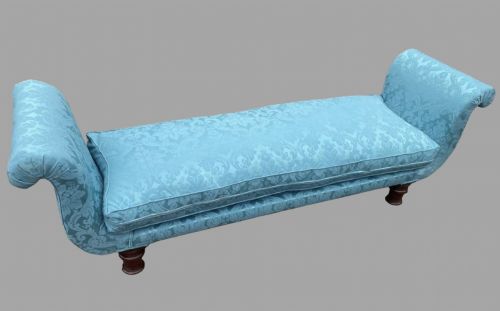
When you search for an antique blue chaise, you encounter nineteenth-century daybeds, chaise longues, and French lit bateau forms upholstered in blue cotton, velvet, and damask fabrics. These seating pieces span the Victorian era and nineteenth-century French Empire styles, often incorporating timber structures such as mahogany.
You are most likely to meet nineteenth-century English and French examples on this page, ranging from standard Victorian chaise longues to kidney-shaped sofas and reclining day beds. Makers such as Howard and Sons and Miles & Edwards appear among these nineteenth-century forms.
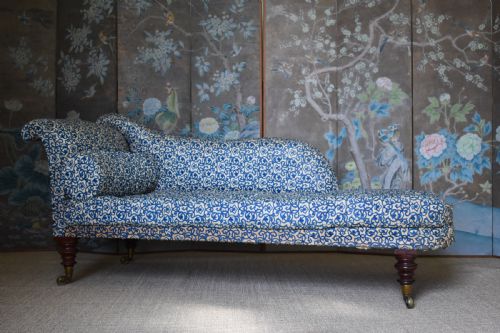
The defining characteristic across these listings is the elongated seat designed for reclining, paired with blue upholstery fabrics that range from damask to velvet. Timber frames support these textiles, occasionally featuring turned legs and original castors.
Materials and construction
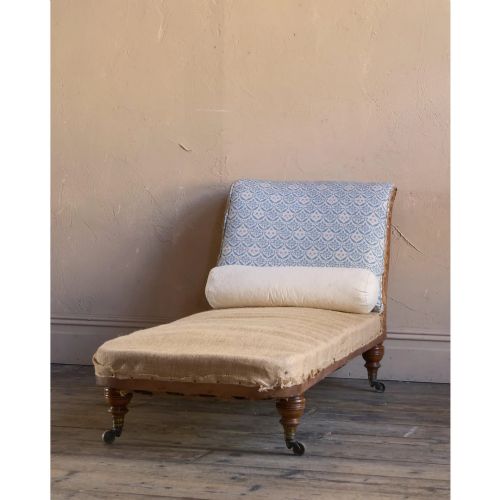
Makers built these frames using timber, specifically mahogany, shaping the wood to form the curved backs and structural foundations of chaise longues and daybeds. Turned legs provide support on specific Victorian day bed examples.
Upholstery defines the character of each piece, utilising materials such as cotton, velvet, and damask upholstery in blue shades. Brass components, including original castors, frequently complete the lower assembly of these nineteenth-century seats.
Antique Blue Chaise Retail Price Guide 2026
Typical asking prices for blue chaise among the pieces listed under this phrase on Sellingantiques today, from the lower quarter to the upper quarter. They describe what is for sale here now, not the wider market.
Castors ensure these grand nineteenth-century day beds can roll smoothly across the floor whenever the household decides to rearrange the parlour.
Judging quality and execution
Quality rests upon the distinction of the maker and the integrity of the frame, with pieces by recorded firms such as Howard and Sons or Miles & Edwards holding particular standing. The sophistication of the timber carving and the retention of original elements, including castors, separate standard production from superior examples.
The execution of the textile work determines visual success, where the choice of damask, velvet, or cotton upholstery complements the proportions of the day bed or chaise longue. Finer pieces demonstrate harmonious lines across the French Empire and Victorian styles.
Howard and Sons·Miles and Edwards
The Antique Blue Chaise Glossary
- Chaise longue
- An elongated chair for reclining, literally translating from French as long chair. These seating pieces typically feature a single raised backrest at one end.
- Lit bateau
- A French bed style with parallel head and footboards resembling a boat, seen in nineteenth-century examples. The curving wooden frame shapes the silhouette.
- Damask
- A reversible figured fabric traditionally used for upholstery and drapery. It displays woven patterns that catch the light across blue surfaces.
- Castor
- A small wheel mounted on a swivel attached to the legs of furniture. Original brass versions allow nineteenth-century day beds to move across floors.
Antique Blue Chaise: Frequently Asked Questions
What is an antique blue chaise?
An antique blue chaise is a nineteenth-century reclining seat or daybed upholstered in blue fabrics such as damask, velvet, or cotton.
These pieces encompass Victorian and French Empire styles, utilising timber frames including mahogany.
How do I use a chaise longue?
A chaise longue is designed for daytime reclining, offering an extended seat where you can sit with your legs stretched out.
Historically placed in bedrooms, boudoirs, or large reception rooms, they serve as both sculptural seating and functional rest furniture.
How do I identify a Victorian chaise?
Victorian examples often feature exposed timber frames, turned legs, and brass castors supporting the upholstered body.
Stylistic cues link them to nineteenth-century British cabinet makers and upholsterers working within domestic revival periods.
What is a lit bateau?
A lit bateau is a nineteenth-century French daybed form featuring curving ends that recall the shape of a boat.
These forms emphasise symmetry in the woodwork, framing the upholstered mattress or seat base.