







Antique Blown Glass Carafe
An antique blown glass carafe brings handmade warmth and rich colour to a table, offering tactile weight and historic charm.
Antique Blown Glass Carafe
An antique blown glass carafe encompasses serving bottles, water jugs, ewers, and decanters shaped by the breath and hand of the glassmaker. These vessels bridge utilitarian dining needs and decorative arts, originating primarily from Victorian, Edwardian, and Art Deco periods, alongside earlier Georgian and 19th-century examples.
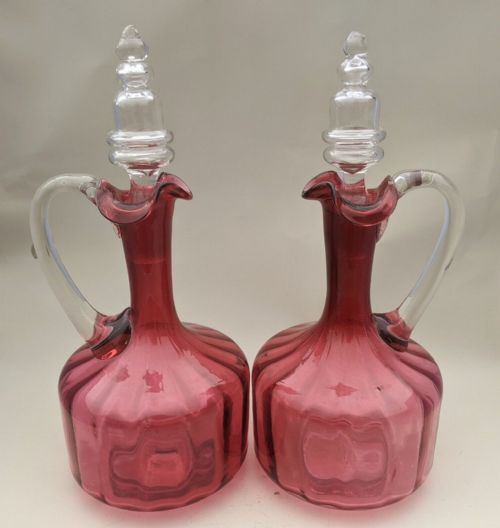
The pieces on this page span British, French, Venetian, and Bohemian workshops, reflecting a wide geographical spread of glasshouses. Forms range from shaft and globe shapes to optic-blown vessels and figural designs such as dogs, utilising colours like cranberry, green, amber, and Bristol blue.
Buyers encounter traditional wine decanters, cider decanters, and tall water jugs intended for hospitality and display. Each piece carries the distinct irregularities of manual production, marking it apart from later industrial manufacturing.
Materials and technique
Makers formed these vessels using traditional glassblowing techniques, often gathering molten metal on a blowpipe and expanding it within a mould or freehand. Optic-blowing created internal ribbed patterns within the glass body, while applied elements such as handles and collars were fused while hot.
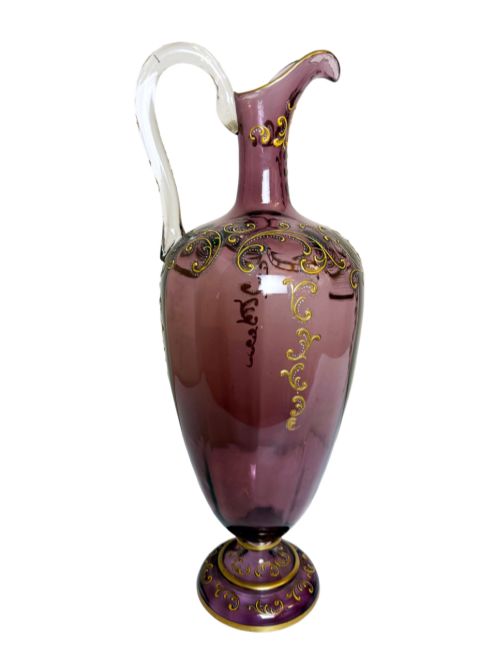
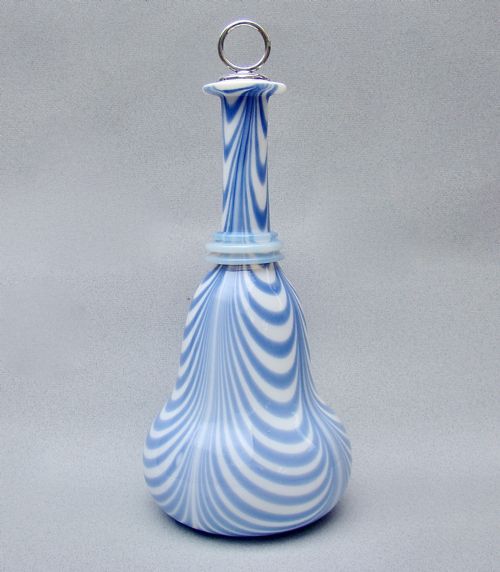
Decoration relied on hand-painting with enamel, delicate gilt applique, and embedded white glass threads known as latticinio work. Some examples incorporated metal mounts, including silver plate and Old Sheffield Plate, combining glass production with metalworking traditions.
Antique Blown Glass Carafe Retail Price Guide 2026
Typical asking prices for blown glass carafe among the pieces listed under this phrase on Sellingantiques today, from the lower quarter to the upper quarter. They describe what is for sale here now, not the wider market.
One cheerful Victorian vessel takes the sculptural form of a dog, ready to hold your table water.
Distinctions in quality
Quality rests in the skill of the blower and the clarity or richness of the metal itself, seen in the depth of cranberry and amber glass tones. Superior pieces display balanced proportions, clean pontil marks, and precise application of enamel or gold leaf.
The involvement of known designers or documented firms elevates a piece, as does the crispness of hand-engraving or specialised techniques like Nailsea loopings. A successful composition balances the weight of the glass body with the comfort and form of the handle or neck.
James Powell·Archibald Knox for Liberty·Stevens and Williams·Pauly and Co.
The Antique Blown Glass Carafe Glossary
- Pontil mark
- The rough scar left on the base of a vessel where the punty rod was detached after blowing. It serves as an indicator of hand-blown manufacture.
- Latticinio
- Opaque white glass threads embedded within clear or coloured glass, often arranged in twisted or netted patterns. This technique originates from Venetian traditions.
- Optic blown
- A method where glass is inflated inside a ribbed mould to create a pattern of indentations on the interior or exterior. It lightens the vessel while adding texture.
- Ewer
- A large jug with a wide spout and a curved handle, traditionally used for holding and pouring water or wine. Victorian examples frequently feature elaborate applied decoration.
- Nailsea type
- Glassware characterised by looped or splashed white or coloured enamel threads over a contrasting ground. The style originated in English glassworks during the 19th century.
Antique Blown Glass Carafe: Frequently Asked Questions
Can I use these carafes for serving wine today?
Many Victorian and Edwardian examples remain fully functional for serving water, wine, or spirits at the table.
Inspect the interior for residue and check that any historic glass remains stable before pouring beverages.
How do I identify a Victorian piece?
Victorian vessels often display rich cranberry, green, or Bristol blue tones, frequently combined with hand-painted enamel or gilt decoration.
Examining the weight, the presence of a polished or rough pontil mark, and the stylistic cues of the period helps confirm the era.
What is the difference between a carafe and a decanter?
Carafes generally feature open necks designed for immediate table service of water or young wines.
Decanters more often include fitted stoppers intended for storing and serving spirits or aged wines over longer periods.