






Antique Billiards Score Board
An antique billiards score board keeps the tally in style, bringing rich timber and sliding markers to the games room.
Antique Billiards Score Board
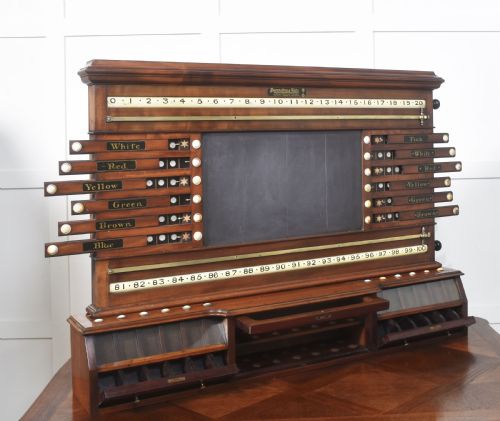
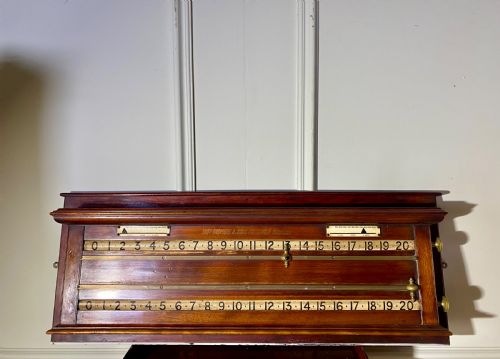
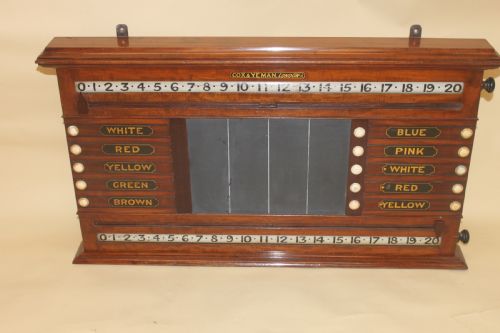
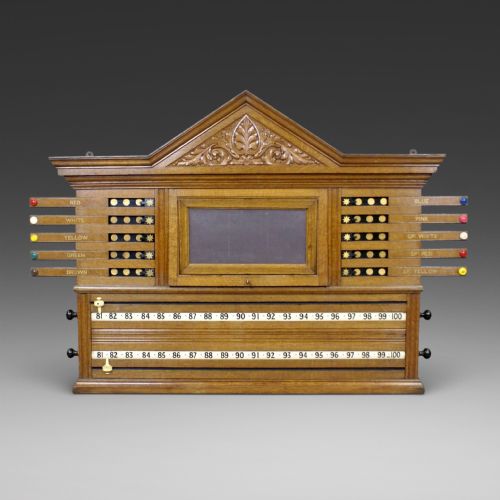
An antique billiards score board is a purpose-built wall marker used to track points in cue sports like snooker, pool, and life pool. When browsing this selection, you encounter substantial timber wall pieces designed to withstand the vigorous atmosphere of Victorian and Edwardian games rooms.
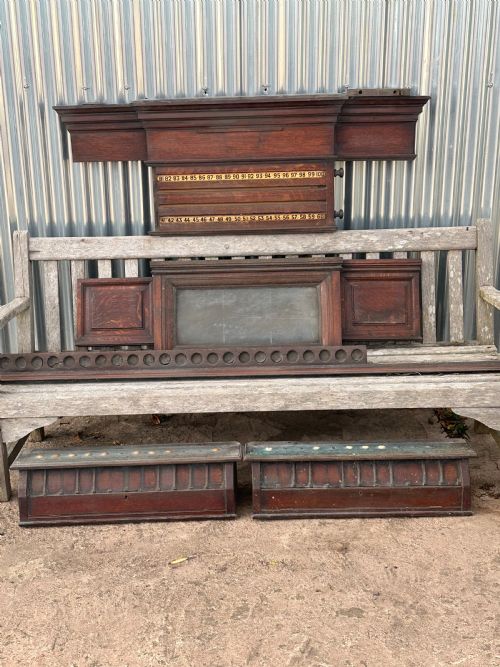
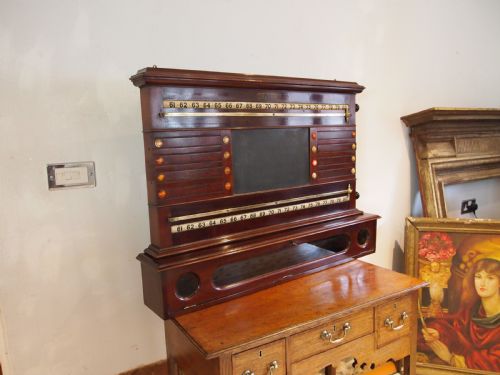
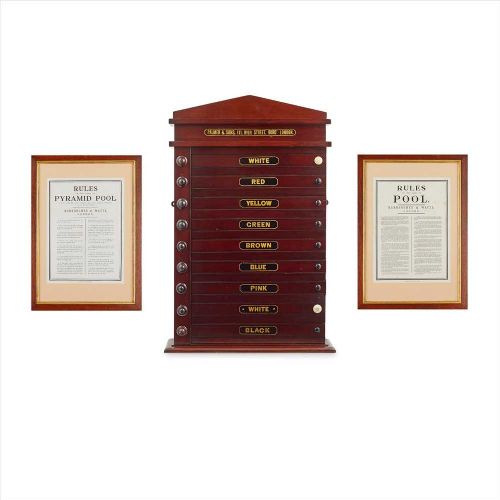
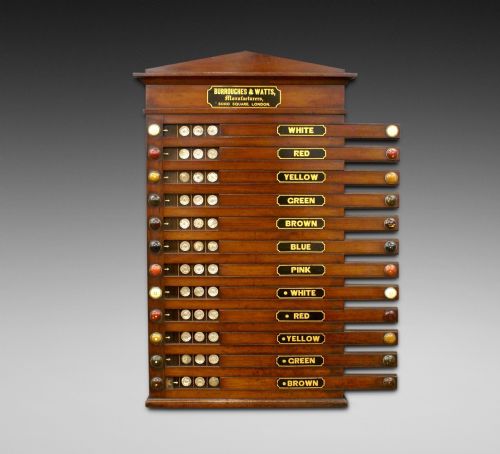
The versions most commonly met on this page span the nineteenth century into the Edwardian era, taking the form of straightforward wall-mounted scoring boards or extensive score cabinets. These objects range from simple two-player tallies to large, twelve-player boards equipped with sliding pointers and brass dials.
What varies in quality
Quality in an antique billiards score board lies in the ambition of the maker and the choice of materials, moving from simple pine and mahogany constructions to large, heavily carved oak or walnut cabinets. Superior examples display refined cabinet-making, incorporating integrated glazed compartments and finely turned brass components.
The sophistication of the scoring mechanism marks the upper tier of pieces, featuring complex multi-player layouts for life pool alongside standard snooker tracks. Maker attribution to prominent nineteenth-century firms further elevates a board, distinguishing standard workshop production from high-end billiard room fittings.
Some boards include little wooden panels that slide shut to hide your opponent's crushing lead.
Orme & Sons Manchester·Thurston & Co of London·Cox & Yeman London·Burroughes and Watts·Palmer & Sons
The Antique Billiards Score Board Glossary
- Life Pool
- A variation of cue sport where each player holds a life, tracked on specialised boards with multiple sliding markers.
- Score Cabinet
- A wall-mounted wooden enclosure housing the scoring tracks alongside storage space for chalk, rules, or accessories.
- Celluloid
- An early thermoplastic material frequently utilised for number panels or sliding pointers on Victorian and Edwardian boards.
- Marker
- The sliding pointer or indicator moved along the brass rods or wooden tracks to register points during a game.
Antique Billiards Score Board: Frequently Asked Questions
What is the difference between a board and a cabinet?
A standard scoreboard consists of an open wooden backboard featuring numbered tracks and sliding pointers for tracking scores. Cabinets enclose the scoring mechanism behind doors and often provide interior shelving or compartments for billiard accessories.
While boards mount flat against the wall as functional markers, cabinets offer a more substantial architectural presence in a games room. Both types utilise the same brass and timber construction methods typical of the Victorian and Edwardian periods.
Can I still use an antique board for modern games?
These boards function perfectly well for contemporary games of snooker, pool, and billiards, as the traditional scoring numbers apply directly to modern rules. The sliding markers and brass dials operate independently of electricity, relying on the original mechanical tracks.
Careful handling of bone, celluloid, and wooden pointers preserves the historic mechanism during active play. Most nineteenth-century boards retain enough flexibility in their sliding tracks to accommodate regular friendly matches.
How do I distinguish a Victorian board from an Edwardian one?
Victorian scoreboards typically display darker mahogany timbers, heavier mouldings, and straightforward functional layouts designed for nineteenth-century billiard halls. Edwardian examples often favour lighter oak or English walnut, sometimes incorporating decorative Arts and Crafts or Edwardian cabinet detailing.
Maker signatures, style of lettering on the scoring scales, and the choice of wood provide clear chronological indicators. Comparing the complexity of the pool tracks also helps separate mid-nineteenth-century pieces from later twentieth-century productions.