




Antique Biedermeier Sofa
An antique biedermeier sofa brings restrained nineteenth-century geometry and figured timber into a modern interior.

Antique Biedermeier Sofa
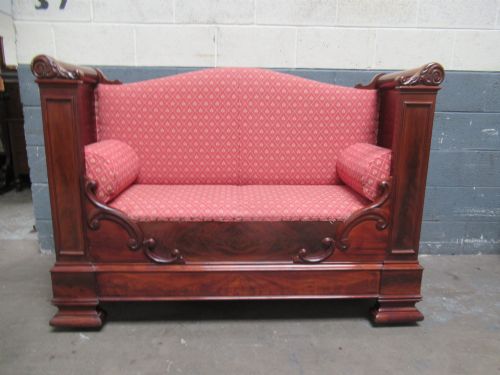
An antique biedermeier sofa is a nineteenth-century seating form defined by clean architectural lines and expressive wood grains. The pieces found here span the nineteenth century, including Empire Revival and Swedish Empire variations alongside core Biedermeier examples.
Buyers most frequently meet nineteenth-century birch, burr birch, and mahogany settees and sofas. These range from smaller Swedish birch designs to larger German flame mahogany couches and multi-piece living room suites.
How they were made
Cabinetmakers constructed these frames using solid woods like birch, maple, and mahogany, frequently applying flame mahogany and burr birch veneers to create striking surface patterns. Ebonised wood and ormolu mounts provided sharp contrast and decorative accent.
Upholstery completed the seating, paired with carved details and marquetry work in specific regional interpretations such as Dutch and Scandinavian pieces.
One nineteenth-century suite contained seven matching pieces, proving that nineteenth-century households took serious upholstery very seriously indeed.
What varies in quality
Quality rests upon the selection and matching of wood veneers, particularly the grain movement across broad surfaces of burr birch and flame mahogany. Superior examples display thoughtful timber selection that frames the rectilinear geometry of the form.
The precision of the joinery and the restraint of the carved or cast ormolu mounts further distinguish finer pieces from simpler utilitarian seating.
The Antique Biedermeier Sofa Glossary
- Biedermeier
- A Central European style dating from the nineteenth century characterised by utilitarian comfort and neoclassical lines. It prioritises clean forms and figured wood veneers over heavy ornamentation.
- Burr birch
- A timber growth that produces intricate, swirling grain patterns highly prized for veneer work. Cabinetmakers used it to cover flat surfaces on tables and seating.
- Flame mahogany
- A veneer cut from the fork of a mahogany tree that creates a distinctive flame-like pattern. It provides rich visual movement on nineteenth-century furniture.
- Ormolu
- Gilded brass applied as decorative mounts on furniture. It accentuates structural lines on tables and sofas.
- Ebonised wood
- Timber treated to resemble ebony, providing dark contrast against lighter birch and mahogany surfaces.
Antique Biedermeier Sofa: Frequently Asked Questions
How do I identify a Biedermeier sofa?
Look for clean architectural lines, exposed nineteenth-century wood frames, and figured veneers such as birch or mahogany without excessive ornamentation.
Swedish and German examples often feature restrained neoclassical proportions that distinguish them from later revival styles.
What woods were used in these sofas?
Cabinetmakers primarily utilised birch, burr birch, satin birch, and mahogany for both solid frames and decorative veneers.
Secondary woods and ebonised details occasionally appear to create contrast on nineteenth-century pieces.
Where were these sofas made?
Production centred largely in Sweden, Germany, and broader Scandinavian and continental regions during the nineteenth century.
Regional workshops adapted neoclassical styles into practical domestic furniture with distinct local timber preferences.
How do I care for nineteenth-century veneer?
Maintain stable room humidity and avoid placing the timber in direct sunlight to protect delicate birch and mahogany veneers.
Clean surfaces gently with a dry or slightly damp cloth, avoiding harsh chemical polishes that damage historic finishes.