

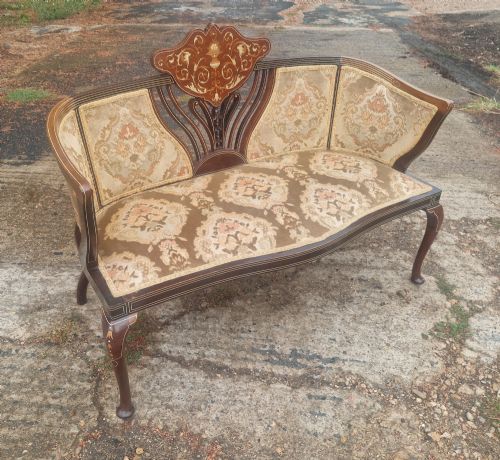
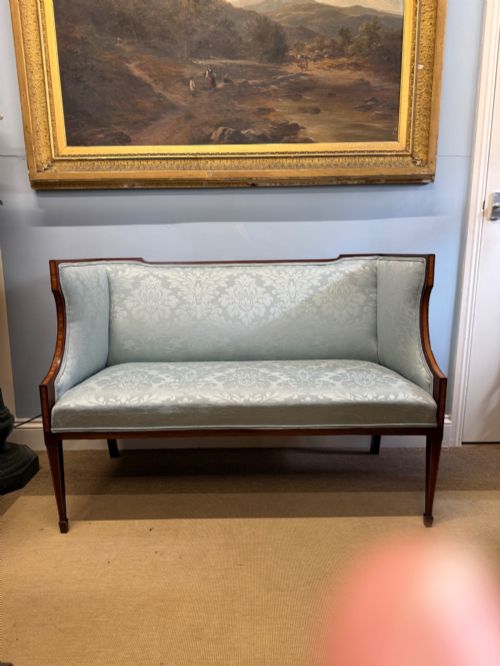
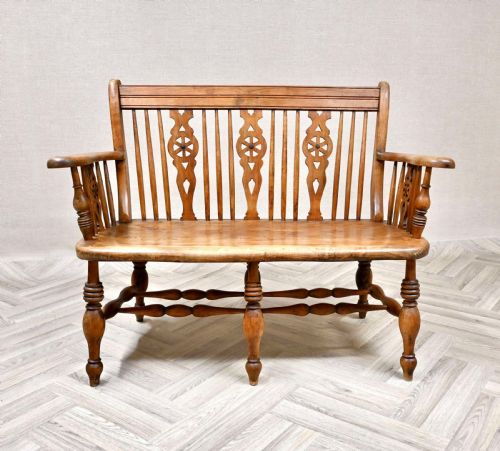
Antique Bench Sofa
When you search for an antique bench sofa, you are looking at dual-purpose seating that merges the solid frame of a bench with upholstered comfort.
Antique Bench Sofa
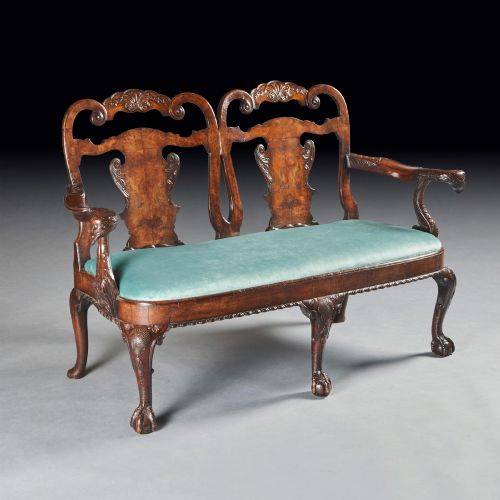
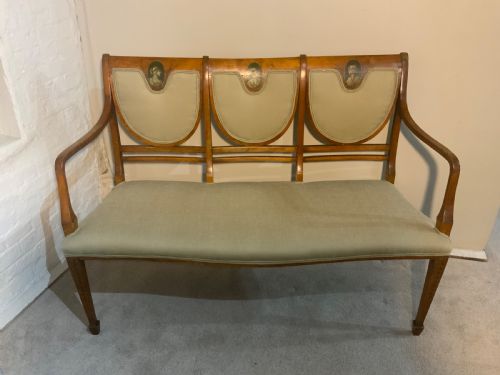
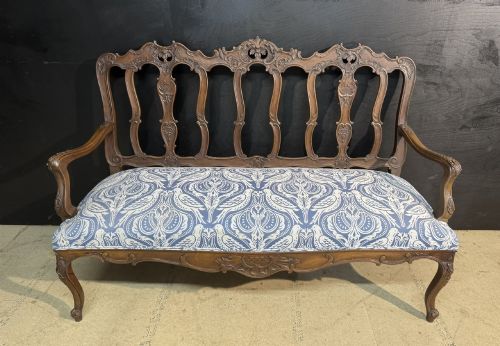
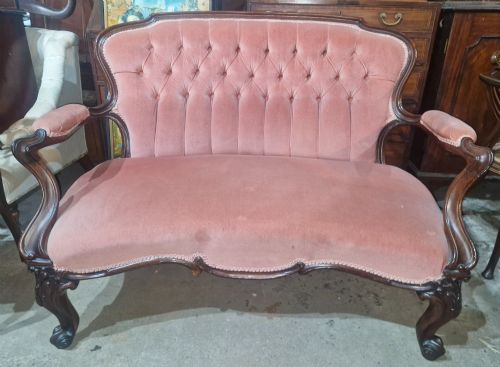
An antique bench sofa spans multiple centuries and forms, incorporating everything from sturdy elm farmhouse settles to elegant rosewood Victorian settees and French giltwood canapés.
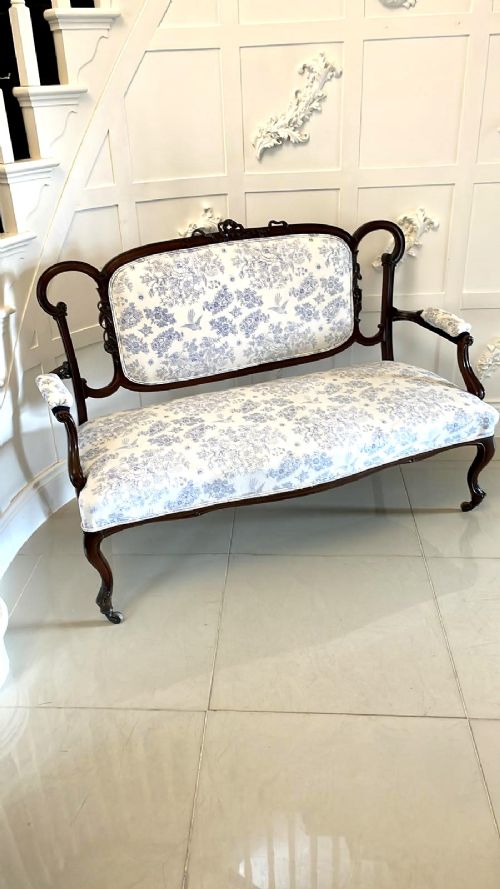
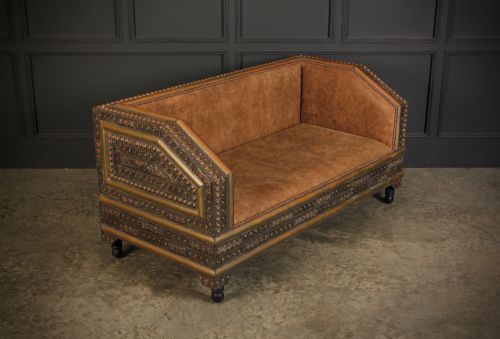
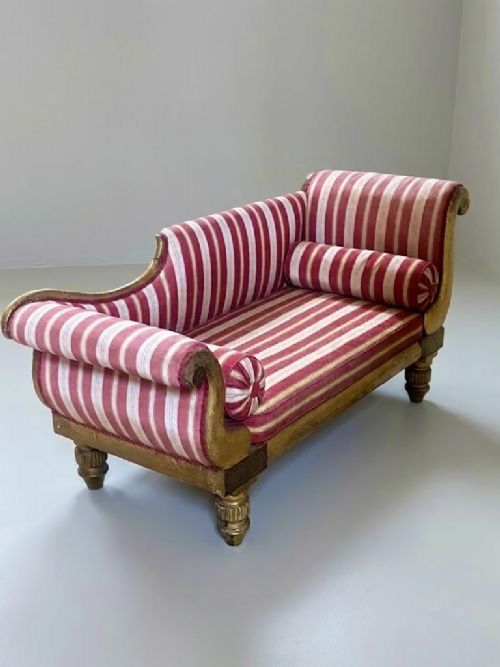
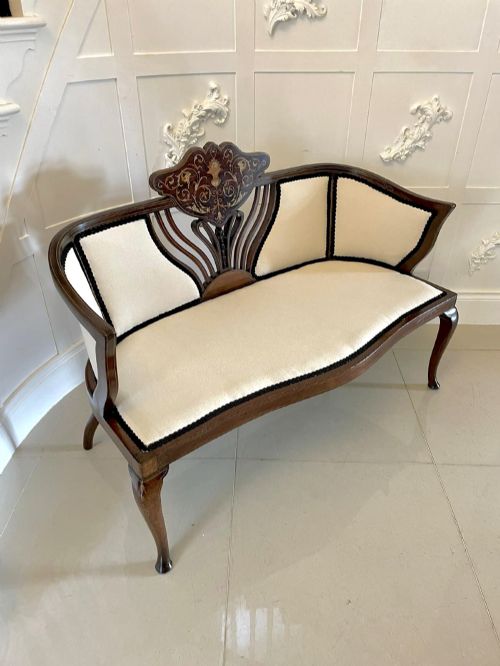
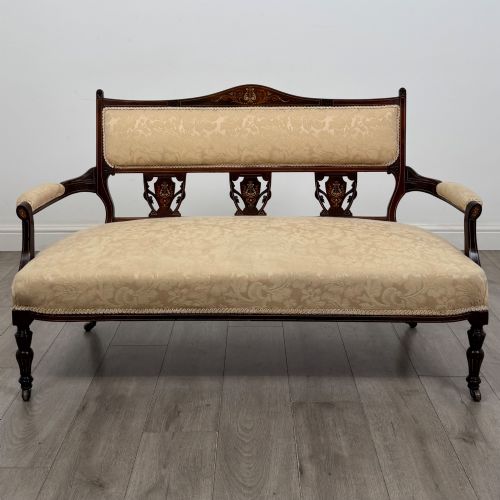
The pieces appearing on this page range from early Georgian mahogany designs and Regency giltwood frames to Edwardian inlaid walnut sofas and rustic nineteenth-century French workbenches.
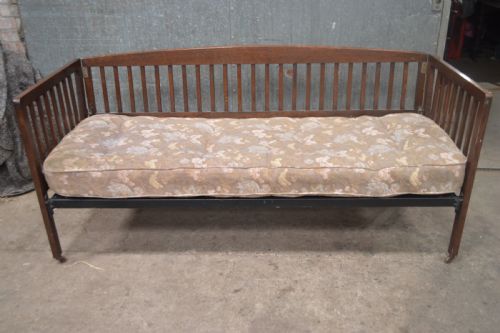
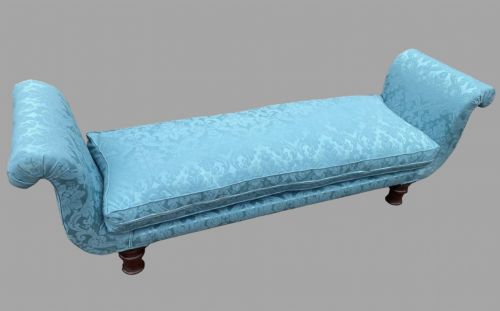
Buyers will encounter diverse formats, including chair-back settees, daybeds, window seats, and spindle-backed salon sofas alongside traditional wooden bench seating.
How they were made
Carpenters and cabinetmakers utilised dense timbers such as mahogany, walnut, rosewood, oak, and satinwood to construct robust structural frames, often integrating intricate hand-carved details.
Finishes varied significantly by period and style, encompassing gilded gesso, parcel gilt, ebonised treatments, and painted surfaces alongside polished natural wood grains.
Upholstered versions relied on traditional padding and webbing techniques, finished with decorative textiles like antique striped silk, patterned fabric, cane webbing, or leather.
Some nineteenth-century French workbenches slip into this category, proving that even a carpenter's heavy clamping bar can double as a seat.
What varies in quality
The integrity of the timber frame and the precision of its joinery set higher-tier seating apart from simpler vernacular examples.
Superior execution shows in the crispness of hand-carved ornamentation, such as lion mask hairy paw feet or intricate back splats, matched with high-grade original or period-appropriate gilding and upholstery materials.
C. Hindley & Sons·Giles Grendey
The Antique Bench Sofa Glossary
- Canapé
- An upholstered French sofa dating from the seventeenth or eighteenth century onwards. These pieces typically feature exposed wooden frames with carved decorative motifs.
- Settee
- A medium-length upholstered wooden bench with a back and armrests. This form evolved during the late seventeenth century and remains distinct from larger multi-seat sofas.
- Settle
- A traditional wooden wooden bench featuring a high solid back to block drafts, enclosed arms, and a box seat for storage. They are frequently found in farmhouse and vernacular contexts.
- Daybed
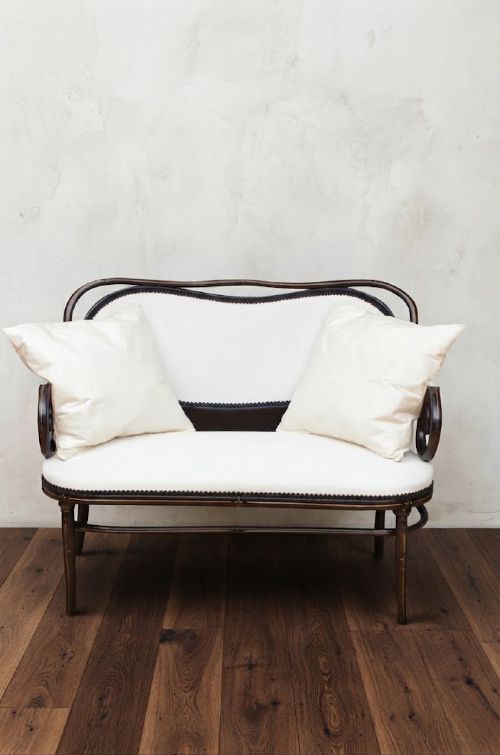
- A long seat designed for reclining, functioning as a combination of chair and bed. Examples range from Regency designs to cast iron and bentwood variations.
- Giltwood
- Timber coated with a thin layer of gold leaf or powder. This finish was heavily utilised across eighteenth and nineteenth-century formal European seating.
Antique Bench Sofa: Frequently Asked Questions
What is an antique bench sofa?
An antique bench sofa is a hybrid seating form that combines the sturdy, architectural timber base of a bench with the upholstered comfort of a traditional sofa or settee. These pieces bridge formal parlour furniture and sturdy vernacular seating.
They encompass diverse regional styles, ranging from French giltwood canapés and Regency rosewood couches to English elm kitchen settles and Edwardian inlaid salon benches.
How do I date an antique sofa?
Dating relies on examining the secondary timbers used in the internal frame, the construction methods of the joinery, and the stylistic vocabulary of the carved elements. Georgian and Regency pieces show distinct classical proportions and cabinetmaking techniques.
Later Victorian and Edwardian examples often incorporate machine-sawn elements alongside hand-finishing, while 1920s pieces frequently embrace simpler lines or revived historical motifs.
Where were bench sofas used historically?
Formal upholstered settees and giltwood sofas were traditionally placed in drawing rooms, salons, and formal hallways of grand townhouses and country estates. They served as refined seating for guests and family.
In contrast, wooden bench seats, settles, and elm kitchen sofas were utilised in domestic farmhouses, country cottages, and rustic halls where durability and wind-blocking high backs took precedence.
How do I care for antique wood and upholstery?
Preserving the timber frame requires maintaining stable room humidity and avoiding direct sunlight to prevent the polish or veneer from drying and cracking. Occasional gentle dusting keeps the carved details clear.
Upholstered sections, particularly those featuring silk, cane, or antique fabric, benefit from careful surface cleaning and protection against heavy friction or moisture.