
Antique Bedroom Storage Press
An antique bedroom storage press brings architectural presence and deep utility to a room, offering hanging space and internal drawers within timbers of genuine character.
Antique Bedroom Storage Press
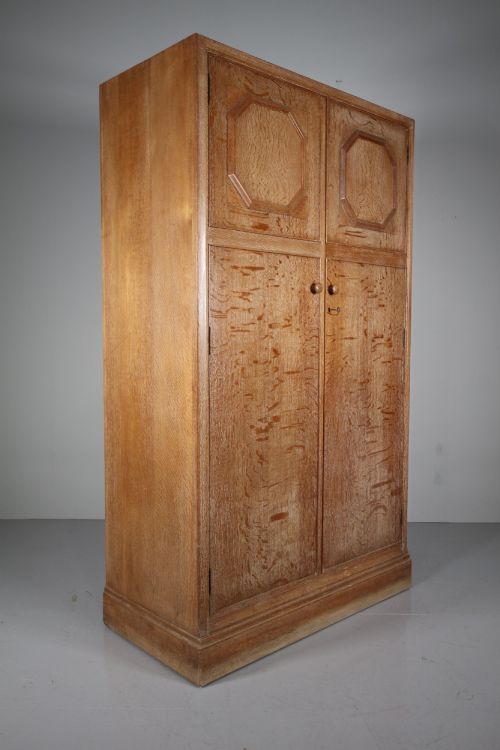
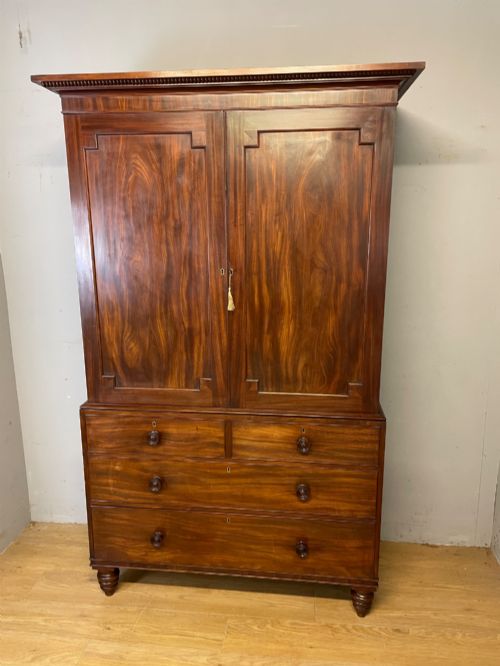
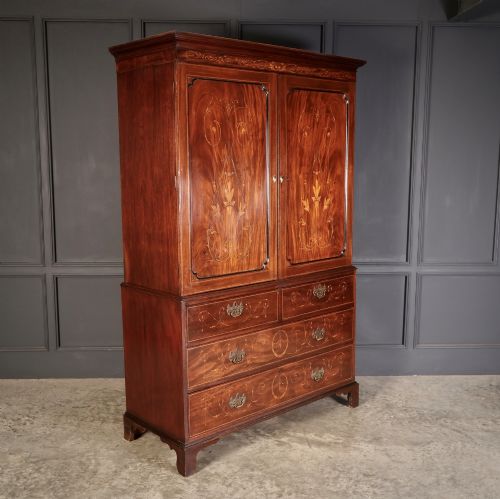
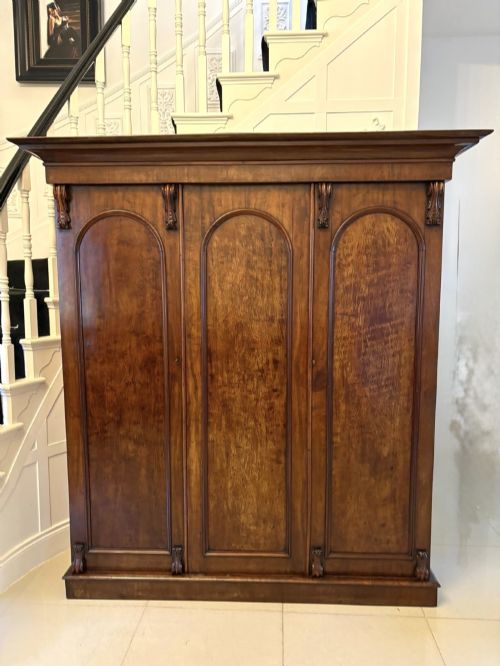
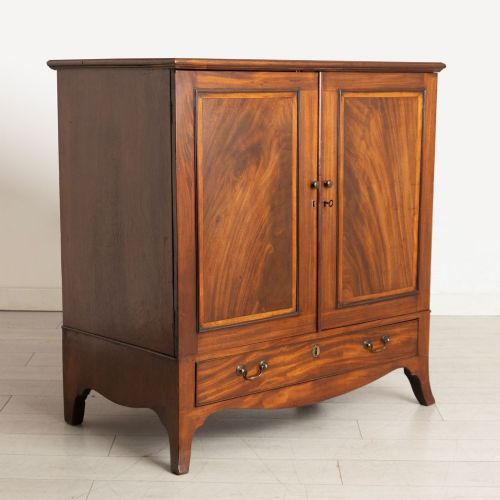
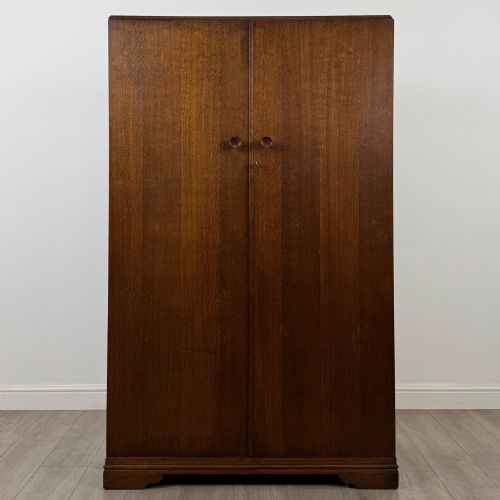
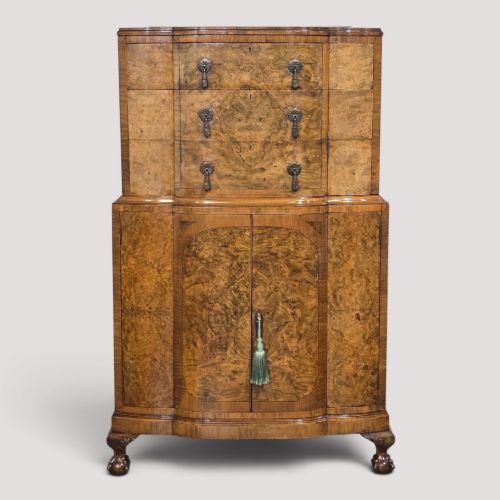
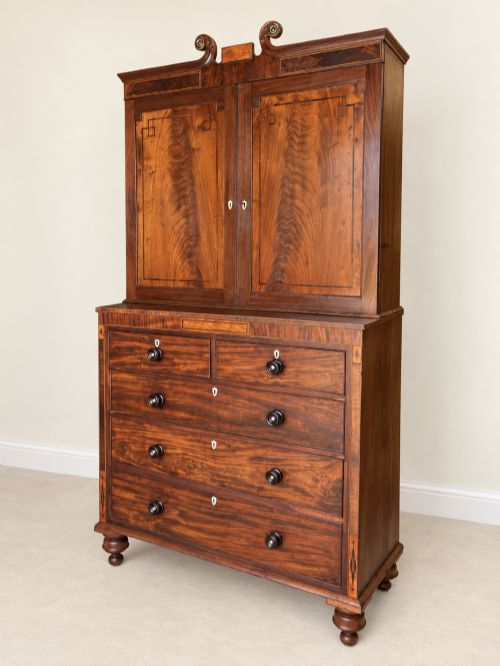
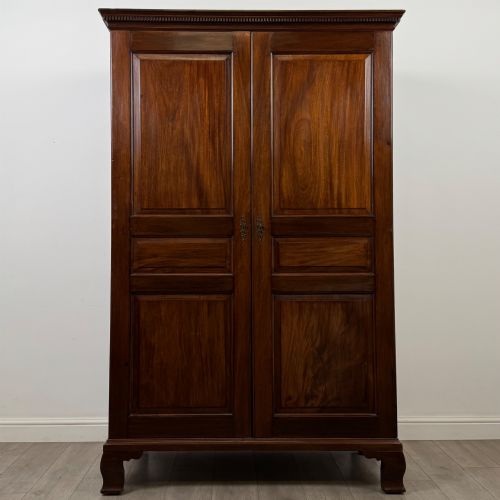
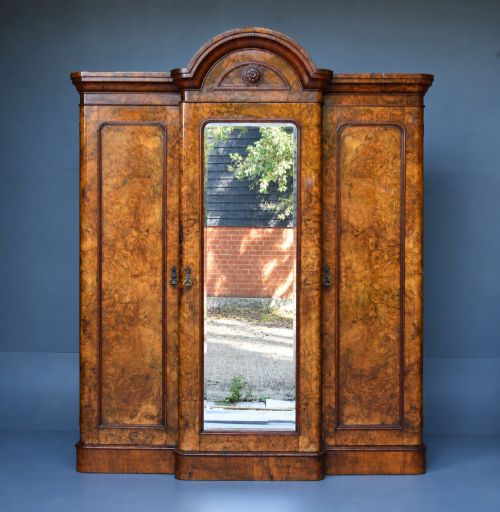
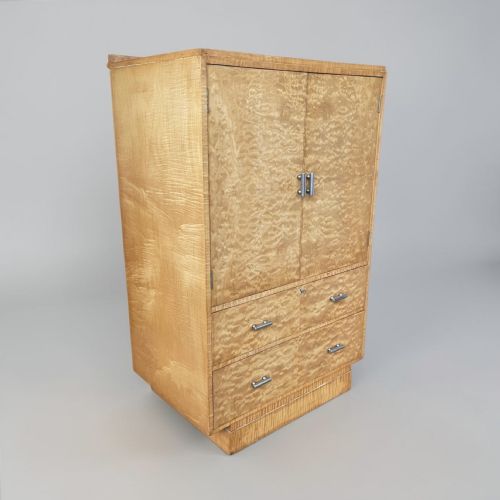
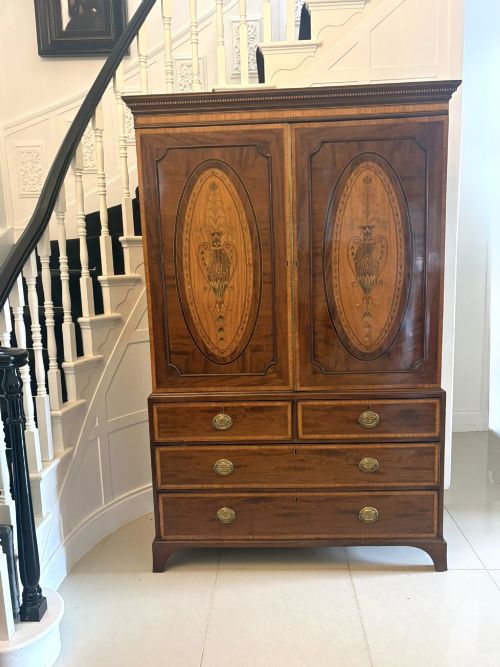
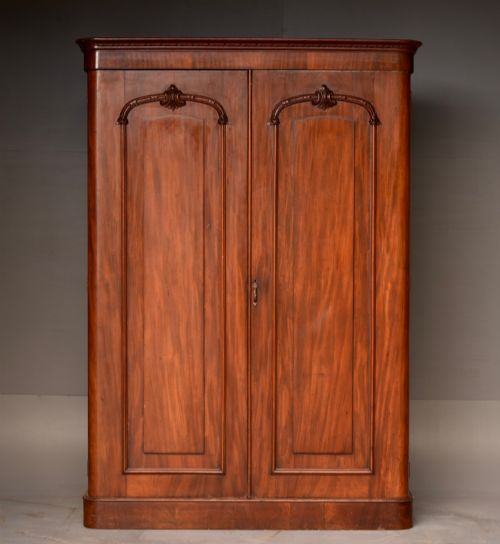
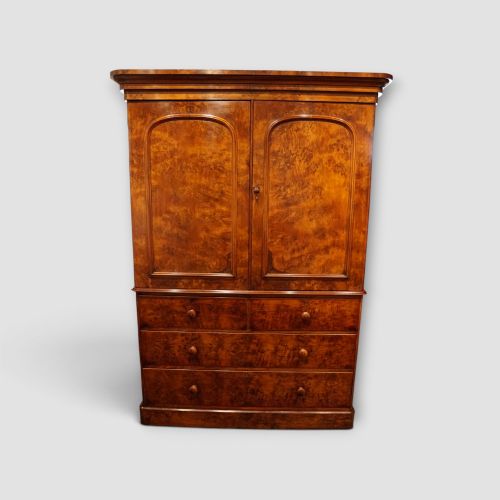
When you search for an antique bedroom storage press, you encounter substantial case pieces designed to hold linen, garments and personal items across multiple tiers and compartments. The pieces meeting this description span utilitarian pine cupboards to formal mahogany linen presses and grand triple wardrobes from the Georgian, Victorian and Edwardian eras.
The most common forms on this page include mahogany linen presses featuring upper cupboard doors hiding sliding trays above lower drawer chests, alongside tallboys, compactums and double or triple wardrobes in walnut and pine. These items evolved to serve the changing storage demands of bedrooms from the eighteenth century through to the early twentieth century.
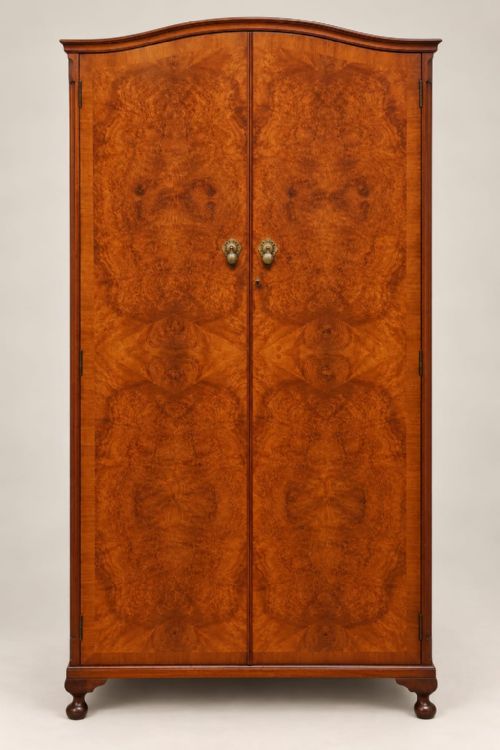
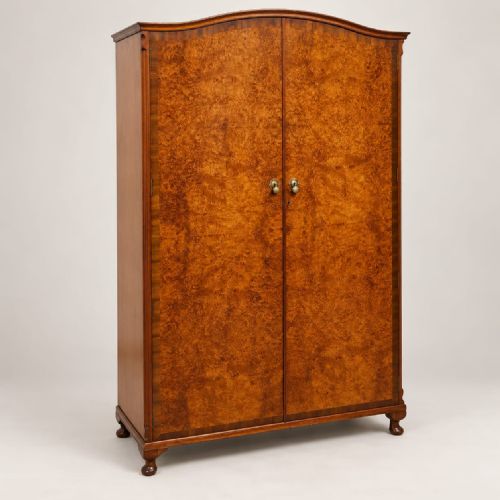
Makers and cabinetmakers constructed these presses using sturdy native and imported woods, creating functional focal points for bedrooms that range from plain country pine to highly figured burr walnut and satinwood-inlaid mahogany. Each piece reflects the domestic habits of its period, providing deep carcass capacity designed to anchor a bedroom's layout.
How they were made
Cabinetmakers built these presses using solid timbers and select veneers, employing mahogany, walnut, oak and pine mounted on robust frames with panelled doors and hand-cut dovetails for the internal drawers. Timber selection dictated the structural integrity and visual depth of each carcass, utilising the natural figure of flame mahogany and burr walnut.
Joiners integrated decorative details directly into the construction, applying satinwood stringing, blind fretwork cornices and brass hardware alongside sliding shelves and hanging rails tailored to contemporary garments. Many large Victorian and Edwardian examples utilised knockdown construction with peg-and-slot joints to allow easier transport between rooms.
What varies in quality
The hierarchy of quality rests upon the selection of timber veneers, the crispness of inlaid banding and the precision of the cabinetwork visible in the drawer linings and backboards. Superior examples demonstrate continuous grain matching across large panel surfaces and use dense, heavy hardwoods rather than secondary softwoods.
Hardware integrity and internal configuration also separate standard utility items from finer commissions, with original brass drop handles, working locks and smoothly operating sliding trays commanding greater appreciation. The proportion and balance of the cornice, doors and plinth dictate whether a press holds a commanding architectural presence in a room.
maples & co·Druce & Co.
The Antique Bedroom Storage Press Glossary
- Linen Press
- A tall storage cabinet traditionally used to store folded sheets and textiles on internal sliding trays, usually positioned above a chest of drawers.
- Compactum
- A multifunctional wardrobe combining hanging space, shelves and internal drawers within a single unified carcass.
- Tallboy
- A tall vertical chest of drawers, often topped by a small cupboard section, designed to maximise vertical storage space in a bedroom.
- Blind Fretwork
- Carved decorative openwork applied flat to a wooden surface without piercing right through the background timber.
- Burr Walnut
- Timber taken from the gnarled growth of a walnut tree, highly prized by cabinetmakers for its intricate, swirling grain patterns.
Antique Bedroom Storage Press: Frequently Asked Questions
How do I use a linen press today?
These pieces suit modern bedrooms as wardrobes or linen cupboards, where the deep internal shelves accommodate folded clothes, bedding or winter garments with ease.
The lower drawer chests provide practical organisation for smaller items, while the upper cupboard sections offer substantial volume for bulky items.
Are knockdown wardrobes difficult to assemble?
Knockdown wardrobes utilise interlocking wooden pegs and bolts designed to let large furniture move between rooms without damaging door frames.
Assembly simply requires methodical alignment of the panels before tightening the internal fixings to ensure the carcass stands square.
What is the difference between Georgian and Victorian presses?
Georgian presses typically display restrained classical proportions, fine mahogany veneers and subtle stringing, reflecting eighteenth-century design balance.
Victorian examples frequently scale up in size, utilising heavy burr walnut or pine, bolder cornices and deeper moulding to project robust domestic status.