
Antique Bedroom Press
An antique bedroom press provides substantial clothing storage through classic cabinetwork.
Antique Bedroom Press
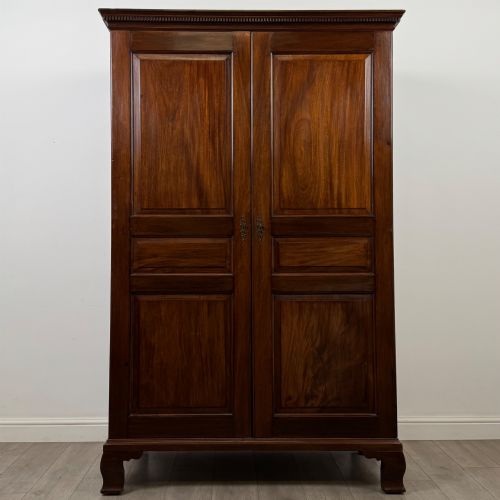
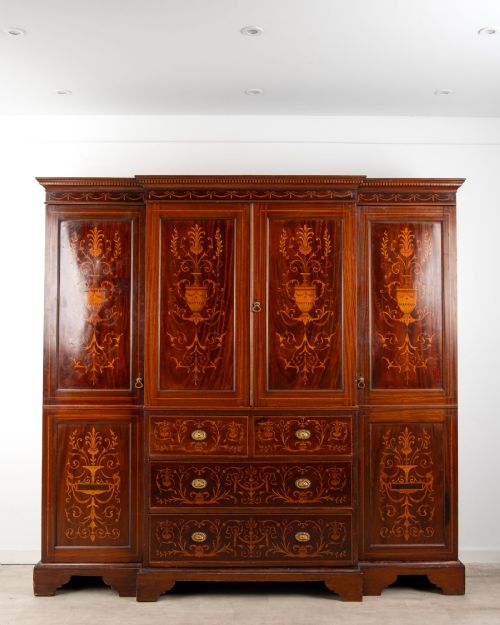
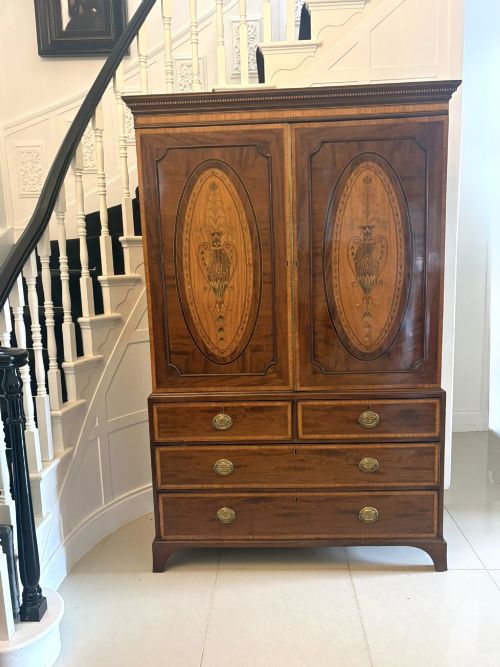
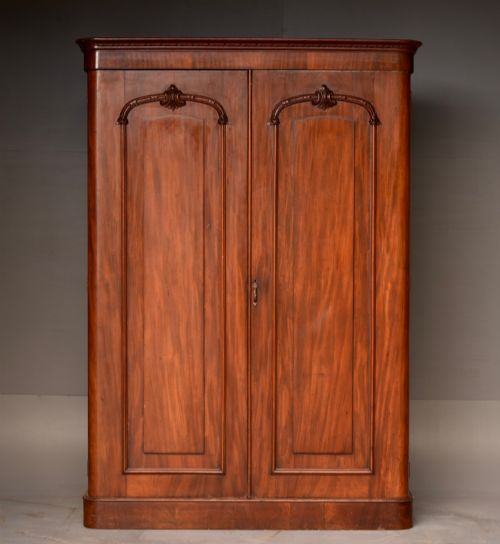
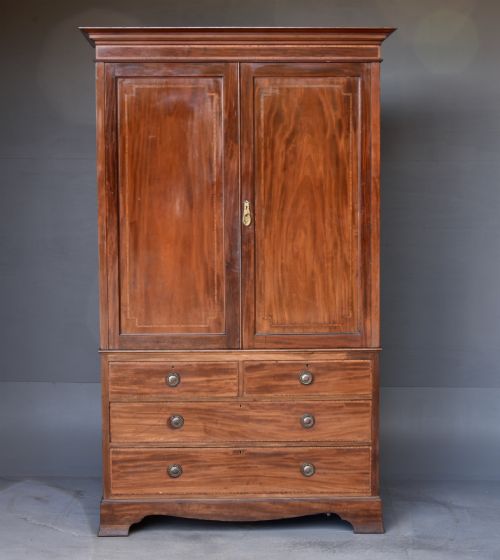
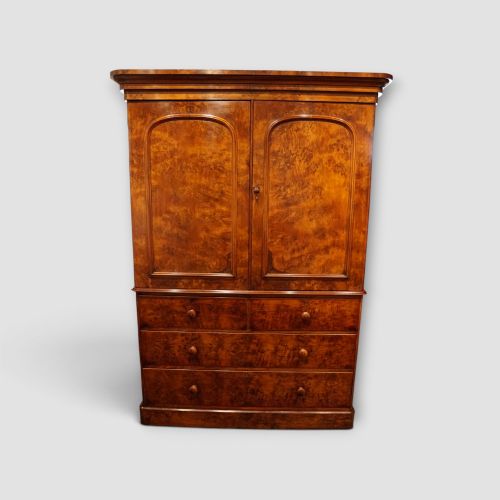
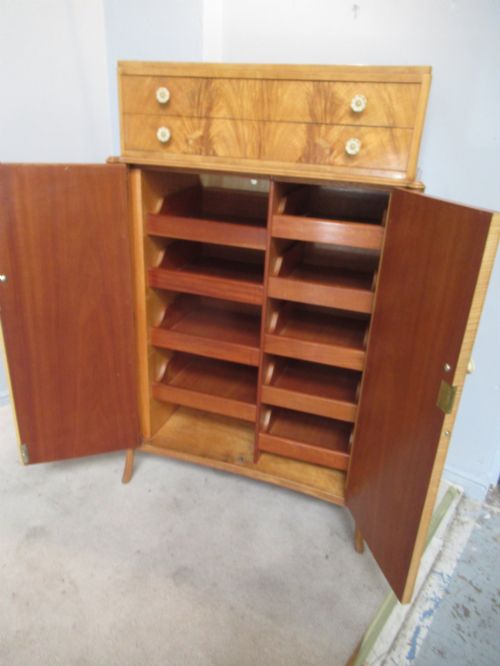
An antique bedroom press combines hanging space, sliding linen trays, and deep drawers in a single substantial cabinet. These pieces range from Georgian linen presses with upper sliding trays to Victorian and Edwardian wardrobes and compactums.
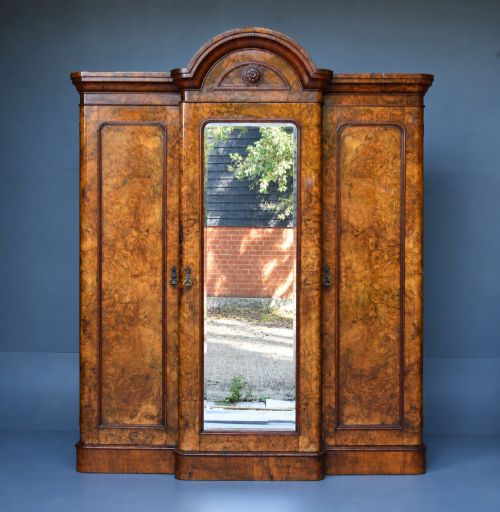
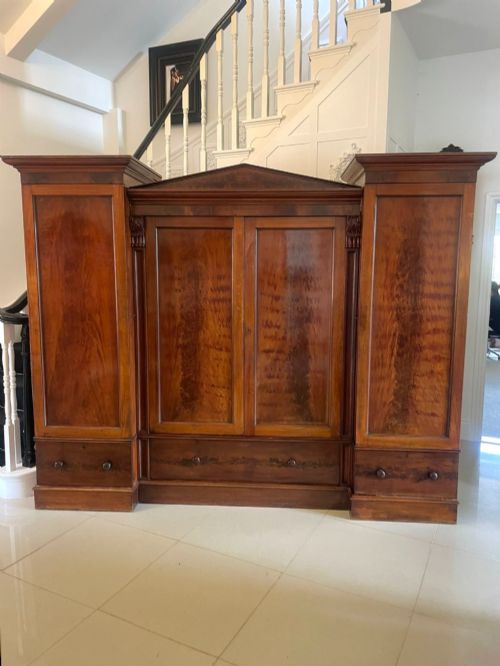
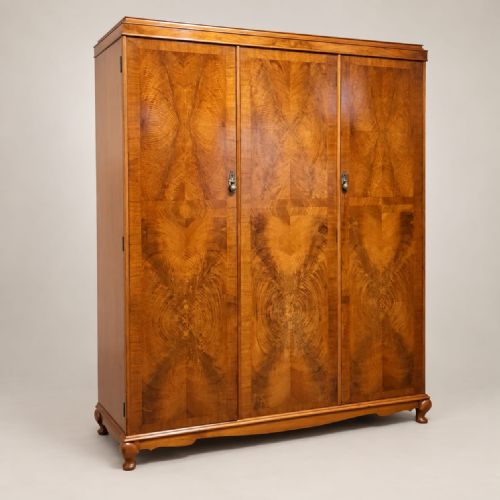
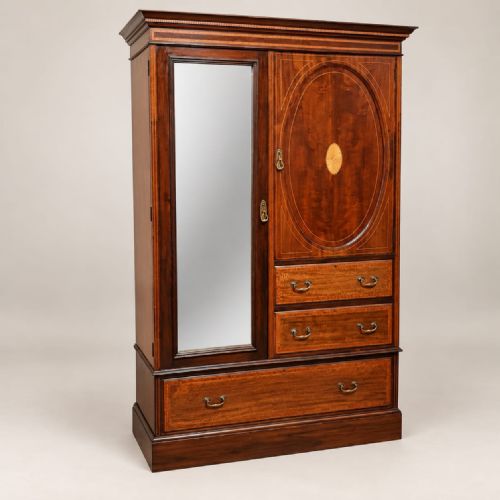
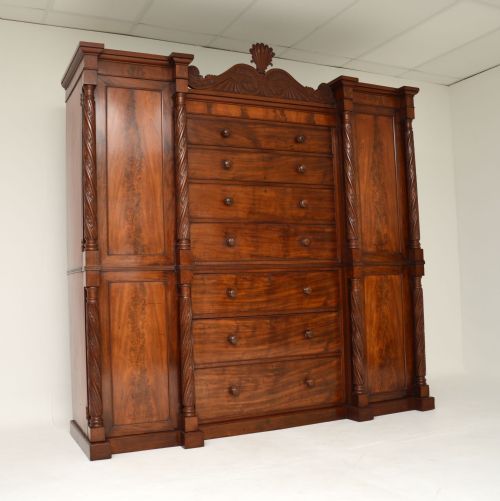
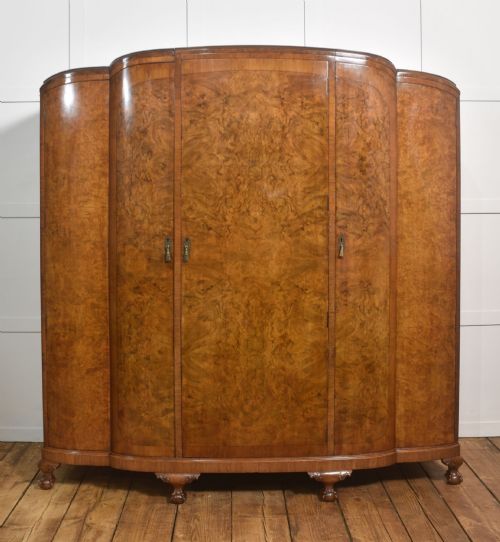
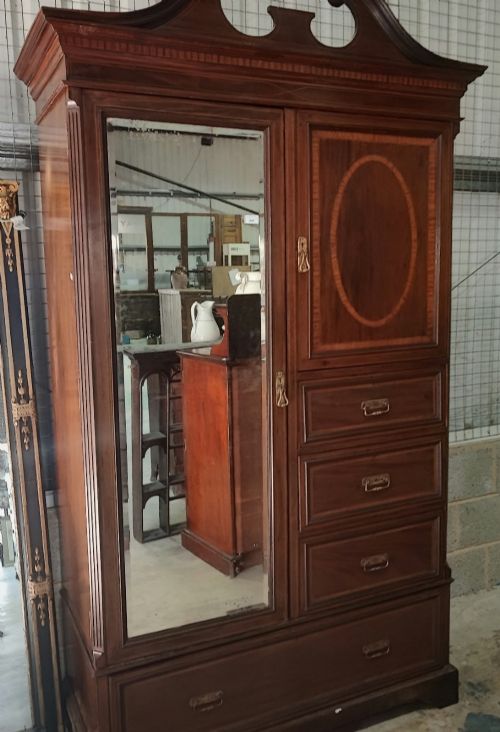
Mahogany, burr walnut, and pine predominate across the selection, often detailed with satinwood inlay or brass hardware. Formats span double and triple doors, tallboys, and breakfront configurations designed for large chambers.
Makers such as Maples & Co. and Edwards and Roberts appear alongside vernacular pine and oak pieces from the nineteenth and early twentieth centuries.
How they were made
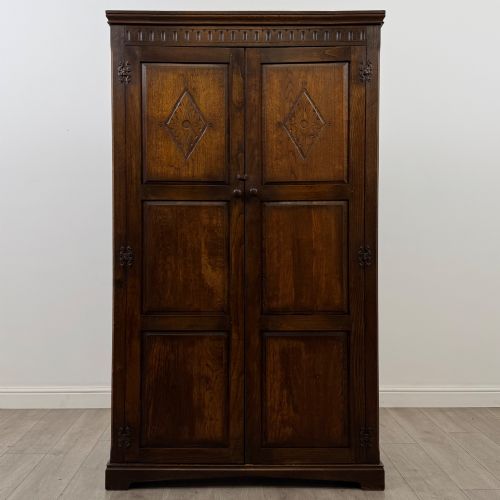
Cabinetmakers utilised solid timbers alongside figured veneers such as burr walnut and mahogany applied to stable secondary woods. Construction relied on traditional dovetailing for drawer construction and sturdy framing to support heavy panelled doors.
Surface finishes involved French polishing, waxing, or occasionally scumble paintwork to imitate richer grain patterns. Brass handles, escutcheons, and internal sliding linen trays completed the functional architecture of each wardrobe.
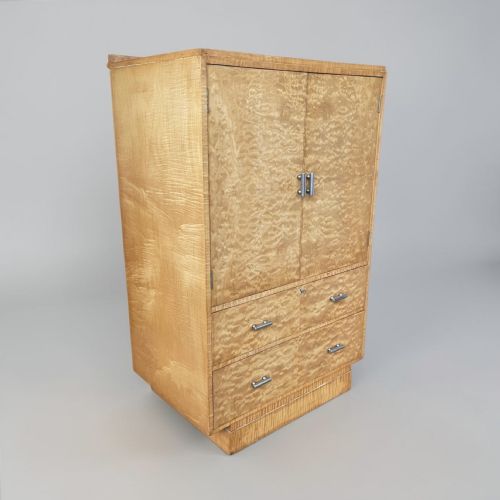
Listings feature pieces spanning from the Georgian period through the Victorian and Edwardian eras up to Art Deco 1930s designs.
What varies in quality
The choice of timber veneer dictates the visual impact, with figured mahogany and burr walnut representing the higher tiers of cabinetmaking. Grain matching across large wardrobe doors and intricate satinwood inlay set finer workshop pieces apart from standard utility items.
Internal configuration also defines grade, where sliding linen trays, modular drawer stacks, and clothes hanging compartments remain intact and well-fitted. Robust structural joinery ensures heavy mirrored or panelled doors hang true without sagging.
Maples & Co.·Edwards and Roberts
The Antique Bedroom Press Glossary
- Compactum
- A multi-functional wardrobe combining hanging space, drawers, and linen shelves in one footprint. These units often feature central banks of drawers flanked by mirrored or panelled doors.
- Linen press
- A tall cabinet featuring upper sliding trays enclosed by doors, positioned above a chest of base drawers. Originally designed to store flat linens before hanging clothes became standard.
- Tallboy
- A tall chest of drawers, sometimes split into two stacking sections, offering vertical storage with a small footprint. They frequently appear in mahogany or burr walnut.
- Scumble paintwork
- A decorative surface technique applied to pine or secondary woods to simulate the grain of oak or other prized hardwoods. Artisans used combs and glazes to manipulate the wet paint layer.
- Breakfront
- A cabinet design where the central section projects forward from the flanking wings, adding architectural depth to large wardrobes.
Antique Bedroom Press: Frequently Asked Questions
What is an antique bedroom press used for?
These large cabinets served bedrooms by offering dedicated storage for folded garments, linens, and hanging attire. The upper sections typically housed sliding trays or hanging rails, while lower drawer stacks accommodated smaller garments.
Today, they function as primary wardrobe furniture in contemporary homes, providing substantial internal volume that matches or exceeds modern equivalents.
Will an antique wardrobe dismantle for transport?
Many Victorian and Edwardian triple wardrobes and large pine presses were constructed to dismantle into manageable sections for delivery. Pegs, bolts, and knockdown framing allowed these heavy pieces to pass through narrow doorways.
It is essential to check whether a specific cabinet utilises knock-down construction, particularly for massive multi-door or mirrored variations.
Which woods are most common in these pieces?
Mahogany and pine appear frequently across the selection, accompanied by burr walnut, oak, and satinwood. Finer pieces often feature figured veneers and decorative inlay work.
Vernacular examples from the nineteenth century are typically constructed from solid pine or oak, occasionally retaining original painted or waxed surfaces.