


Antique Beaded Ceiling Pendant
An antique beaded ceiling pendant brings light through rows of suspended crystals, creating the distinct sparkle collectors seek for period interiors.
Antique Beaded Ceiling Pendant
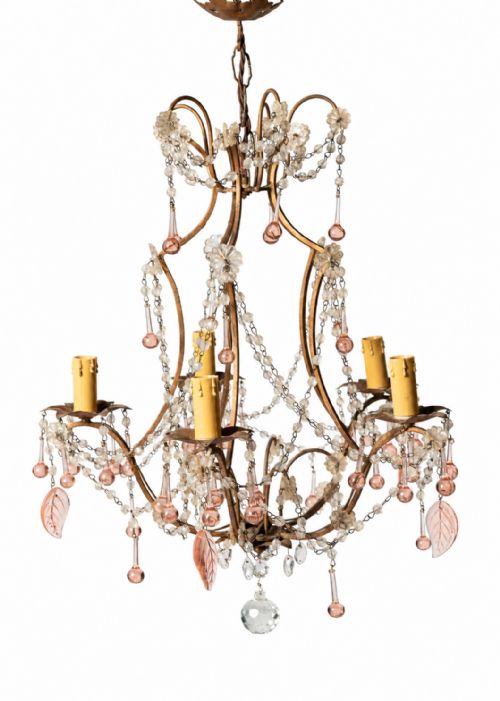
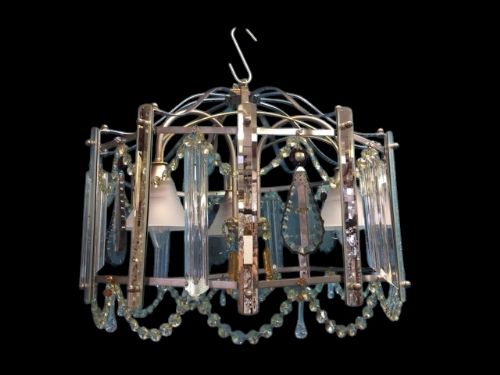
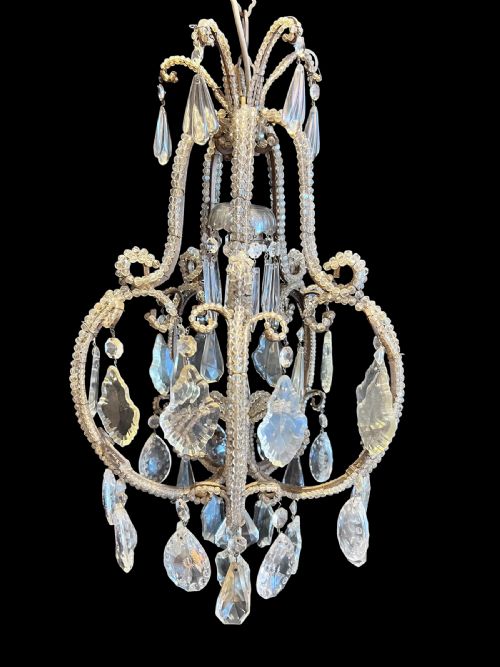
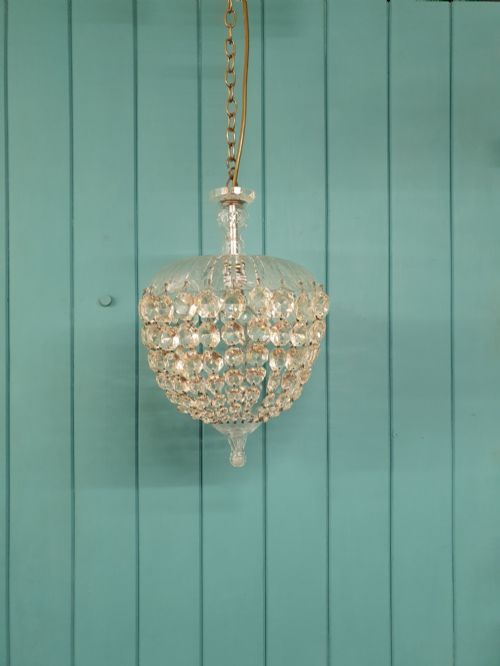
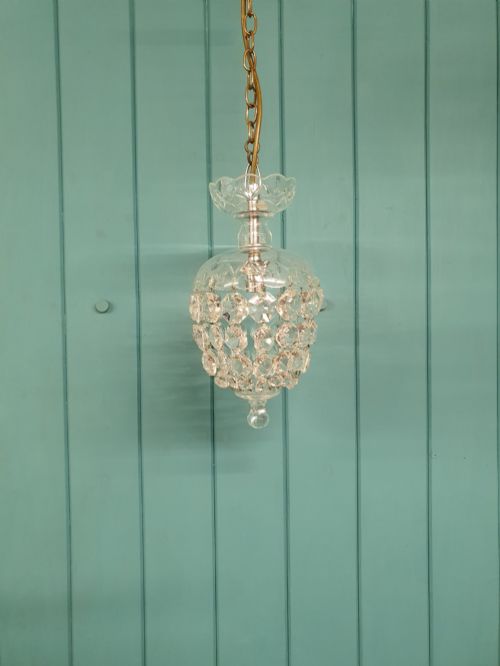
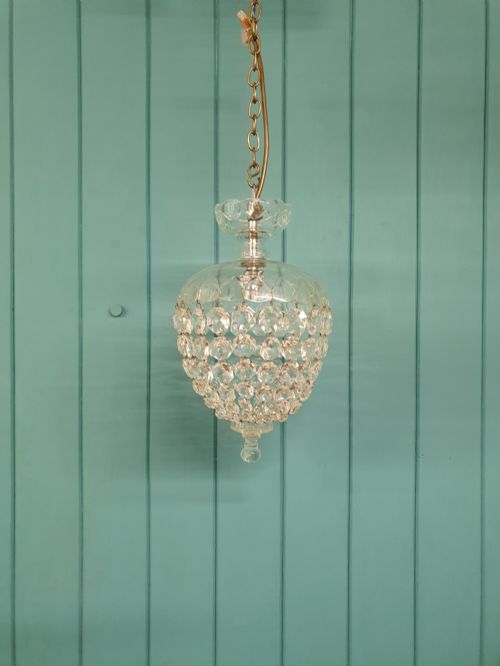
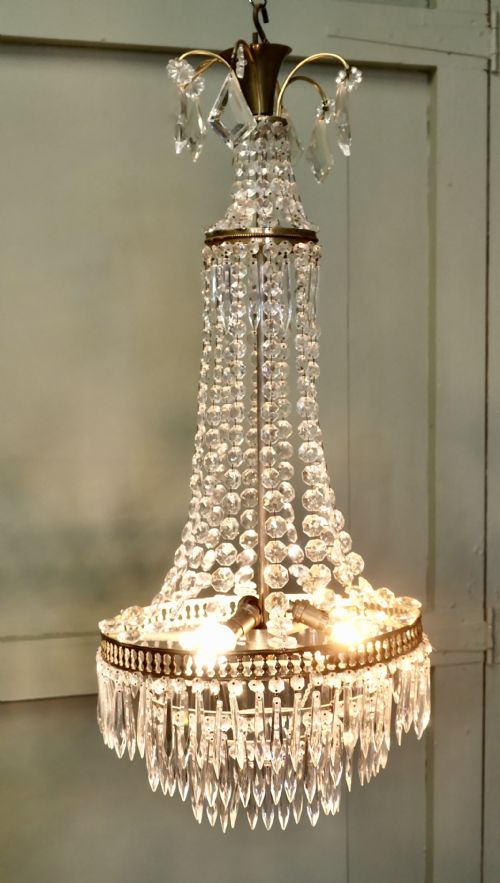
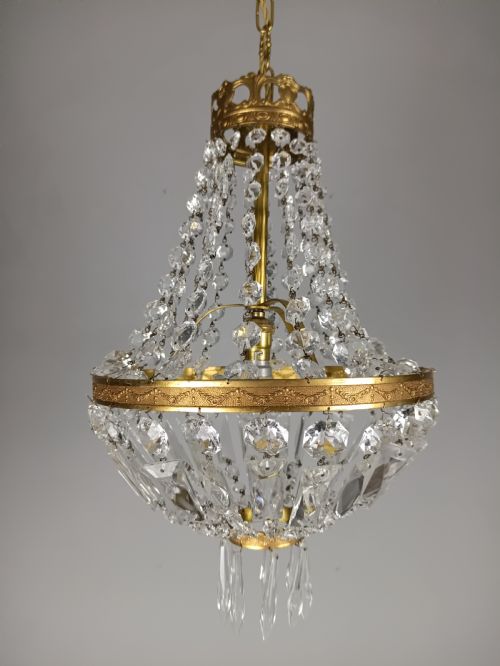
When buyers search for an antique beaded ceiling pendant, they find light fittings constructed with suspended glass elements and metal frames. These pieces originate from periods spanning the nineteenth century through the nineteen-thirties, including Edwardian and Art Deco eras.
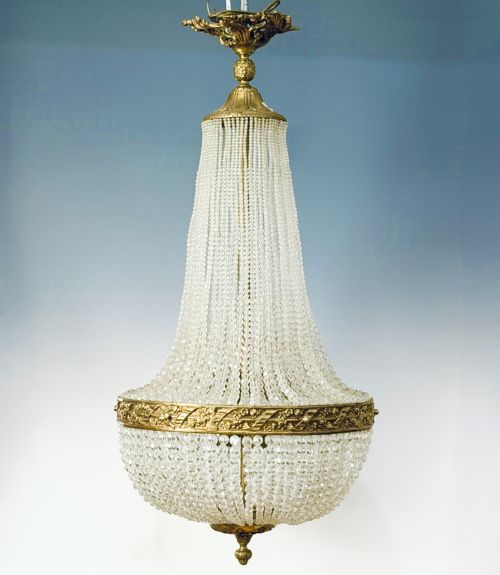
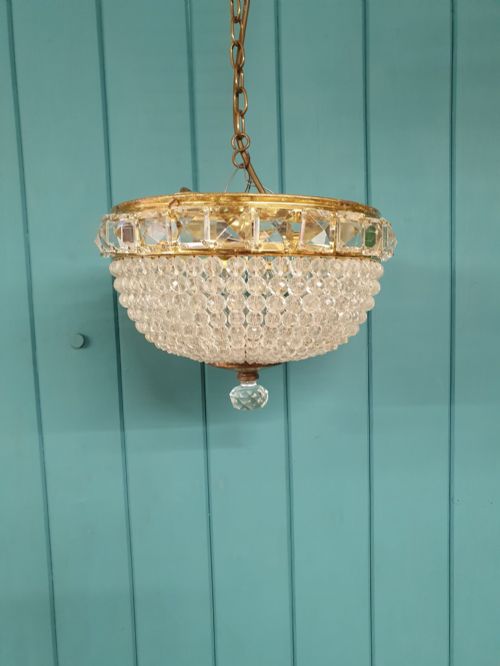
The most common forms on this page include dome top and bag chandeliers alongside basket designs and hanging lanterns. Italian and French workshops dominate the styling, ranging from Venetian and Florentine details to French Empire influences.
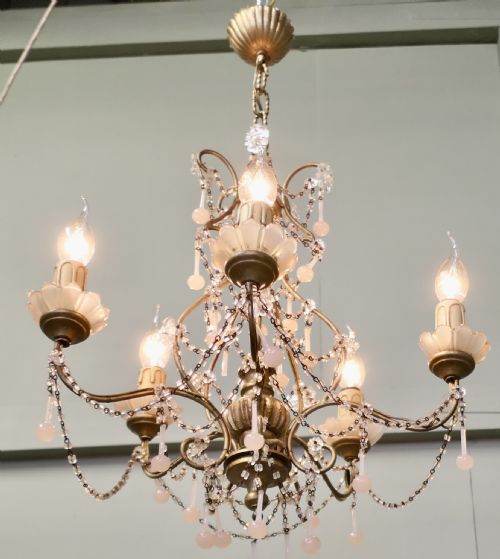
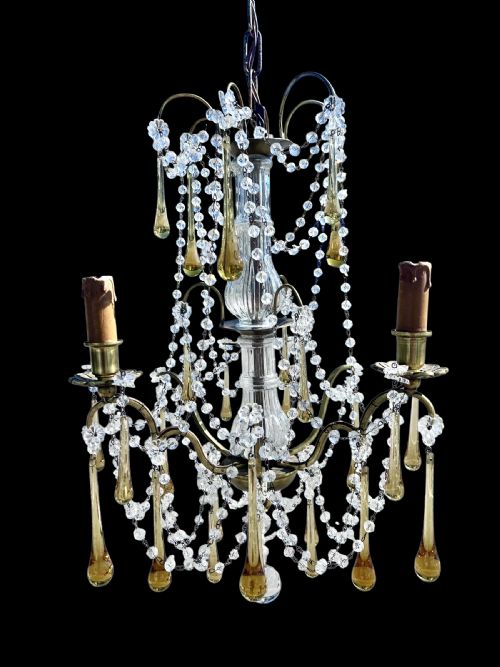
Lighting formats vary from single light pendants to multi-branch chandeliers holding up to twenty-four lights. Smaller dome top and tapered bag variants measure only a few inches, while larger tent and waterfall installations span grand proportions.
Materials and construction methods
Makers built the structural frameworks using brass, gilt metal, wrought iron and standard metal. Brass and gilt frames support the weight of the glass components while providing a decorative metallic finish.
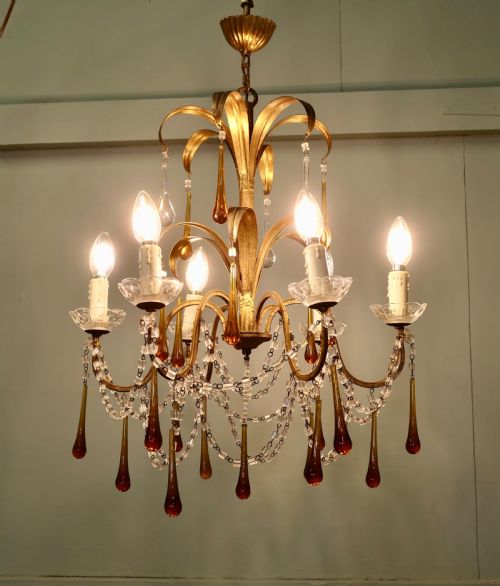
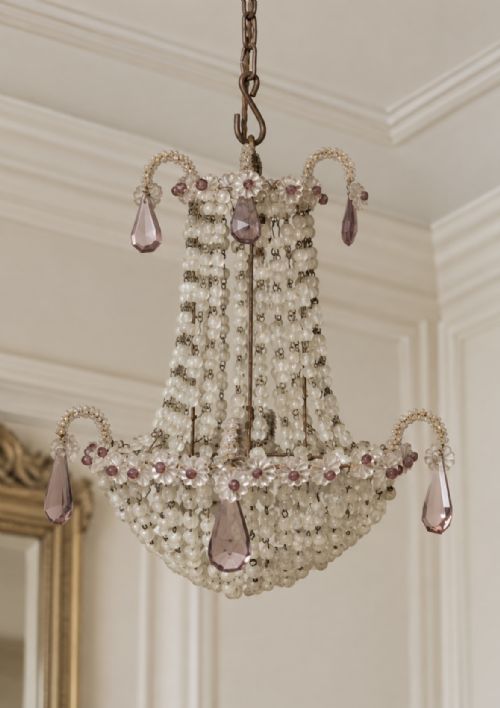
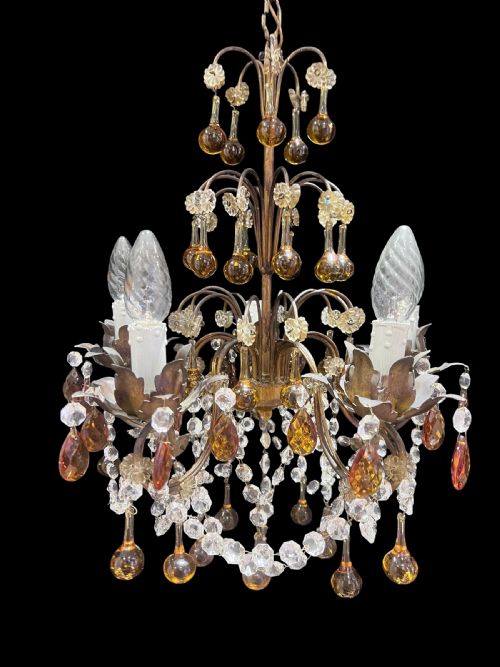
Crystals, cut glass, and plain glass form the dangling beads, prisms and drops attached to each frame. Some examples incorporate coloured glass elements such as pink, blue, red, amber, and cobalt crystals or glass fruit shapes like grapes, apples and pears.
Antique Beaded Ceiling Pendant Retail Price Guide 2026
Typical asking prices for beaded ceiling pendant among the pieces listed under this phrase on Sellingantiques today, from the lower quarter to the upper quarter. They describe what is for sale here now, not the wider market.
Design influences span French Empire, Italian Florentine, Venetian, Rococo Revival, and Art Deco styles.
Distinctions in quality
Quality rests upon the precision of the glass cutting and the complexity of the frame construction. Denser hand-cut crystal drops refract light more sharply than simple pressed glass alternatives.
The integrity of the metal framework, whether cast brass, gilded metal or wrought iron, dictates the overall durability and visual weight of the fixture. Elaborate multi-tiered configurations such as tent and waterfall arrangements require superior armature design to support hundreds of individual beads.
Wedgwood
The Antique Beaded Ceiling Pendant Glossary
- Bag chandelier
- A light fitting shaped in a tapered bag silhouette where dense rows of beads gather towards a bottom terminal.
- Tent and waterfall
- A chandelier style featuring an upper triangular tent of beads cascading down into a wider waterfall tier.
- Dome top
- A compact ceiling light characterised by a rounded upper canopy dripping with cut glass beads.
- Prism
- A cut glass pendant designed to refract light into spectral colours when illuminated.
- Galleon chandelier
- A decorative hanging light formation resembling the silhouette or thematic detailing of a traditional sailing ship.
Antique Beaded Ceiling Pendant: Frequently Asked Questions
How do I hang a heavy beaded chandelier safely?
Suspension requires fixing directly into ceiling joists using a rated metal hook capable of taking the full weight of the metal frame and glass components.
Professional electrical installation ensures the internal wiring matches modern standards while supporting the physical load securely.
What rooms suit an antique beaded pendant?
Hallways, bedrooms and dining spaces accommodate smaller dome top or bag variants effectively without overwhelming the vertical space.
Larger multi-light tent and waterfall chandeliers suit high ceilings in principal reception rooms.
How do I clean delicate glass beads safely?
Cleaning involves removing individual glass drops where possible and wiping them gently with a mild soapy solution and a soft cloth.
Harsh chemical immersion damages antique gilt finishes on brass and metal frames, so cleaners should keep liquids away from the structural metalwork.
How can I tell Edwardian pieces apart from later ones?
Edwardian examples often feature tighter brass and cut glass bag configurations with subtle proportions suited to smaller turn-of-the-century spaces.
Art Deco and nineteen-thirties pieces introduce bolder geometric structures alongside more varied coloured crystal accents like blue prisms or pink glass.