






Antique Bar Back Seats
Antique bar back seats offer robust timber construction and distinctive curved splats, bringing enduring utility and period character to any dining table.
Antique Bar Back Seats
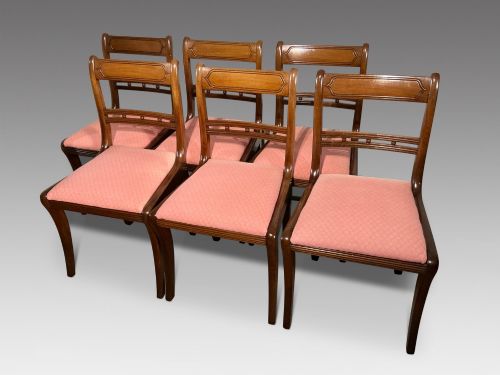
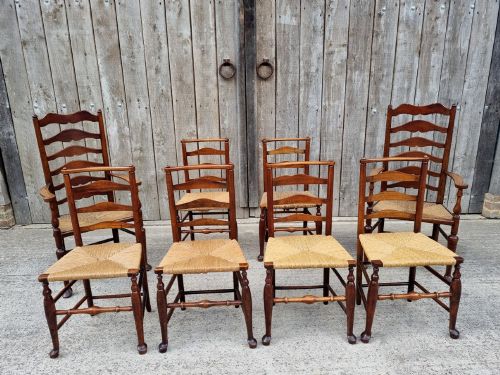
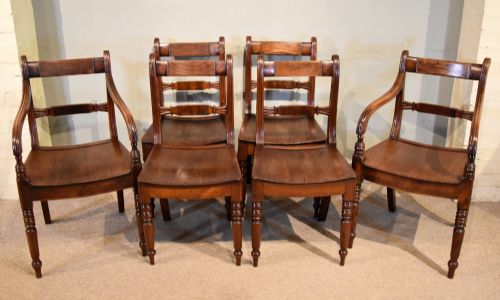
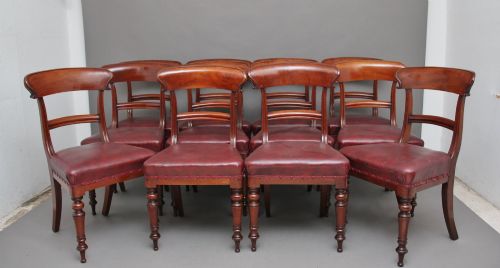
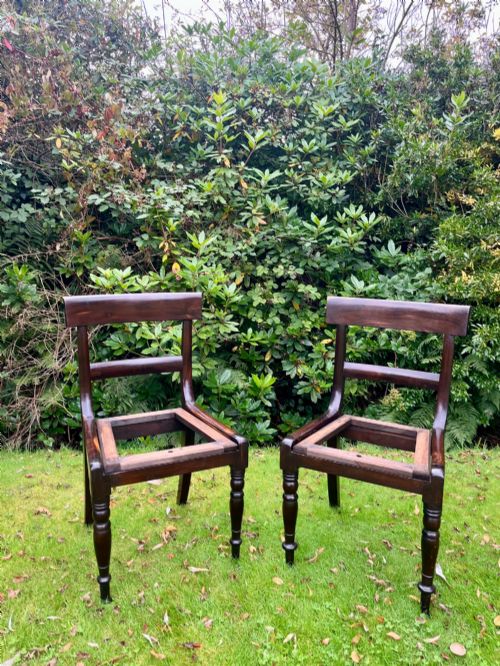
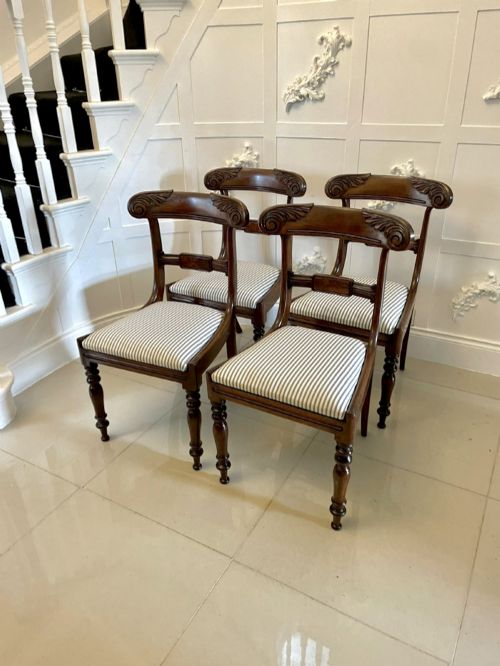
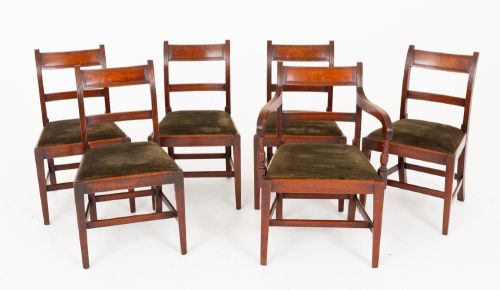
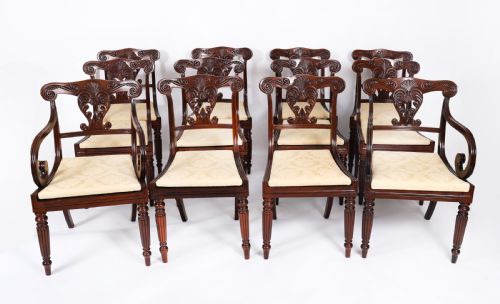
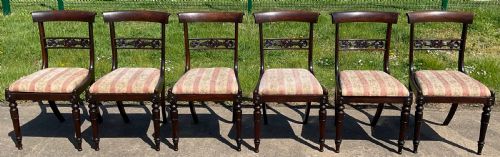
Antique bar back seats are primarily found as dining chairs and side chairs spanning the Georgian, Regency, William IV, and Victorian periods. Buyers seeking these pieces frequently encounter matching sets of mahogany chairs featuring horizontal carved splats that resemble a flattened bar or rail across the uprights. Examples range from modest pairs to large sets of twelve or fourteen, incorporating regional variations such as Scottish laburnum and Irish designs alongside standard English forms.
The profile typically centres on a rounded or tablet-shaped top rail supported by substantial side stiles, framing an open or solid horizontal splat below. While formal dining settings account for the majority of available forms, vernacular interpretations such as elm and beech Windsor variants or kitchen chairs also appear within the wider selection. These seating options deliver practical everyday utility while retaining the proportions and timber patination characteristic of nineteenth-century cabinet work.
Materials and construction methods
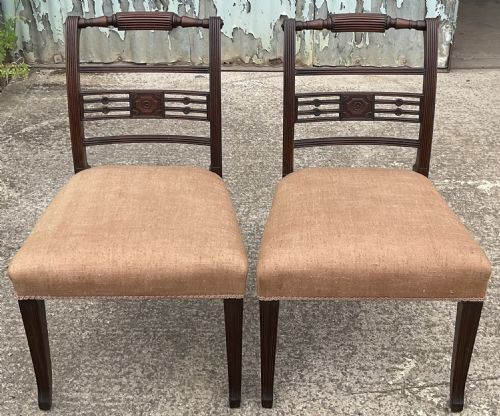
Cabinet makers relied heavily on dense tropical hardwoods like mahogany and rosewood, often complemented by secondary timbers such as beech and elm in vernacular frames. Construction hinged on mortise and tenon joinery to ensure the high-stress joints of the backrest and legs remained rigid under daily use. Brass inlay and subtle stringing frequently embellished the top rails of Regency and Georgian examples, adding precise geometric contrast to the dark grain of the timber.
Drop-in seat frames were upholstered in textiles including leather, velvet, and various woven fabrics to provide padded comfort above the wooden rails. Turned legs, sabre legs, and square tapered supports formed the structural bases, shaped with hand planes and chisels to match the prevailing style of the decade. Surface finishes were built up using traditional shellac polishes that accentuated the natural depth and figure of the underlying wood.
Antique Bar Back Seats Retail Price Guide 2026
Typical asking prices for bar back seats among the pieces listed under this phrase on Sellingantiques today, from the lower quarter to the upper quarter. They describe what is for sale here now, not the wider market.
The listings demonstrate a strong preference for mahogany across nineteenth-century examples, alongside occasional regional variants in elm, beech, and laburnum.
Quality distinctions in timber and form
The calibre of an antique bar back seat rests heavily on the selection of the timber and the crispness of the hand-carved details. Superior sets display well-figured mahogany with consistent grain patterns across every chair in the group, whereas lesser examples utilise plainer wood or mismatched boards. The definition within the horizontal bar splat and any applied brass work reveals the carver's skill, distinguishing master workshop production from standard commercial output.
Structural integrity also separates everyday survivors from exceptional cabinet work, particularly regarding the tightness of the joinery at the backrest junctions. Chairs that retain their original blocked corners and uncompromised frame construction demonstrate superior initial manufacture and careful historical upkeep. Uniformity across large sets of eight, ten, or twelve pieces elevates the desirability of the group significantly.
James Reilly·Heals
The Antique Bar Back Seats Glossary
- Bar back
- A seating form characterised by a horizontal wooden slat resembling a rail connecting the two upright stiles. This design evolved through the late eighteenth and nineteenth centuries as a comfortable evolution from earlier splat-back chairs.
- Sabre leg
- A concave curving leg that tapers towards the foot, frequently seen on Regency dining chairs. The shape mimics the sweep of a cavalry sword and provides both stability and visual lightness.
- Drop-in seat
- A removable wooden frame upholstered separately and dropped into a rebate within the chair seat rails. This technique allowed for straightforward reupholstery without disturbing the structural frame of the chair.
- Stile
- The upright vertical side member of a chair back that connects the seat to the top rail. Master makers shaped these components to ensure ergonomic support while maintaining stylistic harmony.
- Laburnum
- A dense, highly figured hardwood yielding dark brown and yellow contrasting patterns. Scottish cabinet makers occasionally utilised this timber for decorative side chairs and regional seating.
Antique Bar Back Seats: Frequently Asked Questions
How do I care for antique mahogany chairs?
Keep wooden chairs away from direct heat sources and strong sunlight to prevent the timber and finish from drying out. Regular dusting with a soft, dry cloth maintains the polish without building up greasy residues.
Upholstered drop-in seats require gentle vacuuming using an appropriate attachment to protect the underlying textile. Checking the joinery periodically ensures that any loose joints are addressed before structural strain occurs.
Are these chairs suitable for daily use?
These pieces were built for practical dining and hospitality, utilising robust mortise and tenon joinery designed to withstand regular sitting. Their solid timber construction makes them exceptionally durable when properly maintained.
Placing felt pads beneath the feet protects both the chair legs and hard flooring during movement. With sensible handling, they serve as reliable dining seats for everyday modern living.
How can I tell the period of a chair?
Dating relies on examining the leg styles, wood selection, and carving details that characterise specific decades. For instance, sabre legs and brass inlay point towards Regency production, while turned legs frequently indicate Victorian manufacture.
Construction marks, tool traces, and the overall wear pattern on the underside of the seat frame offer further clues regarding age. Comparing these physical characteristics with dated examples helps confirm the era of origin.