


Antique Baluchistan Carpet
These antique baluchistan carpet pieces are hand-knotted tribal rugs bearing rich traditional motifs that bring authentic nomadic character to any interior.
Antique Baluchistan Carpet
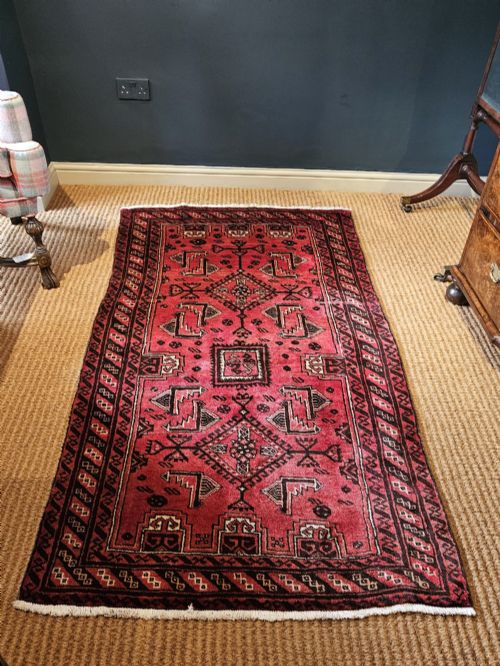
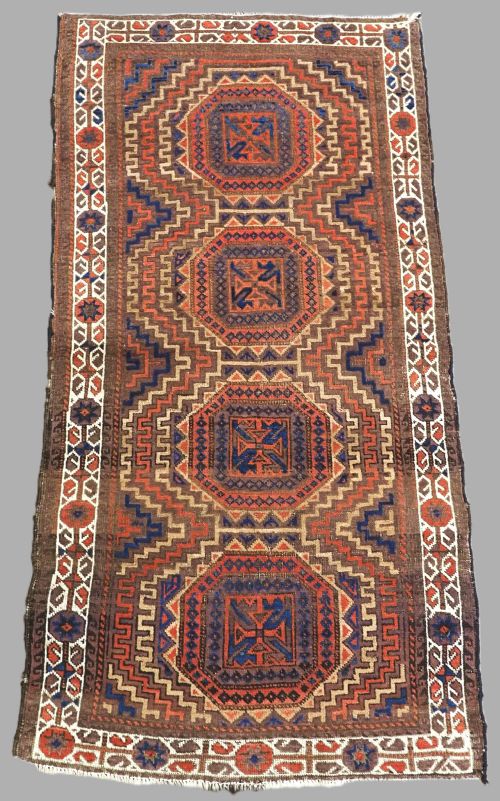
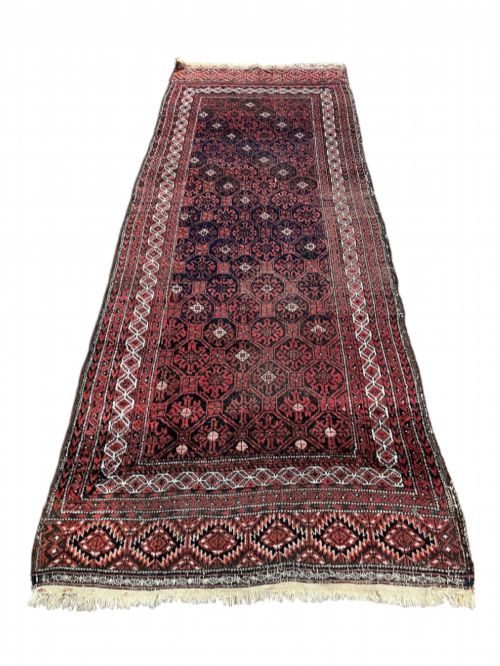
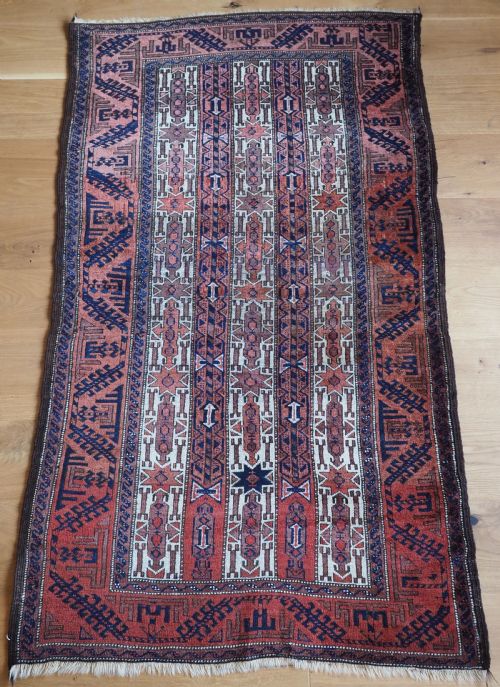
When you search for an antique baluchistan carpet, you are looking at tribal and nomadic floor coverings woven by various groups inhabiting the borderlands of Persia and Afghanistan. These textiles encompass formats ranging from smaller mats and prayer rugs to longer runners and main carpets. The weaving tradition reflects the heritage of tribes such as the Salar Khani, Mahdad Khani, and Yaquab Khani, alongside Afghan Baluch and Timuri groups.
The pieces available on this page date predominantly from the late nineteenth century through to the early twentieth century, specifically spanning the decades around eighteen-eighty to nineteen-twenty. Their designs often incorporate large guls, Herati patterns, or scarce white ground stripe designs, occasionally featuring human figures within prayer rug formats. These works serve as enduring examples of tribal artistry produced for personal use and regional trade.
Materials and construction
The construction of an antique baluchistan carpet relies primarily on wool, frequently utilised as pure wool or hand-spun wool for the pile and foundation. This reliance on natural animal fibres ensures a resilient surface capable of withstanding generations of daily use. Goat hair also appears in the construction, typically employed in the outer corded selvages or structural elements to provide additional edge durability.
Weavers utilised traditional upright looms to knot these textiles by hand, employing local vegetable and natural dye sources to achieve deep, saturated colour palettes. The manipulation of hand-spun wool yields subtle irregularities in texture and tone, distinguishing authentic nomadic weaving from later commercial production. Structural rigidity is maintained through robust wool foundations that support the dense, short pile characteristic of these tribal pieces.
Listings feature pieces from the late nineteenth century up to nineteen-twenty, utilising hand-spun wool, pure wool, and goat hair.
Distinctions in quality
Quality in an antique baluchistan carpet rests upon the fineness of the knotting and the crispness of the tribal design execution. Superior pieces exhibit a dense, supple handle and precise geometry within motifs such as guls or Herati fields, demonstrating exceptional weaver control. The depth and integrity of the original wool pile also dictate the desirability of a piece, with high-grade examples retaining substantial nap and clear chromatic contrasts.
Salar Khani tribe·Mahdad Khani tribe·Yaquab Khani design·Timuri tradition
The Antique Baluchistan Carpet Glossary
- Gul
- Gul. A repeating octagonal or medallion motif commonly found across Central Asian and tribal rugs, often serving as a primary clan identifier.
- Herati
- Herati. A classic Persian floral pattern featuring a central rosette enclosed by a diamond lattice and flanked by curved serrated leaves.
- Prayer rug
- Prayer rug. A specialised format featuring a single arch or mihrab design indicating the direction of prayer, sometimes incorporating human or animal figures.
- Selvage
- Selvage. The reinforced outer edge of a carpet finished securely to prevent the side cords and weft threads from unravelling.
- Mihrab
- Mihrab. The arched niche depicted on prayer rugs that symbolizes the prayer direction towards Mecca.
Antique Baluchistan Carpet: Frequently Asked Questions
How do I clean an antique baluchistan carpet?
Maintenance requires gentle surface dusting and professional antique textile cleaning when necessary, avoiding harsh modern detergents that strip natural wool oils.
Regular light vacuuming without a rotating power brush helps protect the hand-spun wool pile and delicate goat hair edges from accumulating abrasive grit.
Where were these tribal carpets originally made?
These textiles originate from the border regions spanning western Afghanistan, eastern Persia, and the wider Khorasan province where nomadic groups settled.
The weavers operated within distinct tribal confederations, passing down specific border patterns and colour combinations through generations of families.
Can I place a runner in a hallway?
Runners fit narrow corridors and transitional spaces perfectly, adding warmth and historical texture to high-traffic domestic areas.
Using a breathable, high-grade underlay keeps the wool foundation stable and prevents slipping on hard wooden or tiled floors.