




Antique Asian Shelf
An antique asian shelf brings centuries of craftsmanship into a room, offering compartments and ledges designed for display.
Antique Asian Shelf
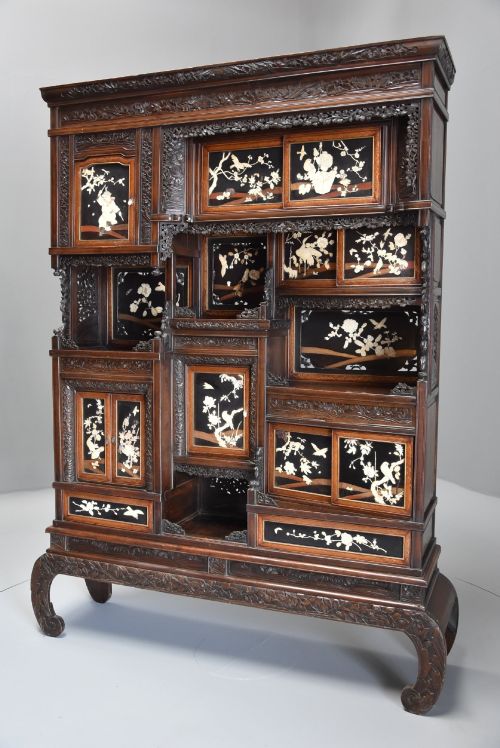
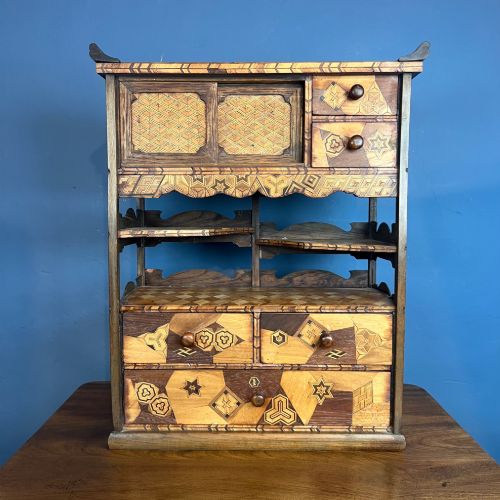
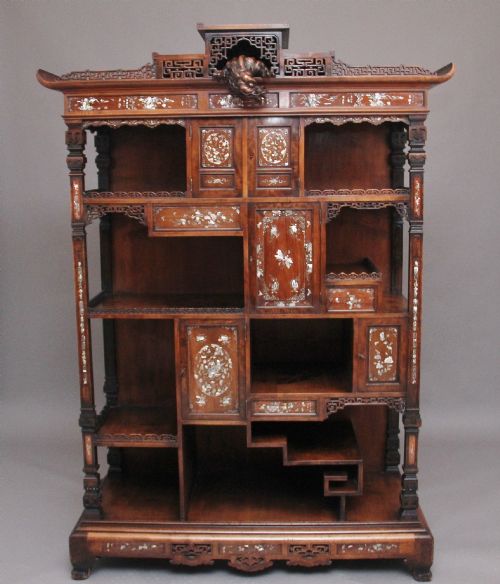
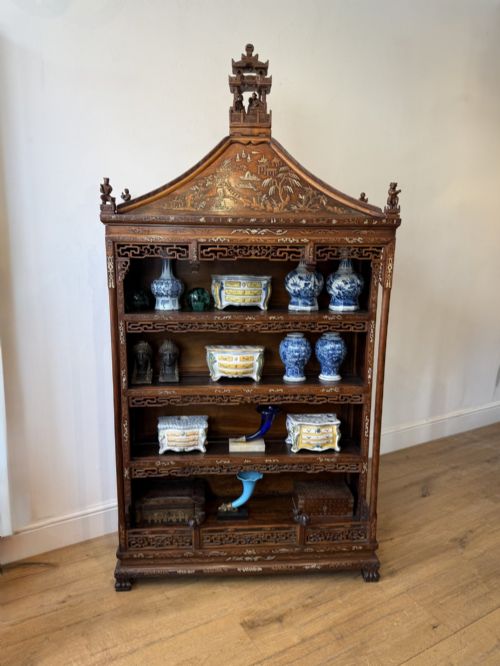
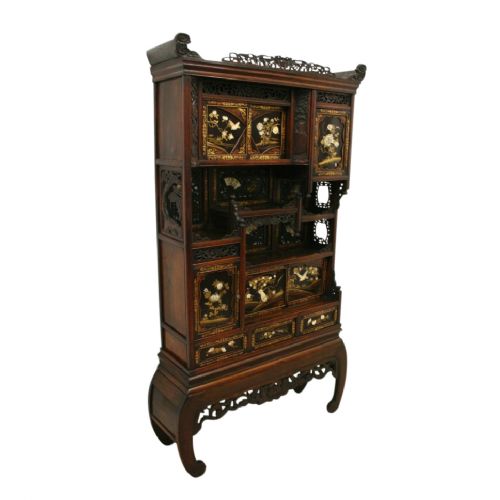
The term antique asian shelf covers a variety of wall-hanging brackets, floor-standing cabinets, and intricate shodana units originating from China and Japan. Buyers encountering these pieces will find formats ranging from compact hanging shelves to large display cabinets and dwarf side-cabinets. The selection spans the nineteenth century through to the early twentieth century, incorporating distinct periods such as the Meiji era and Qing dynasty.
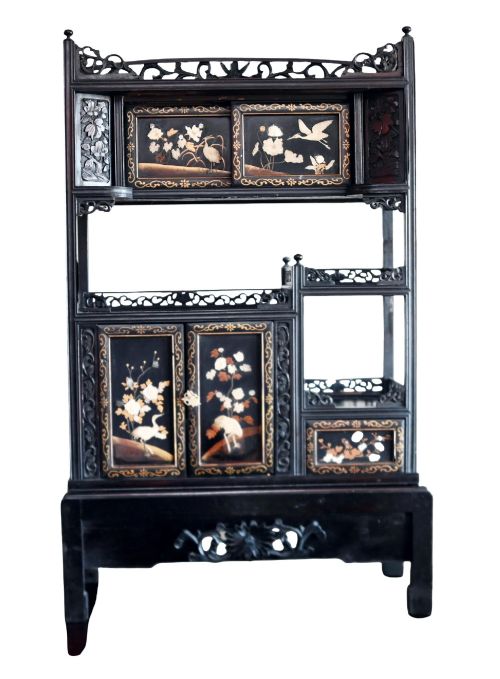
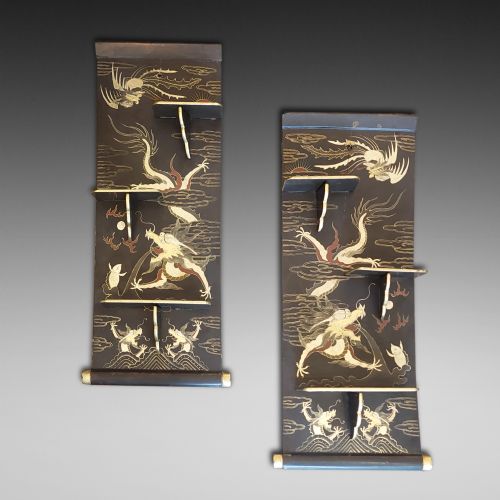
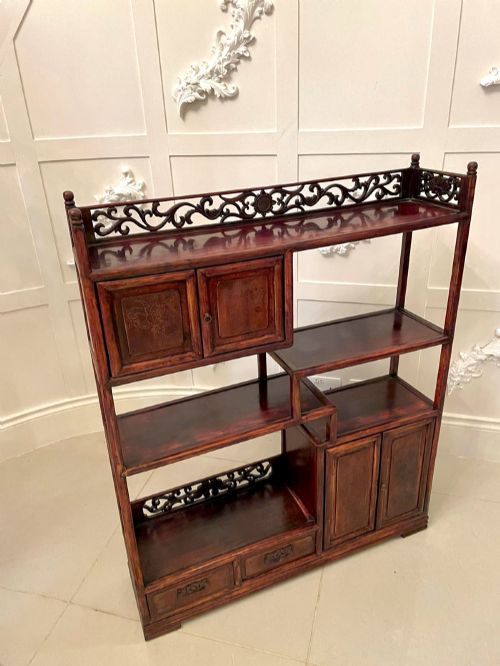
Forms include stepped display stands, wall shelves, and tall bookcases fitted with numerous ledges and compartments. Many items combine open display space with enclosed storage sections behind panelled doors. These structures served traditional domestic interiors for holding precious objects, porcelain, and ornaments.
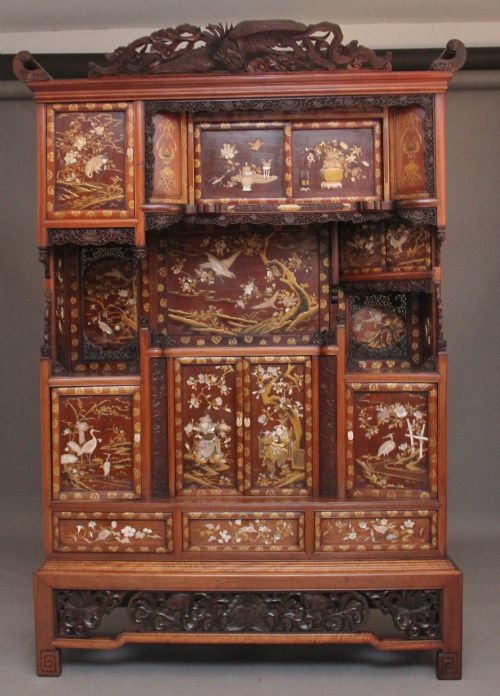
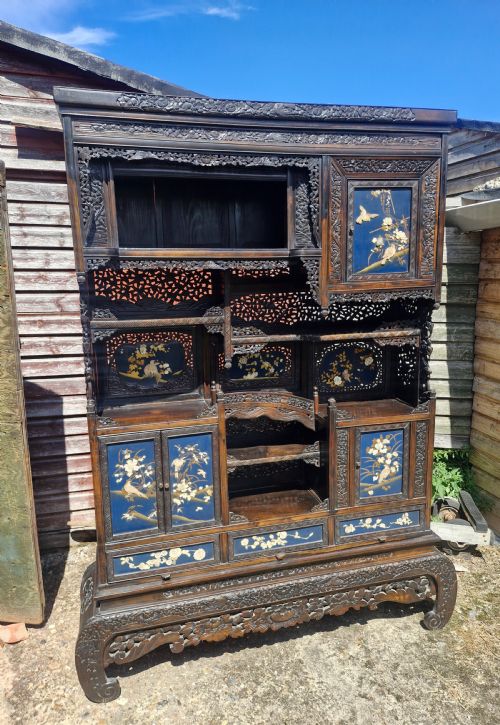
Origins divide clearly between Chinese hardwood productions and Japanese lacquered or carved shodana cabinets. European interpretations also appear in the form of Chinoiserie and Japonisme styles produced locally during the same historical window. This mix gives buyers a choice between austere traditional hardwood and highly decorative inlaid finishes.
Materials and construction methods
Construction relies heavily on dense Asian hardwoods, rosewood, and ebonised timber joined without modern adhesives. Cabinetmakers utilised traditional interlocking joinery to build stable frames that could support heavy loads of porcelain and metalwork. Surfaces often received multiple coats of lacquer to achieve deep gloss or matte finishes.
Decoration involved intricate carving, mother-of-pearl inlay, and bone or brass embellishments. Artisans applied carved panels depicting natural motifs directly into the main structure or set them within sliding doors. Lacquered pieces demonstrated layered applications that allowed for polishing and relief detailing.
Antique Asian Shelf Retail Price Guide 2026
Typical asking prices for asian shelf among the pieces listed under this phrase on Sellingantiques today, from the lower quarter to the upper quarter. They describe what is for sale here now, not the wider market.
Current listings feature items spanning the Meiji period, Qing dynasty, and Edwardian eras, constructed from hardwood, lacquer, and mother-of-pearl.
Markers of quality and craftsmanship
Quality rests upon the depth of the carving and the precision of the timber joints. Superior examples exhibit crisply carved relief work across every panel, whereas simpler pieces rely on plain surfaces or printed decoration. The choice of material also dictates grade, with solid rosewood and Hongmu sitting above softer woods finished with paint or lacquer.
The complexity of the interior layout affects overall refinement. Finer shodana cabinets feature asymmetrical stepped shelving, secret compartments, and meticulously fitted sliding doors that operate smoothly within their grooves. Inset mother-of-pearl work that remains intact without missing segments indicates higher original craftsmanship.
The Antique Asian Shelf Glossary
- Shodana
- A Japanese cabinet featuring asymmetrical shelves, cupboards, and sliding doors designed for displaying ornaments. These pieces originated in the Meiji period.
- Chinoiserie
- A European decorative style emulating Chinese artistic traditions. It appears on furniture and clocks dating from the late nineteenth and early twentieth centuries.
- Japonisme
- A Western artistic movement inspired by Japanese art and design following the opening of trade routes in the nineteenth century.
- Whatnot
- A piece of furniture consisting of a framework of open shelves for displaying small objects. This form was adapted in crossover styles during the late Victorian and Edwardian periods.
Antique Asian Shelf: Frequently Asked Questions
What is a shodana cabinet?
A shodana is a Japanese display cabinet characterised by stepped, asymmetrical shelving and multiple small compartments. These units were built to showcase delicate porcelain and decorative art objects.
Craftsmen often added sliding doors, small drawers, and intricate carved panels to the structure. They serve today as focal points in rooms requiring varied display surfaces.
How do I clean a lacquered shelf?
Dust lacquered surfaces gently with a soft, dry microfibre cloth to prevent scratching the delicate finish. Avoid using chemical sprays, abrasive cloths, or excess water on antique lacquer.
If cleaning requires more attention, use a slightly damp cloth followed immediately by a dry one. Maintaining stable indoor humidity prevents the lacquer from cracking over time.
Where should I place a wall shelf?
Hanging shelves require secure fixings into solid masonry or wall studs to support the substantial weight of dense hardwoods. Position them away from direct sunlight and radiators to protect the timber and lacquer.
They work effectively above sideboards or desks where smaller ornaments can be safely arranged. Ensure the hanging brackets match the structural integrity of the piece.
How do I date an Asian cabinet?
Dating relies on stylistic markers, construction techniques, and materials associated with specific historical periods like the Meiji era or Qing dynasty. Records often link these items to the late nineteenth and early twentieth centuries.
Examine the joinery methods and the type of hardware used on doors and drawers. European adaptations like Chinoiserie generally point towards early twentieth-century production dates.