




Antique Asian Porcelain Lighting
These antique asian porcelain lighting pieces bring historical ceramic vessels into domestic interiors as wired table lamps and candlesticks.
Antique Asian Porcelain Lighting
When buyers search for antique asian porcelain lighting, they encounter ceramic vessels originating from China and Japan that have been adapted for modern illumination. These objects range from seventeenth-century vases to twentieth-century figural lamps.
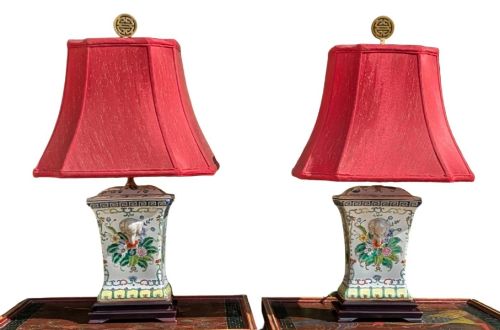
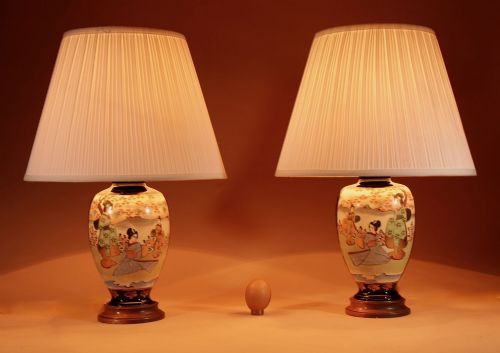
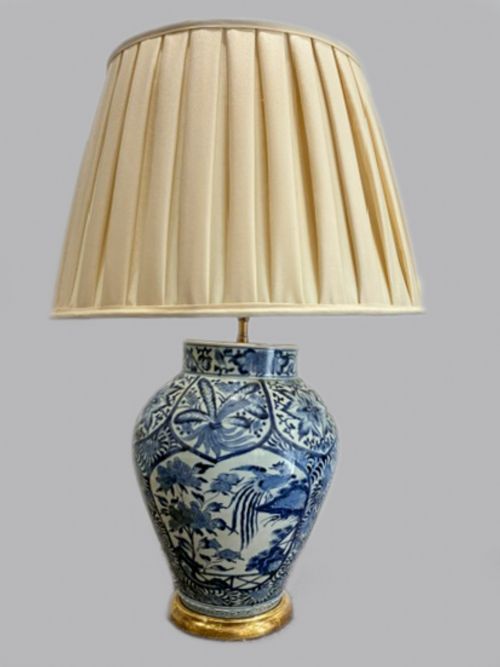
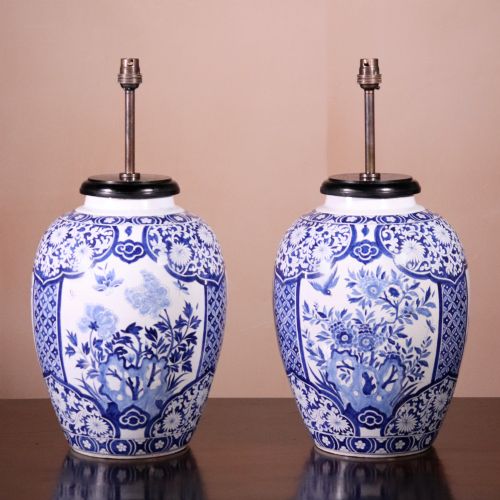
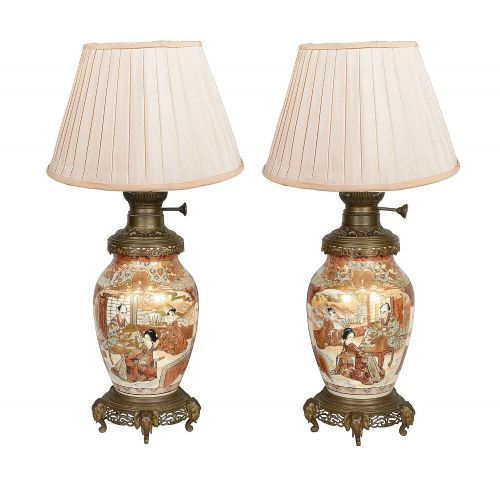
The most common forms on this page are table lamps created from converted vases, jars, and spill vases, alongside occasional candlesticks. Many items appear in matched pairs utilising Satsuma, Imari, Kutani, or Chinese blue and white porcelain.
The historical span covers the Edo and Meiji periods in Japan alongside various Qing Dynasty and later Chinese eras. Vessels often retain their original hand-painted decoration beneath twentieth-century electrical fittings.
How they were made
Potters shaped these porcelain, earthenware, and ceramic bodies by hand or on the wheel before applying detailed enamel, cobalt blue, or polychrome glazes. Workshops utilised firing techniques that produced celadon, turquoise, powder blue, and blanc de chine surfaces.
Metal components in brass provide structural support for the electrical wiring and lamp holders. Fabric and silk shades often complement the ceramic bases, whilst wooden stands elevate certain Oriental vases.
Japanese and Chinese aesthetics dominate the selection, encompassing Edo, Meiji, and Qing Dynasty production traditions.
What varies in quality
The standard of antique asian porcelain lighting depends heavily on the crispness of the hand-painted decoration and the depth of the glaze colours. Finely penciled motifs on Imari and Satsuma porcelain indicate superior craftsmanship compared to simpler factory-produced patterns.
Conversion methods also distinguish the collection, as professional mounting preserves the original ceramic body without destructive drilling. The integration of matching pairs and the survival of historic wooden bases elevate the overall desirability of the piece.
The Antique Asian Porcelain Lighting Glossary
- Satsuma
- A type of Japanese earthenware featuring a crackled ivory glaze decorated with polychrome enamels and gilt. These pieces were frequently converted into table lamps during the nineteenth and twentieth centuries.
- Imari
- A style of Japanese porcelain featuring a distinct palette of underglaze blue, iron red, and gilt. It originated in Arita and appeared on vessels subsequently wired for electricity.
- Celadon
- A term for pottery denoting a pale green or grey-green glaze resembling jade. This finish appears on Chinese vessels dating from the seventeenth century onwards.
- Kutani
- Japanese coloured porcelain characterised by bold pictorial designs, often incorporating greens, yellows, and purples. These wares form a substantial portion of the lamp conversions available.
- Blanc de Chine
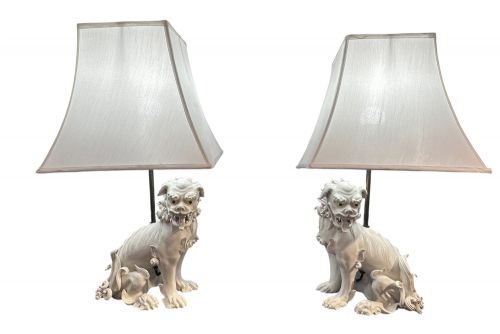
- A white porcelain produced in China, specifically associated with Dehua kilns. The term translates as white from China and describes figures such as Shi Lions mounted as lamps.
Antique Asian Porcelain Lighting: Frequently Asked Questions
Are these lamps converted from old vases?
Many items began life as decorative vessels, ginger jars, or spill vases before being fitted with electrical components and lampshades. This conversion process allows historic ceramics to function practically in modern rooms.
Makers incorporated brass fittings into the tops or bases of the porcelain bodies while retaining the hand-painted exterior decoration intact.
How do I date Japanese Meiji period lamps?
The Meiji period spans from eighteen sixty-eight to nineteen twelve, a timeframe often indicated by complex Satsuma or Kutani enamel work. These pieces typically display intricate gilt detailing and narrative scenes.
Comparison with documented workshop styles and baseline ceramic marks helps narrow the decade of production for individual pieces.
Can I find matching pairs of lamps?
A significant portion of the inventory consists of balanced pairs created from twin vases or jars. These matching sets provide symmetrical illumination for sideboards, mantlepieces, or large desks.
Matching pairs usually share identical hand-painted motifs, dimensions, and colour palettes originating from the same ceramic workshop.
What is Chinese blue and white porcelain?
This traditional ceramic style utilises cobalt oxide pigment to paint decorative patterns beneath a clear transparent glaze before high-temperature firing. The resulting cobalt blue designs contrast sharply against a white porcelain background.
Motifs on these lamp bases frequently feature floral bands, landscapes, or traditional symbolic imagery.