
Antique Ash Chairs
Antique ash chairs bring the honest character of English country workshops into a room, offering sturdy vernacular seating shaped from tough local woods.
Antique Ash Chairs
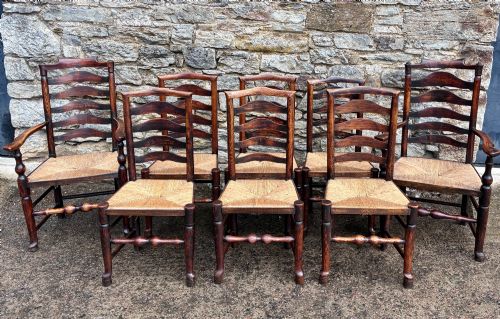
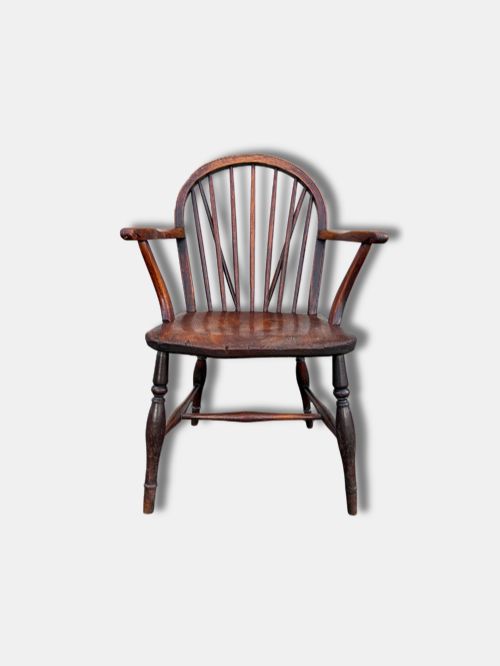
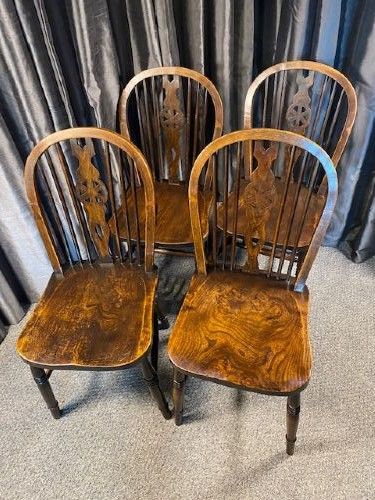
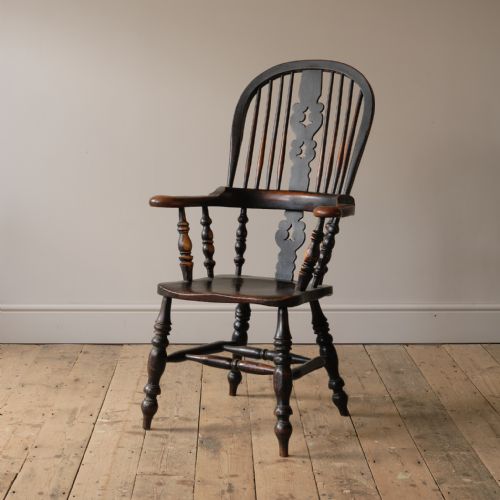
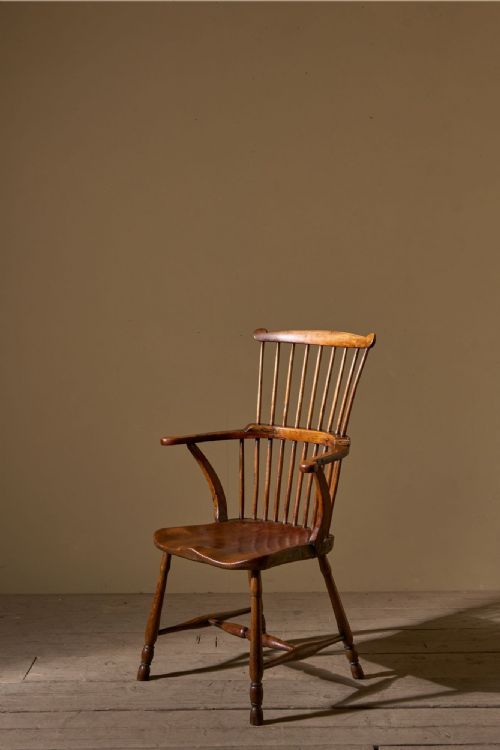
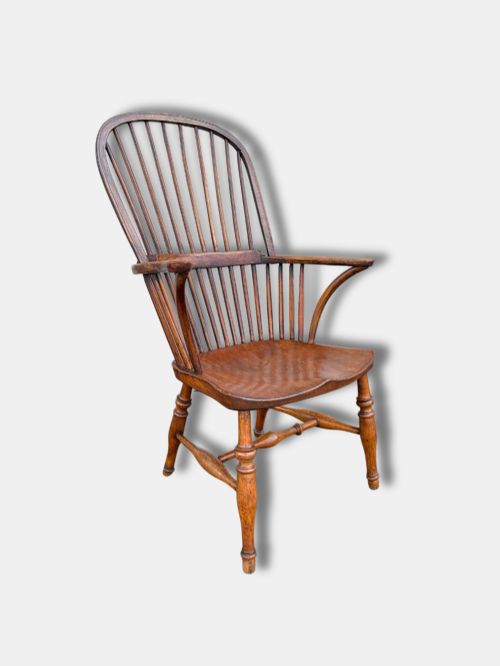
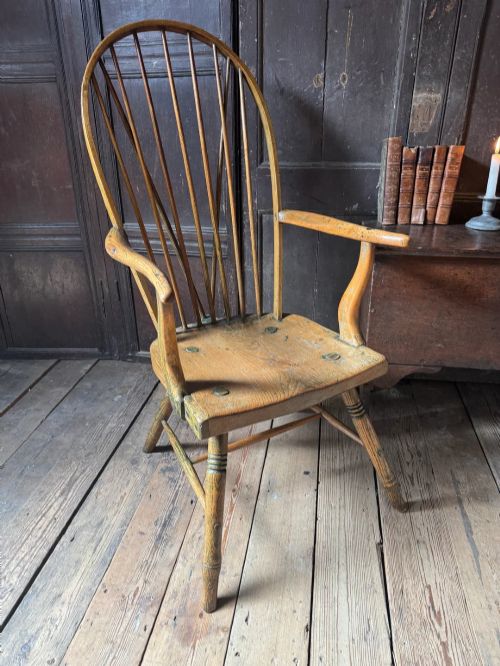
Antique ash chairs encompass a broad selection of vernacular seating, from Windsor armchairs to ladder-back kitchen chairs. The most common examples seen here pair ash with elm, often built in regional styles across the eighteenth and nineteenth centuries.
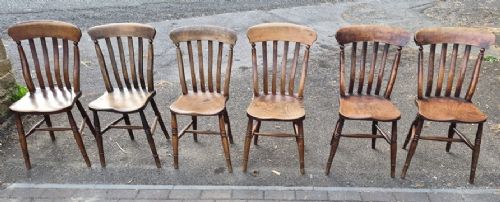
Makers produced these chairs for everyday domestic utility in kitchens, farmhouses and cottages rather than formal drawing rooms. Surviving forms include rocking chairs, desk chairs, children's seating and sets of dining chairs dating from the Georgian period through to the early twentieth century.
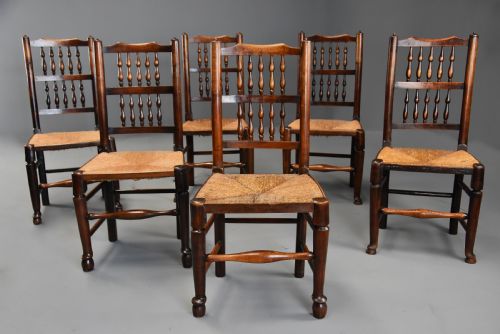
Regional variations define much of what turns up, with Thames Valley, West Country and Lancashire types showing distinct turning and structural traits. Buyers encounter individual armchairs as well as larger matching sets or harlequin groups.
How they were made
Traditional makers utilised the distinct properties of mixed native timbers, pairing tough ash for spindles and frames with elm for solid, saddled seats that resisted splitting. Additional framing often incorporated beech, oak, yew or beech components depending on regional workshop traditions.
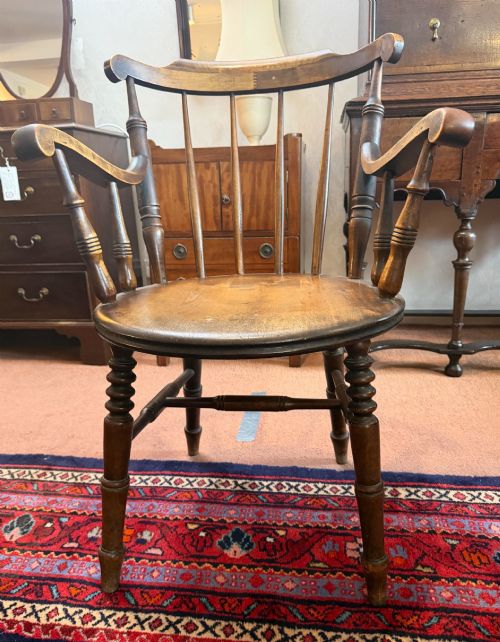
Makers turned legs and stretchers on pole lathes, while steam-bending wood created the curved hoops and comb-backs characteristic of Windsor designs. Seats were hollowed out using adzes and scorps to provide comfortable contours before being joined with wedged tenons.
Listings demonstrate a strong presence of nineteenth-century ash and elm Windsor chairs alongside Georgian country armchairs.
What varies in quality
The visual appeal of the timber surface dictates much of the standing of an individual piece, particularly where grain patterns and deep colour have developed through generations of handling. Original timber surfaces and minimal structural intervention elevate certain chairs above examples with heavy replacement parts.
Proportion and the boldness of the underlying turning separate everyday utility seating from masterwork vernacular items. The elegance of a bentwood comb-back or the refined splay of turned legs reflects the skill of the original country maker.
Philip Clissett·Duncan McKellar
The Antique Ash Chairs Glossary
- Windsor chair
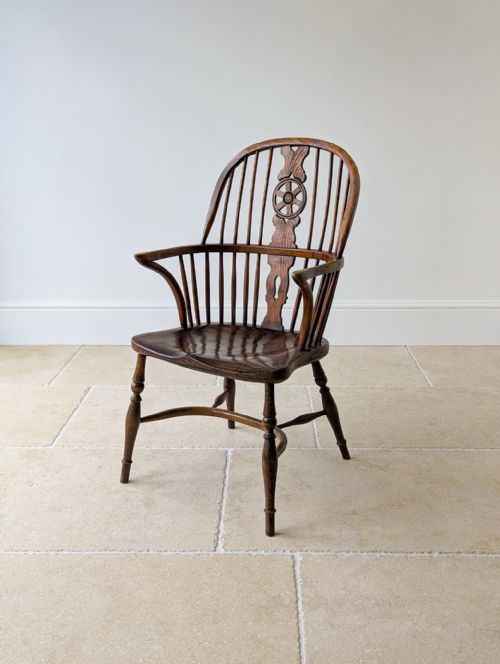
- A wooden chair featuring a solid carved seat into which the legs and back spindles are directly inserted. These chairs rely on a heavy undercarriage for structural rigidity.
- Comb-back
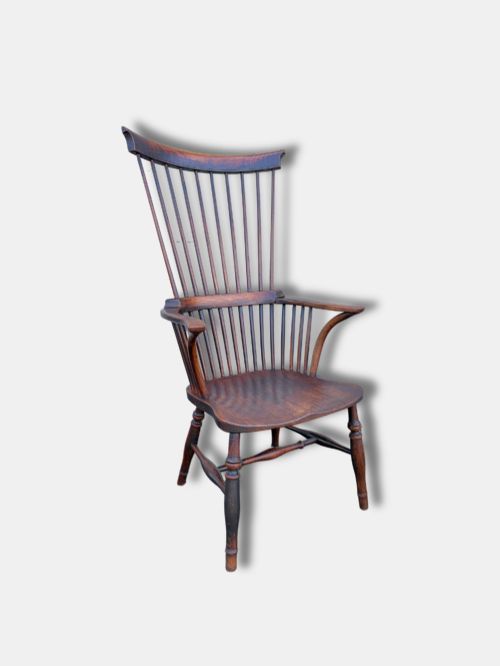
- A Windsor chair design where the back spindles extend upward into a horizontal headboard resembling the teeth of a comb. This style frequently appears on eighteenth-century examples.
- Crinoline stretcher
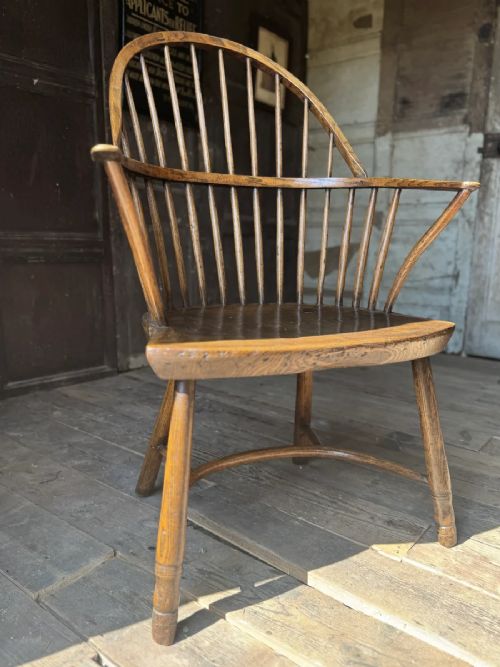
- A bent metal or wooden reinforcement connecting the legs of a Windsor chair in a continuous horseshoe curve. It strengthens the lower frame while providing a footrest.
- Smokers bow
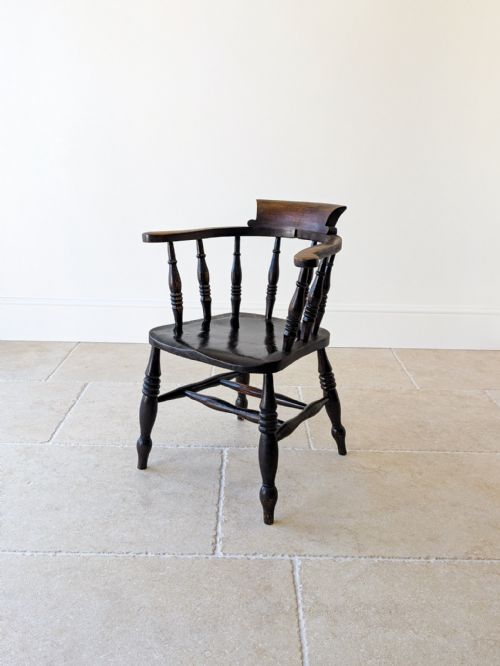
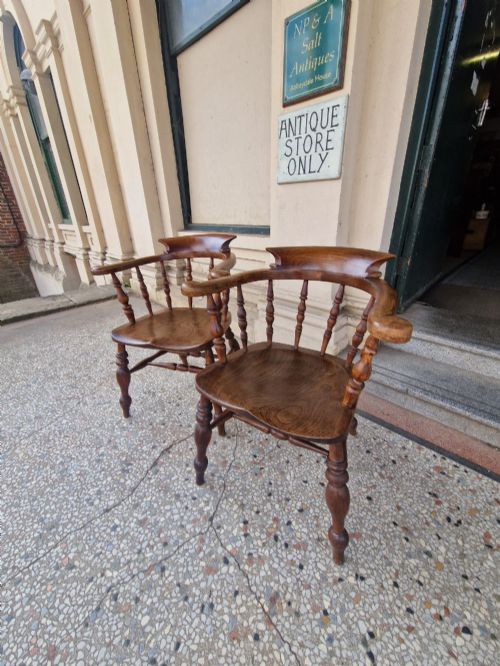
- A low-backed Windsor armchair with a rounded, continuous arm rail supported by short spindles. These comfortable chairs were common in nineteenth-century domestic and commercial interiors.
- Rush seat
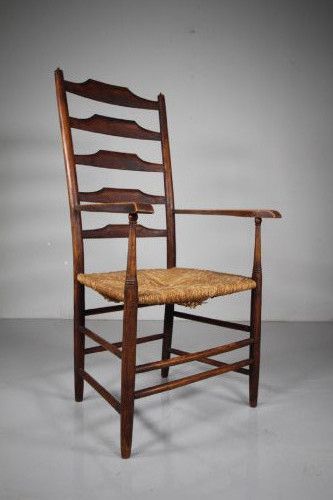
- A woven seating surface constructed from dried marsh rushes twisted into cords. This traditional method appears on ladder-back and country armchairs.
Antique Ash Chairs: Frequently Asked Questions
What is a Windsor chair?
A Windsor chair is a form of seating built around a thick wooden seat rather than a traditional frame. Vertical spindles and back bows are tenoned directly into this solid base.
Makers shaped these chairs for durability, utilising steam-bent woods for the upper backs and turned timbers for the legs and undercarriages.
How do I date an ash chair?
Dating relies on examining construction methods, tool marks, timber combinations and overall regional style. Eighteenth-century versions often feature high comb-backs and heavier country turnings, while later nineteenth-century examples display steam-bent wheel-backs or broader seat proportions.
Changes in screw types, nail manufacture and wood preparation also help establish the manufacturing period.
Are ash and elm mixed on these chairs?
Ash and elm appear together frequently because country makers matched woods to their specific structural strengths. Ash provided flexible resilience for bent parts and spindles, while elm offered tough, non-splitting stability for carved solid seats.
Other native timbers such as beech, oak or yew occasionally supplement the primary woods in the legs or arm rails.
How should I care for an antique ash chair?
Keep wooden chairs away from direct heat sources, strong sunlight and rapid humidity shifts to prevent timber shrinkage or cracking. Occasional application of suitable wax helps maintain the surface finish without building up heavy residues.
Check joinery periodically to ensure wedged tenons and stretcher joints remain stable under normal use.