




Antique Ash Bucket
An antique ash bucket brings solid hearth craft into a room, serving fireside needs with durable metal and wood construction.
Antique Ash Bucket
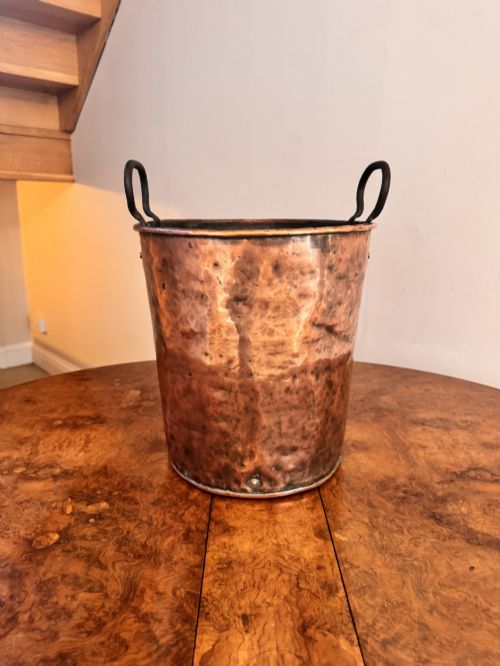
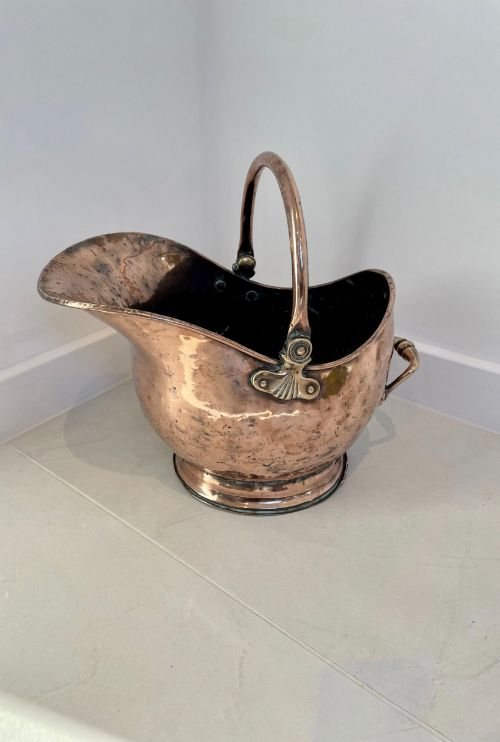
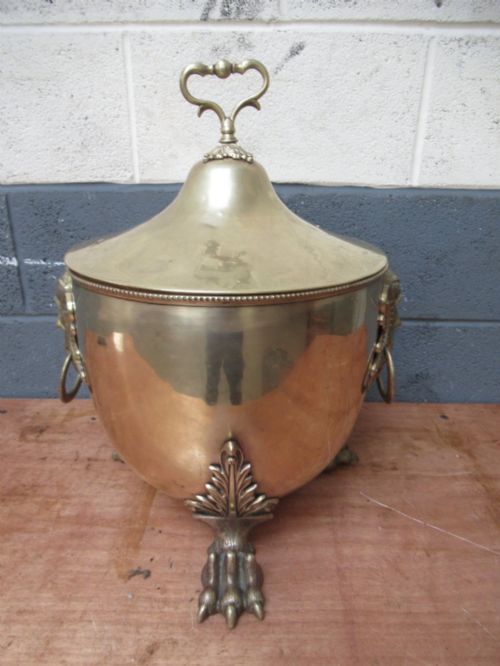
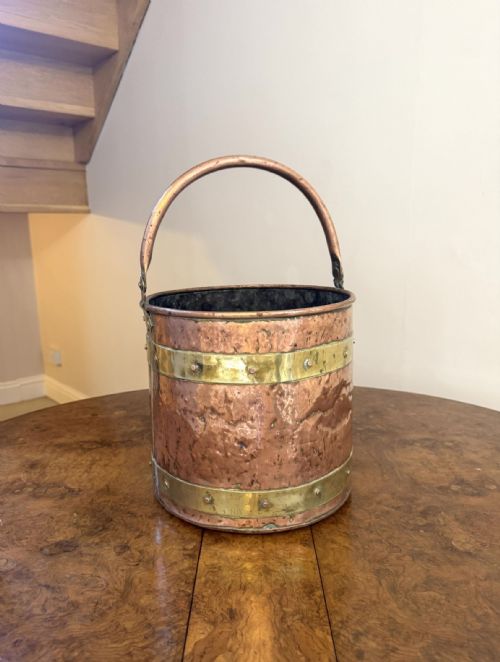
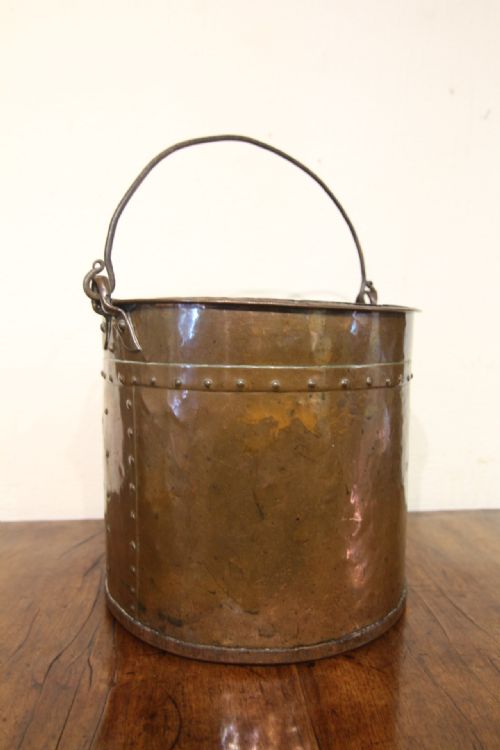
An antique ash bucket encompasses fireside accessories, coal scuttles, and bins dating from the eighteenth century through the early twentieth century. Buyers encounter helmet shapes, cylindrical buckets, and riveted cauldrons designed to hold coal, logs, or kindling by the hearth.
The selection here draws heavily from Victorian and Edwardian periods, alongside George III and Arts and Crafts examples. Materials span brass, copper, wrought iron, oak, and boiled leather, reflecting everyday domestic utility transformed by period craftsmanship.
How they were made
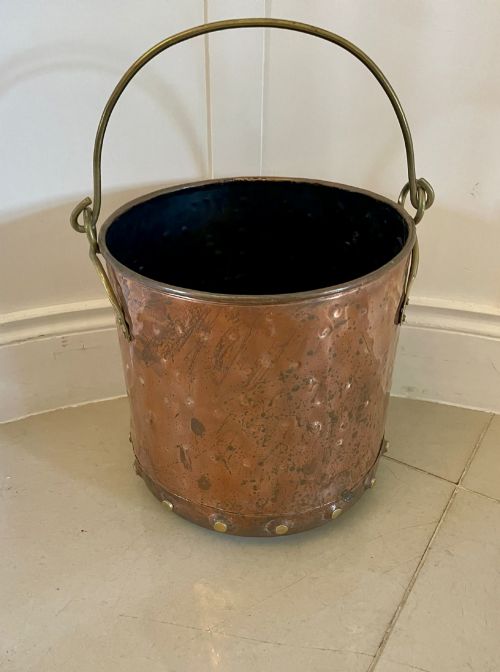
Many containers rely on sheet copper and brass, shaped by handbeaten techniques or riveted construction with wrought iron handles. Artisans utilised brass banding and copper studs to secure wooden bodies or reinforce leather and metal seams.
Makers integrated swing handles, swing bales, and interior liners of metal or wood to handle heavy loads of coal and ash. Surface finishes range from polished brass to patinated dinanderie copper and plain boiled leather.
Antique Ash Bucket Retail Price Guide 2026
Typical asking prices for ash bucket among the pieces listed under this phrase on Sellingantiques today, from the lower quarter to the upper quarter. They describe what is for sale here now, not the wider market.
What varies in quality
Quality rests upon the weight of the metal gauge and the integrity of the riveting, hammering, and banding. Heavy copper and thick brass retain their structural form better under the weight of coal than thin, machine-pressed sheet metal.
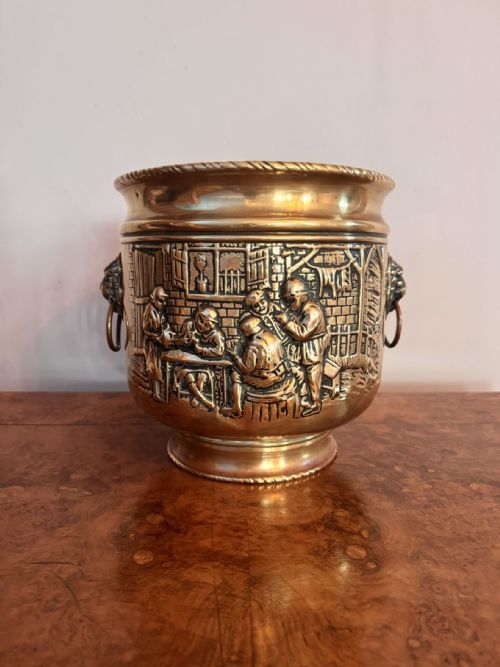
Design detail separates standard utility items from finer decorative pieces, such as Arts and Crafts hammered motifs, tavern scene engravings, or bespoke oak staves with precise copper binding.
Benham & Froud
The Antique Ash Bucket Glossary
- Coal scuttle
- A bucket or container with a sloped opening and a handle, designed for carrying coal to a fireplace. These often take a helmet shape.
- Dinanderie
- An umbrella term for objects made of brass, copper, or bronze, particularly vessels and decorative metalwork. It originates from the town of Dinant in Belgium.
- Boiled leather
- Leather hardened by being boiled in water, wax, or oil, producing a rigid, durable material suited for fire buckets.
- Coal hod
- A heavy-duty container used to store fuel beside the fireplace. It shares functions with coal bins and scuttles.
Antique Ash Bucket: Frequently Asked Questions
What is an antique ash bucket used for?
These vessels were originally made to hold coal, kindling, or ash near domestic fireplaces during the eighteenth, nineteenth, and early twentieth centuries.
Today, buyers utilise them beside modern stoves or open hearths as functional log stores, or repurpose them as planters and waste paper baskets.
How do I tell a Georgian coal scuttle from a Victorian one?
Georgian pieces, dating around eighteen hundred, typically display simpler hand-hammered copper construction and clean helmet silhouettes.
Victorian and Edwardian versions often incorporate machine-rolling, heavier brass banding, stamped decoration, or specific stylistic influences like Arts and Crafts handbeaten panels.
What metals were used to make these buckets?
The listings show a strong reliance on copper and brass, frequently combined with wrought iron handles and fixings.
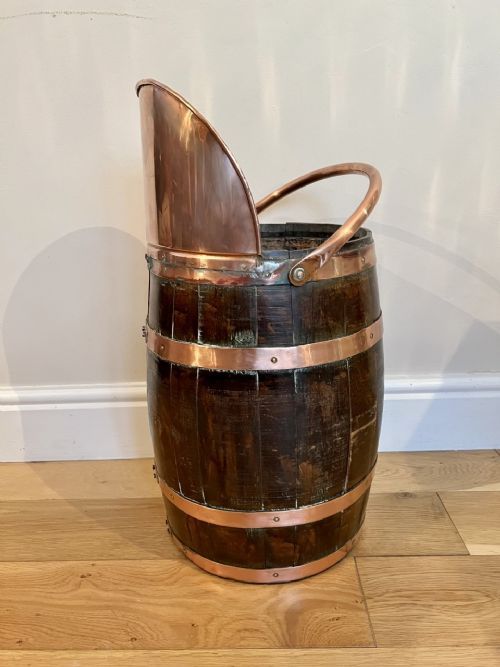
Some unusual examples utilise oak with copper bounding, or entirely non-metal bodies formed from boiled leather.
Can I use an antique copper bucket outdoors?
Many of these containers function well as indoor log holders, umbrella stands, or planters within a home.
Exposing antique boiled leather or unsealed iron to continuous outdoor dampness can accelerate wear on historical materials.