
Antique Arts and Crafts Furniture
These pieces of antique arts and crafts furniture bring sturdy oak construction, visible joinery and honest materials directly into modern rooms.
Antique Arts and Crafts Furniture
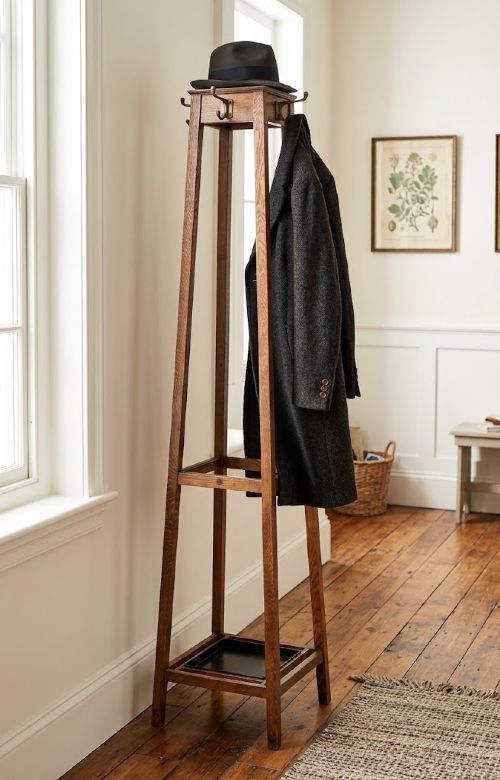
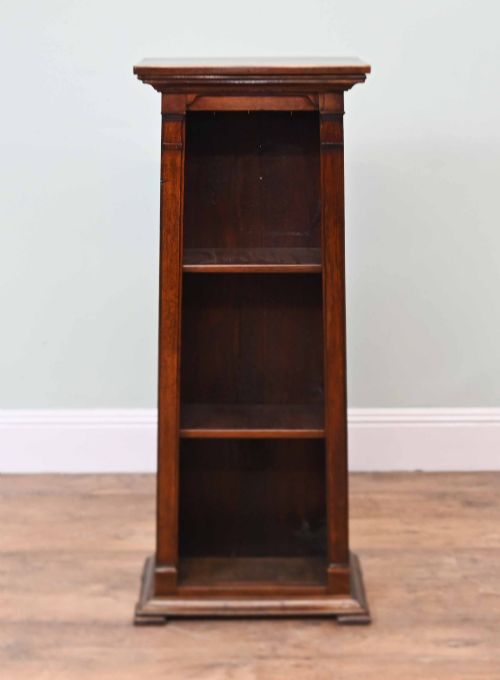
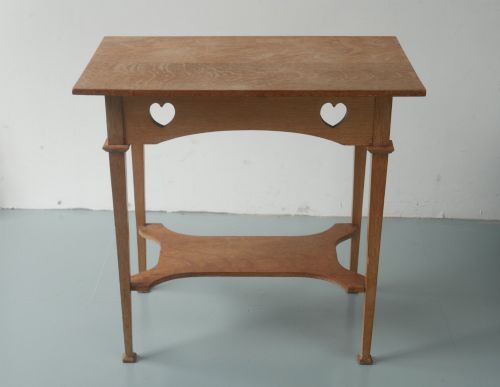
Antique arts and crafts furniture encompasses domestic pieces made from the late nineteenth century through the early decades of the twentieth century, bridging Victorian industrial production and modernist simplicity. The selection here leans heavily towards oak utility pieces, from side tables and bookcases to bureaus and hall stands, designed for everyday domestic use.
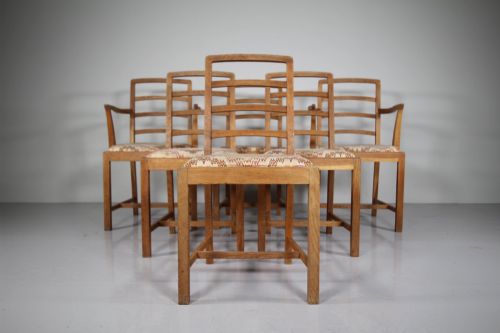
Makers focused on practical forms that showed the grain of the wood and the hand of the maker rather than heavy machine carving or gilt decoration. You will encounter dining chairs, sideboards, and display cabinets originating from periods spanning the Victorian era, the Edwardian years, and the nineteen-twenties.
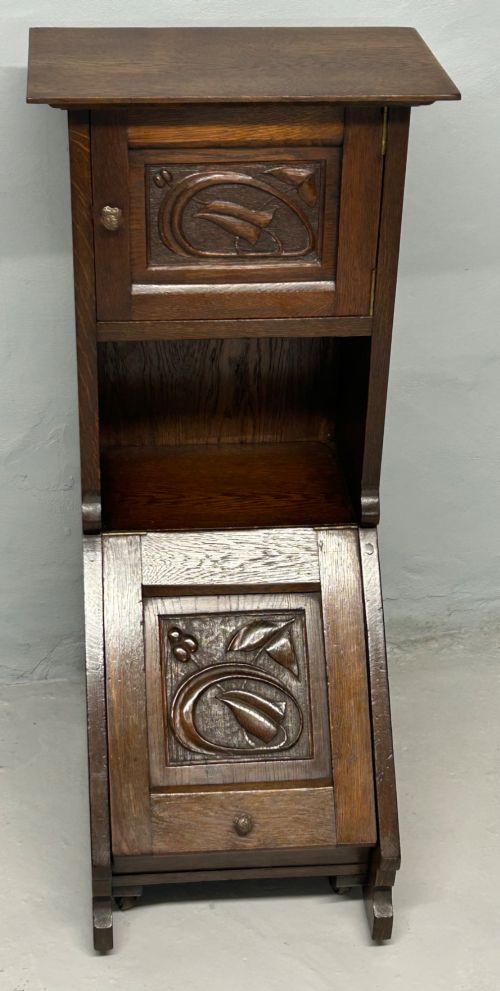
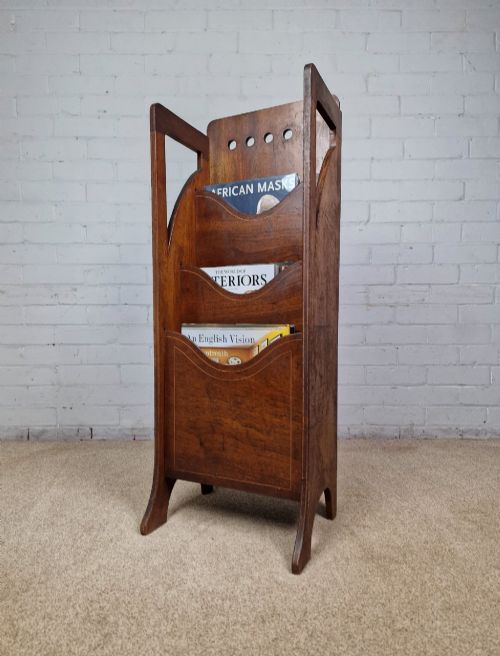
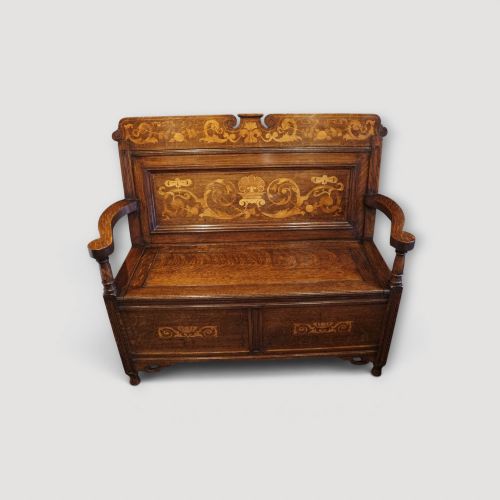
The aesthetic draws upon English country traditions, Gothic revival ideals, and the lighter touches of Art Nouveau and the Aesthetic Movement. These items were built to serve a function, whether housing books in an open bookcase, storing coal in a purdonium, or seating visitors on a high-back bench.
How They Were Made
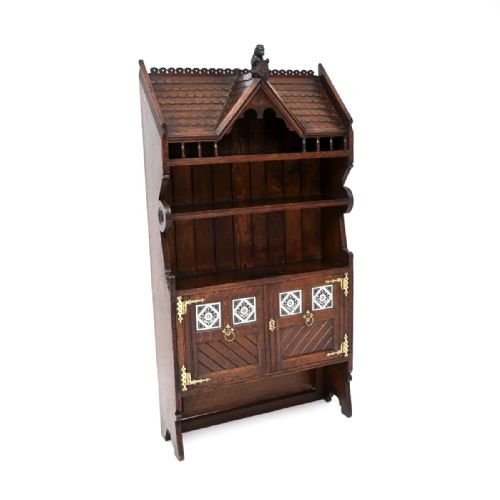
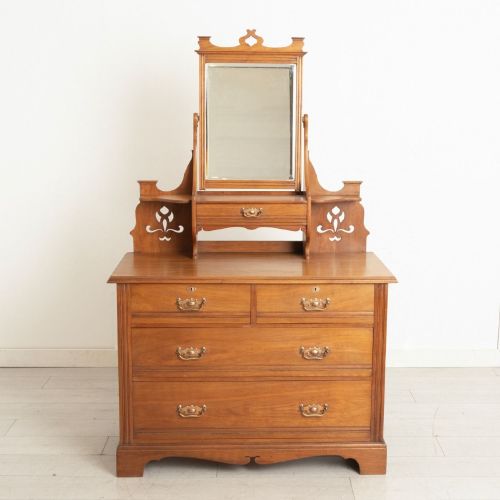
Solid oak serves as the primary material, joined using traditional methods like mortise and tenon joints that expose the construction rather than hiding it behind veneer. Workshops also utilised walnut, beech, fruitwood, and pine alongside metal, brass, and ceramic tile inserts for tabletops and splashbacks.
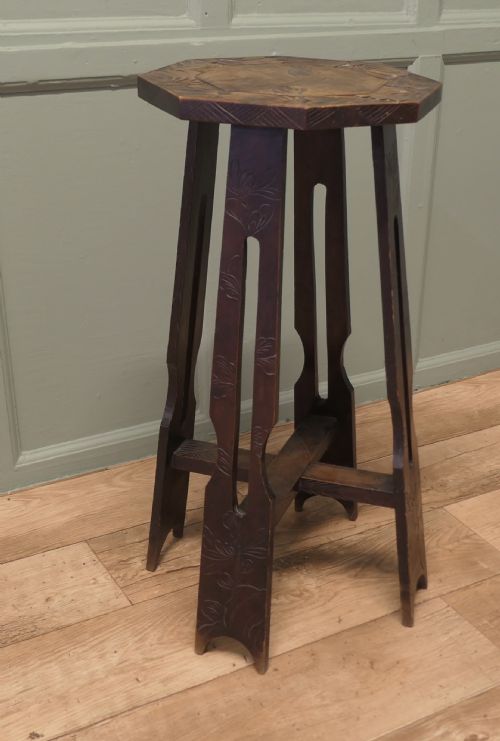
Makers relied on hand-planed surfaces, pegged joints, and shaped copper or brass hardware to finish the utilitarian forms. Decoration often took the form of carved trefoils, subtle inlay, or simple iron strap hinges that emphasised structural integrity.
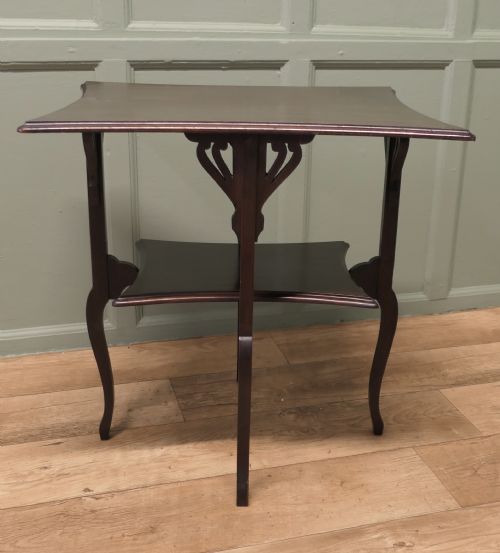
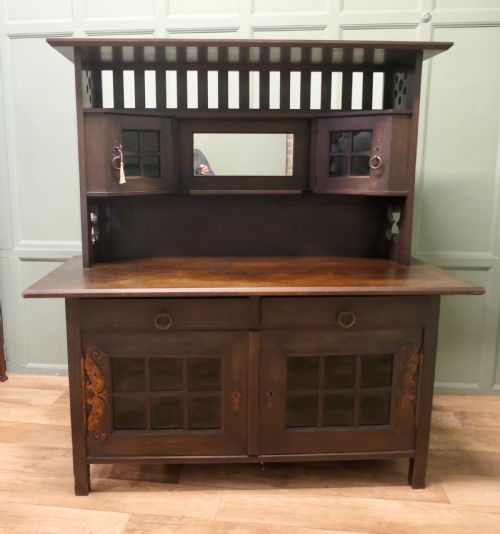
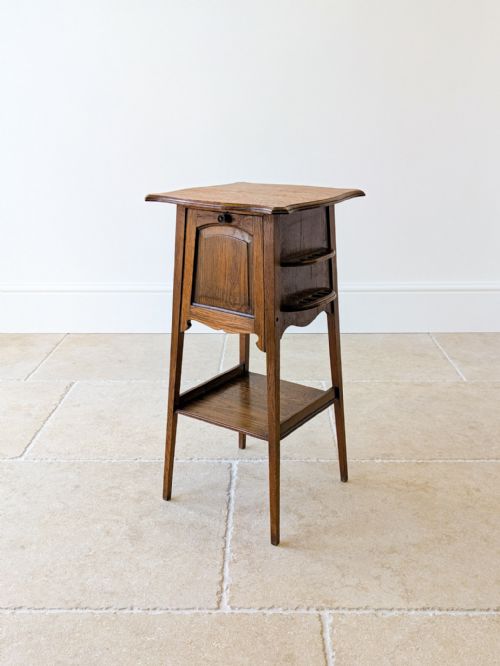
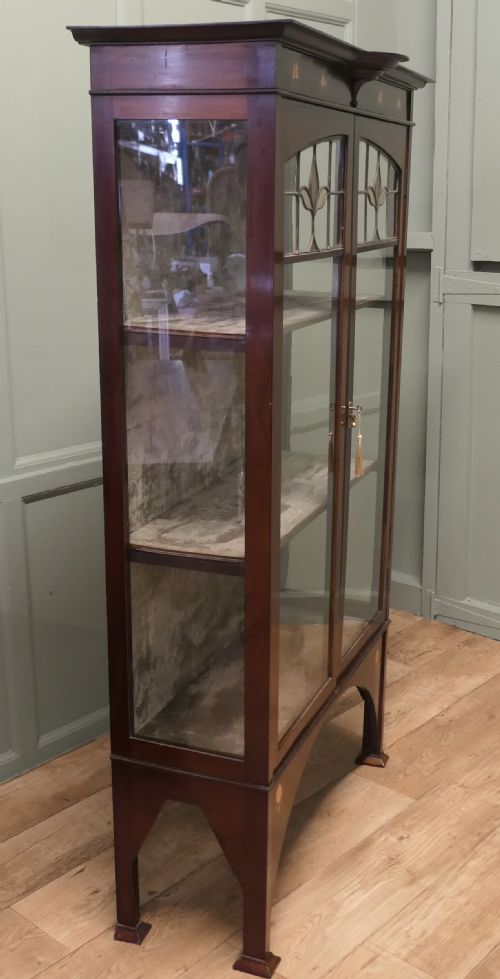
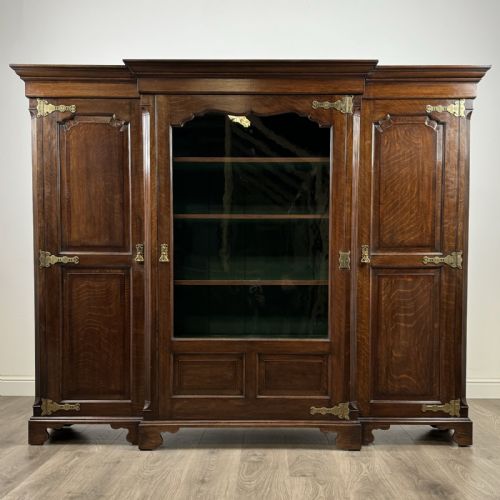
The listings show diverse forms spanning oak sideboards, glazed display cabinets, and occasional tables dating from the late nineteenth century onwards.
What Varies in Quality
Quality rests upon the integrity of the timber selection and the precision of the joinery rather than surface elaboration. Pieces constructed by recognised firms exhibit thoughtful proportion and careful grain matching across panels and doors.
Design execution distinguishes standard utilitarian output from pieces conceived by notable architects and designers. The weight of the hardware, the retention of original labels, and the integration of structural details like pegged tenons separate standard items from superior workshop production.
Leonard Wyburd·Liberty and Co·John Moyr Smith·Shapland and Petter·Heals of London·Finnigans·GM Elwood·JS Henry·Oliver Morel
The Antique Arts and Crafts Furniture Glossary
- Purdonium
- A specialised coal box or cabinet designed to hold fuel near a fireplace, frequently fitted with a metal liner and a hinged lid.
- Settle
- A wooden bench featuring a high back to block drafts and enclosed storage beneath the seat or armrests.
- Secessionist
- A stylistic movement derived from continental European design that favoured geometric abstraction and stylized floral motifs over organic curves.
- Mortise and tenon
- A primary woodworking joint where a protruding tongue fits tightly into a corresponding cavity to lock two pieces of wood at a right angle.
Antique Arts and Crafts Furniture: Frequently Asked Questions
How do I identify arts and crafts furniture?
Look for honest construction methods, visible joinery such as pegged tenons, and a focus on the natural grain of oak or walnut. Decoration remains restrained, prioritising utility and simple geometric or floral motifs.
Items often lack the heavy ornamentation of Victorian furniture, favoring clean lines, metal strap hinges, and functional hardware made from brass or copper.
Where were these pieces originally made?
Production centred largely in British workshops, ranging from London retail houses to regional makers in Scotland and provincial towns. Many pieces emerged from dedicated design guilds and manufacturing firms operating at the turn of the twentieth century.
Retailers often commissioned specific cabinets, sideboards, and chairs from independent workshops, sometimes applying paper labels or brand marks to the finished timber.
How do I care for antique oak furniture?
Keep wooden surfaces away from direct heat sources and rapid temperature fluctuations to prevent the solid timber from splitting or warping. Clean the oak gently using a soft, dry cloth to remove dust without stripping the natural finish.
Applying a traditional beeswax polish periodically helps nourish the grain and protects the surface from everyday wear while maintaining the original lustre.
Can I use these items in a modern home?
These practical forms integrate easily into contemporary rooms because their neutral wood tones and straightforward proportions suit varied interior schemes. Bookcases, side tables, and desks provide functional storage and workspace that serves modern daily routines.
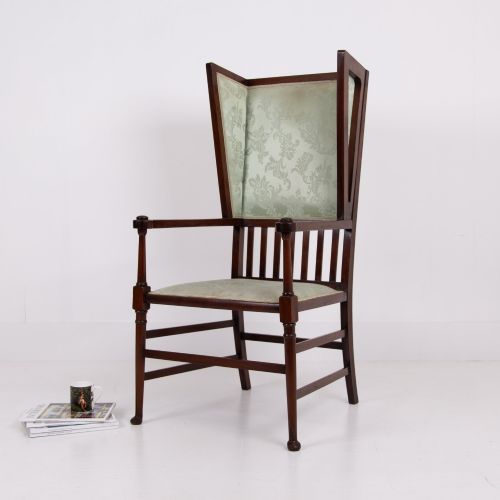
Chairs and benches bring sturdy seating options into hallways, dining spaces, and living areas without overwhelming the surrounding floor plan.