




Antique Armorial China
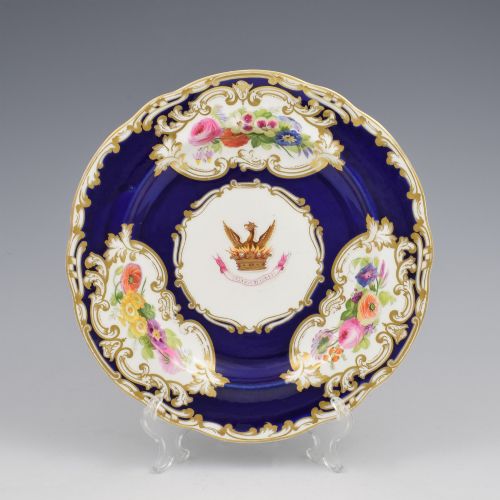
Antique armorial china carries the painted crests and coats of arms of notable families upon fine porcelain and ceramic vessels.
Antique Armorial China
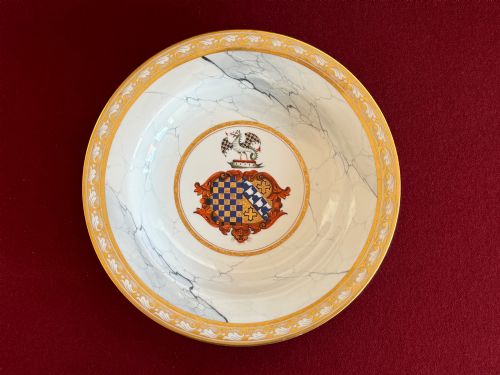
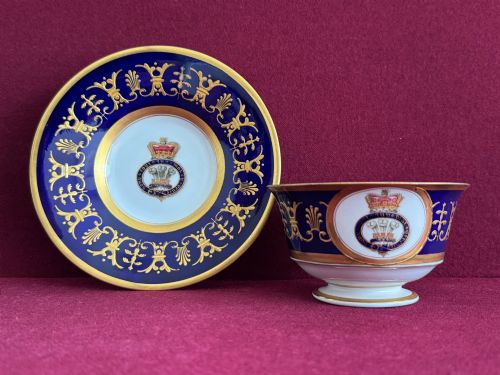
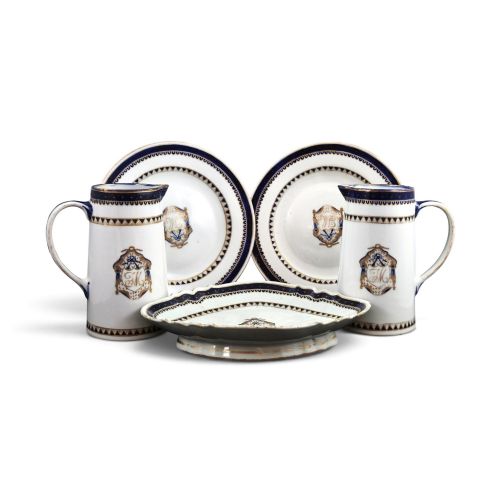
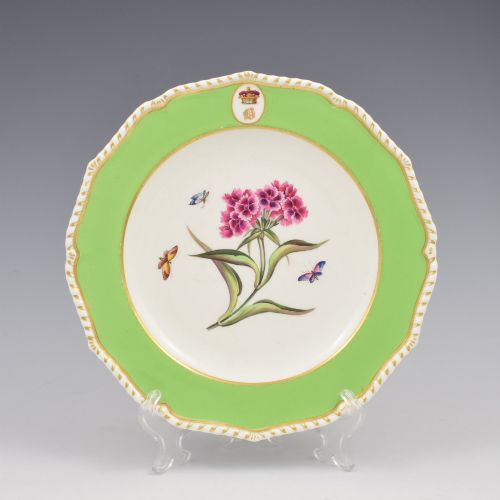
When you search for antique armorial china, you encounter decorative plates, soup plates, teacups, saucers, and serveware painted with familial heraldry. These pieces originate primarily from eighteenth-century Chinese export kilns as well as nineteenth-century English factories like Worcester, Derby, and Minton.
The objects span periods from the mid-eighteenth century through the late Victorian era, taking forms such as octagonal soup plates, dessert plates, and porcelain tableware. Domestic English pieces from the Regency and Georgian periods appear alongside Chinese export wares created for European commissioners.
Chinese export porcelain pieces from the Qianlong period sit alongside British bone china and soft-paste porcelain services commissioned by bishops, marquesses, and nobility. The selection encompasses both individual cabinet plates and remnants of extensive dining services.
How antique armorial china was made
Potters shaped these objects from soft-paste porcelain, bone china, glazed pottery, and standard porcelain bodies before firing them in kilns. Artisans then applied intricate hand-painted enamels, gilding, and gold leaf to render precise heraldic shields, crests, and botanical motifs.
Chinese export workshops utilised durable hard-paste porcelain painted with famille rose enamels, while English manufacturers at Worcester, Derby, and Coalport employed refined porcelain pastes suited to domestic cabinet display. Glazing protected the delicate pigments during subsequent low-temperature enamel firings.
Antique Armorial China Retail Price Guide 2026
Typical asking prices for armorial china among the pieces listed under this phrase on Sellingantiques today, from the lower quarter to the upper quarter. They describe what is for sale here now, not the wider market.
The selection includes dessert plates, soup plates, and tea services decorated with enamel, gold leaf, and traditional hand-painted family crests.
What varies in quality
The fineness of the heraldic painting and the precision of the enamel work distinguish exceptional armorial items from standard production. Crisp detailing in the depiction of crests, mantling, and mottos indicates superior artistry.
The distinction between a major factory commission, such as a named noble service, and commercial export wares alters the historical significance of the piece. Porcelain bodies that remain bright and white without firing distortions command greater attention from collectors.
Barr and Barr·Barr Flight and Barr·Bloor Derby·Chamberlain Worcester·Coalport Porcelain·Samson Of Paris·Minton
The Antique Armorial China Glossary
- Armorial
- Bearing a coat of arms or heraldic crest. This heraldry identifies the original family or institution that commissioned the ceramic service.
- Famille rose
- A palette of opaque enamel colours dominated by pink or rose hues, introduced in Chinese export porcelain during the eighteenth century. This decorative style often frames the central armorial shield.
- Soft-paste porcelain
- A ceramic material composed of white clay and glass frit, fired at lower temperatures than hard-paste porcelain. English factories utilised this body extensively before bone china became dominant.
- Gilding
- The application of gold leaf or powdered gold to ceramic surfaces for decorative emphasis. It frequently highlights the rim edges and heraldic details of fine tableware.
- Qianlong period
- The era of the Qing dynasty spanning from seventeen thirty-six to seventeen ninety-nine, renowned for prolific Chinese export porcelain production. Armorial pieces from this time combined European heraldry with Asian decorative borders.
Antique Armorial China: Frequently Asked Questions
How were armorial services ordered?
European patrons typically sent drawings of their family crests, coats of arms, and mottoes to trading agents or factory directors. These designs were then dispatched to kilns in Jingdezhen or British factories for painting upon porcelain blanks.
The resulting services could include hundreds of matching plates, soup plates, and serving dishes for grand banquets. Surviving examples often represent dispersed portions of these extensive family commissions.
How do I identify the family crest?
Identifying the family involves examining the heraldic elements, including the shield, helmet, mantling, and motto depicted on the ceramic surface. Armorial dictionaries and peerage guides help match these specific charges and tinctures to historical families.
Some pieces include specific biographical context within the listing, such as commissions for bishops, earls, or specific noble services. Comparing the crest to known British or continental heraldry reveals the original commissioner.
How should I display armorial plates?
Armorial plates display effectively on walls using secure plate hangers or within enclosed cabinets protected from dust and light. Placing them away from direct sunlight preserves the vibrancy of the hand-painted enamels and gold leaf.
Because these ceramics are fragile antiques, stable placement prevents accidental tipping or impact damage. Wall mounting allows the detailed heraldry and border patterns to remain fully visible for study.