

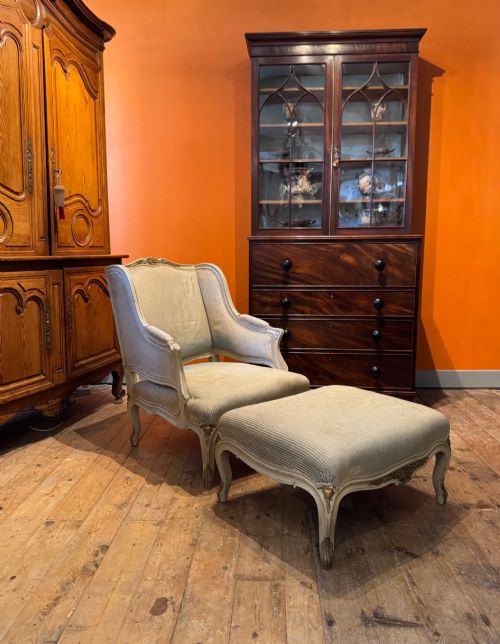


Antique Armchair with Footstool
An antique armchair with footstool offers a restful seat, pairing comfortable parlour chairs with matching low rests.
Antique Armchair with Footstool
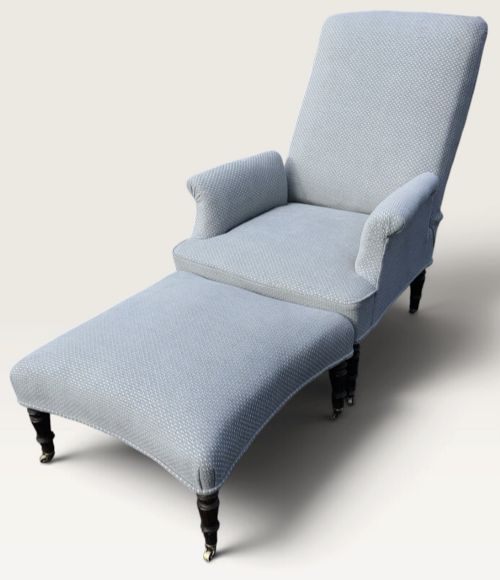
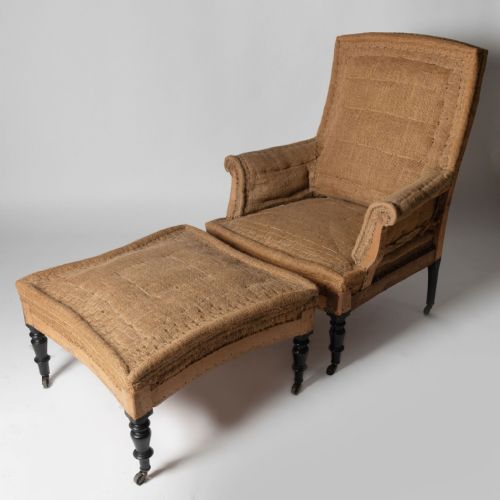
When you search for an antique armchair with footstool, you look for a matched pairing of a seated parlour chair and a low rest for the feet. These seating sets come from periods ranging from the mid-nineteenth century up through the Edwardian era and into the nineteen-twenties.
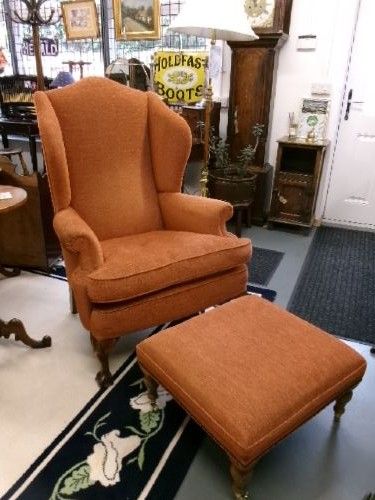
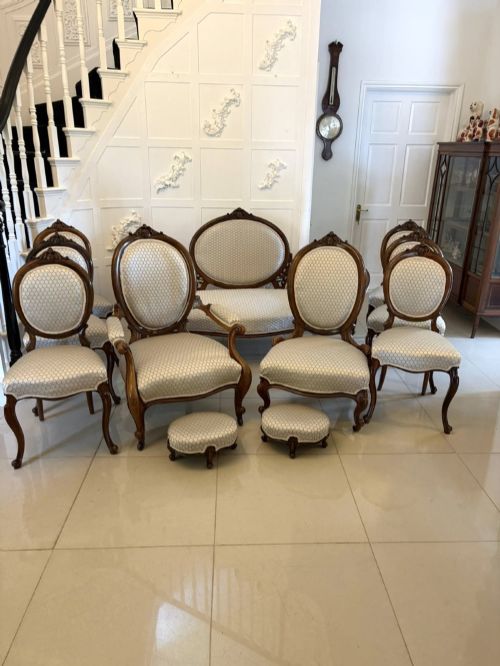
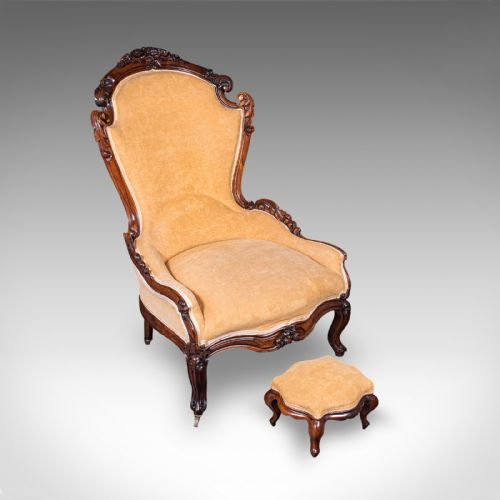
You meet various forms on this page, including buttoned back armchairs with matching stools, wing armchairs, and larger salon suites that incorporate footstools alongside sofas. Origins span English workshops and French revival styles.
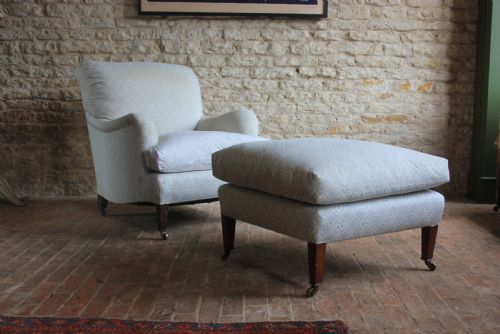
The combinations often unite seating with a companion foot-stool, providing a unified appearance for a drawing room, parlour, or living space. Many pieces reflect traditional British or French design influences.
How these pieces were made
Carpenters utilised timbers such as walnut, mahogany, and beech to build the frames for these chairs and stools, often carving the wood into ornamental shapes. Metal elements like iron and brass sometimes reinforced the internal structure or provided decorative castors.
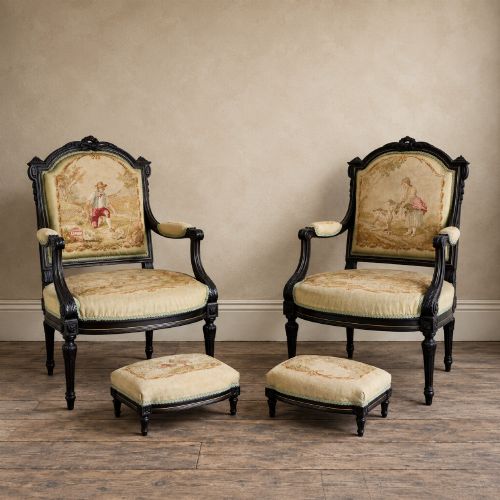
Upholsterers finished the seats using textiles including velvet, standard fabric, and leather, frequently adding buttoned detailing to the backs. Ebonising treatments were also applied to wooden beech frames during the nineteenth-century revival periods.
Antique Armchair with Footstool Retail Price Guide 2026
Typical asking prices for armchair with footstool among the pieces listed under this phrase on Sellingantiques today, from the lower quarter to the upper quarter. They describe what is for sale here now, not the wider market.
Colonel's chairs and bridge-water models prove that even military men and bridge players appreciated a sturdy footstool.
What varies in quality
The refinement of the woodwork separates the standard examples from the finer ones, particularly in the depth and crispness of carved walnut or mahogany details. Elaborate suites featuring multiple matched chairs and footstools demonstrate higher ambition than isolated parlour seats.
The choice of upholstery materials also dictates the standing of a piece, with fine velvet or leather finishes representing a different tier of craftsmanship compared to basic fabric coverings. Coherence between the armchair and its companion footstool remains a key indicator of original pairing.
Howard & Sons
The Antique Armchair with Footstool Glossary
- Wing Armchair
- A fireside chair featuring protective side panels designed to shield the sitter from drafts. These upholstered seats often appear alongside matching footstools.
- Salon Suite
- A matched set of drawing room seating that includes sofas, armchairs, side chairs, and footstools. Such groupings were designed for formal entertaining in nineteenth-century homes.
- Ebonised
- Wood treated with a dark stain or finish to imitate ebony. This technique frequently appears on nineteenth-century French revival beech frames.
- Buttoned Back
- An upholstery method where depressions are created in the padding by stitching deep buttons at regular intervals. This treatment provides both tension and decorative texture to the chair back.
- Chaise Longues
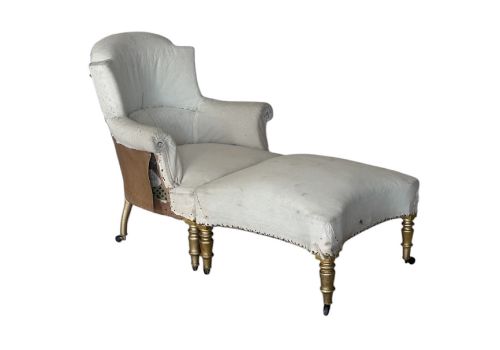
- An elongated upholstered chair intended for reclining, sometimes grouped with daybeds or related seating. These pieces utilise matching textiles and frames.
Antique Armchair with Footstool: Frequently Asked Questions
What is an antique armchair with footstool?
An antique armchair with footstool is a paired seating arrangement consisting of a primary parlour chair and a low companion rest for the feet. These combinations are designed to provide extra comfort and relaxation in a living space or drawing room.
They appear in various nineteenth-century and early twentieth-century styles, ranging from simple English parlour seats to elaborate French revival salon furniture.
How were these chairs used historically?
Historically, these seating combinations were placed in parlours, drawing rooms, and bedrooms to offer comfort during reading, resting, or social gatherings. The companion footstool allowed the sitter to recline without needing a separate daybed.
Larger suites containing armchairs and footstools furnished formal reception rooms where matching decor was important for entertaining guests.
How do I live with them?
Living with these pieces involves placing the armchair and footstool together in a study, drawing room, or bedroom as functional seating. They pair well with traditional interiors and add textural interest through materials like leather, velvet, and carved wood.
Care should be taken to protect antique textiles from direct sunlight and to maintain wooden frames with appropriate furniture wax.
How do I tell periods apart?
You can distinguish periods by examining the wood, upholstery style, and decorative motifs used on the frame. Mid-nineteenth-century examples often feature heavily carved walnut or mahogany, while later Edwardian or nineteen-twenties pieces may show different stylistic influences.
French revival items from the nineteenth century often display ebonised beech and distinct continental carving patterns compared to traditional British furniture.