




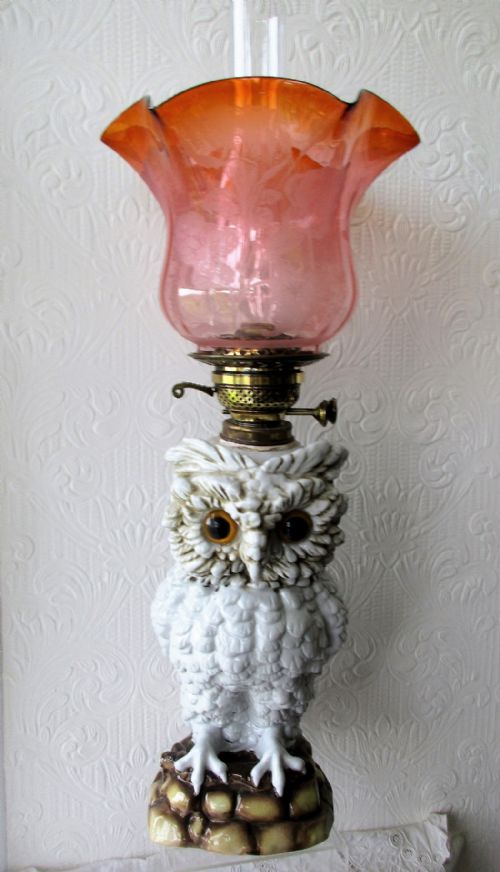


Antique Animal Table Lamps
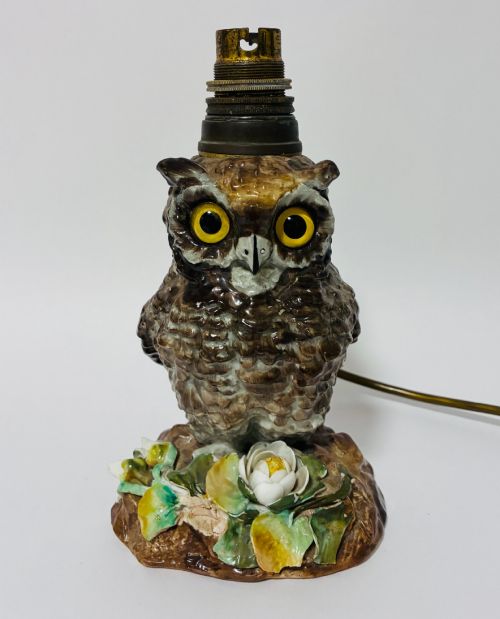
These antique animal table lamps bring character to a room through sculpted owls, dogs, bears and eagles rendered in porcelain, brass and carved wood.
Antique Animal Table Lamps
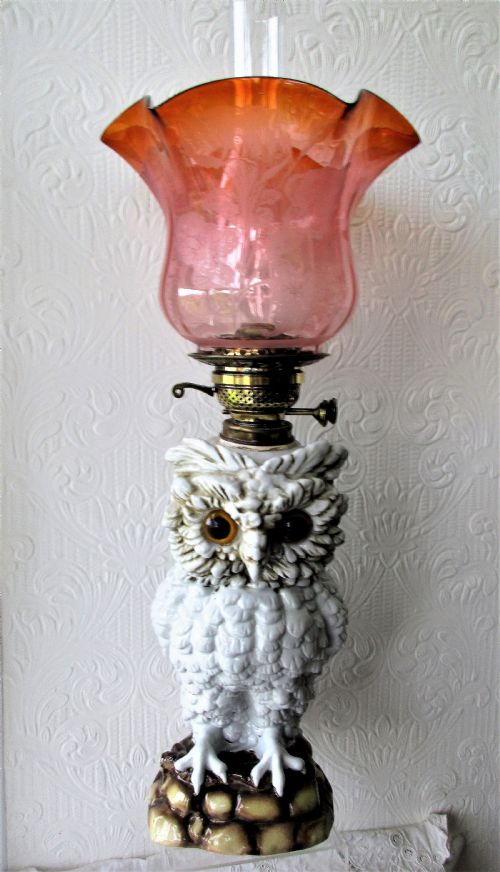
These antique animal table lamps combine practical illumination with sculptural representations of creatures, appearing as table lamps and converted oil lamps. Collectors find forms ranging from birds of prey to domestic dogs and woodland bears.
The pieces on this page span the Victorian, Edwardian and Art Deco periods, alongside Black Forest and American Folk Art traditions. Ceramic and porcelain owl motifs from German factories recur frequently among the offerings.
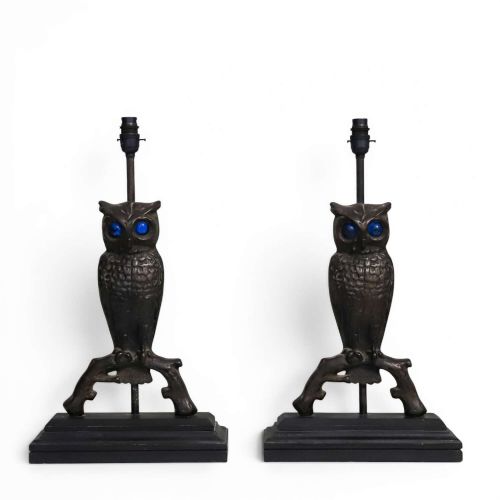
Origins stretch across Britain, France, Germany and America, taking the shape of porcelain figures, cast iron pairs converted from andirons, and carved linden wood. Many started life as oil lamps or night lights before conversion to electricity.
How they were made
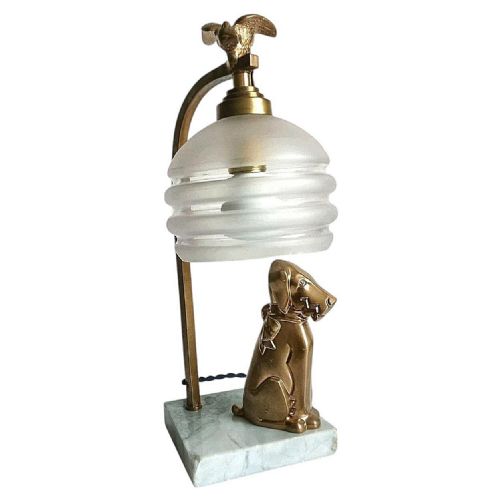
German factories such as Sitzendorf and Ernst Bohne & Sohn utilised moulded porcelain, hand-painting the feathers and fur of owls and dogs. French and American workshops combined cast metals with glass shades and marble plinths.
Antique Animal Table Lamps Retail Price Guide 2026
Typical asking prices for animal table lamps among the pieces listed under this phrase on Sellingantiques today, from the lower quarter to the upper quarter. They describe what is for sale here now, not the wider market.
Periods represented span Victorian, Edwardian, Art Deco, nineteen-twenty and nineteen-thirty.
What varies in quality
Quality rests on the precision of the animal modelling and the crispness of the material, whether hand-carved wood, cast metal or painted porcelain. Softer details in moulded ceramic separate standard production from finer studio work.
The integrity of the materials defines the upper end of the range, seen in genuine marble bases, heavy brass components and undamaged hand-painted glazes. Alterations such as conversions from oil lamps or andirons affect the original construction.
Ernst Bohne & Sohn·Sitzendorf
The Antique Animal Table Lamps Glossary
- Spelter
- A zinc alloy frequently used as a cheaper alternative to bronze for casting sculptural bases and figures during the nineteenth and early twentieth centuries.
- Black Forest
- A style of wood carving originating from the mountainous region of central Europe, renowned for realistic animal sculptures rendered in linden wood.
- Opaline
- A type of semi-translucent glass, often mottled or coloured, used for lamp shades and night light bodies to diffuse light softly.
- Andiron
- A horizontal iron support used in an open fireplace, occasionally repurposed in folk art traditions to create heavy metal lamp bases.
- Linden
- A pale hardwood traditionally favoured by European carvers for its fine grain and suitability for intricate sculptural detail.
Antique Animal Table Lamps: Frequently Asked Questions
What animals appear on these lamps?
Owls, dogs, bears, eagles, serpents and seagulls dominate the designs across these pieces. Ceramic owls and carved bears are especially common.
Makers also shaped spitz dogs, alsatians and parrots in porcelain, brass and marble.
Were these originally electric?
Many examples began as oil lamps or night lights before later conversion to electricity. Some metal designs started life as functional fireplace items.
Wiring is updated for modern use while retaining the antique bases and sculptural bodies.
How do I date an animal lamp?
Dating relies on the materials, manufacturing marks and stylistic traits of the period. Victorian and Edwardian pieces often feature detailed porcelain or heavy brass.
Art Deco examples from the nineteen-thirties utilise mottled opaline glass, granite and streamlined metal forms.
Where were these lamps made?
The evidence points to workshops and factories across Germany, France, Britain and America. German porcelain works produced numerous bird and dog figures.
Black Forest carvers worked in wood, while American makers utilised cast iron.