

Antique Amethyst Glass
These pieces of antique amethyst glass bring deep purple hues to decanters, chandeliers, and jewellery from the Georgian era to the Art Deco period.
Antique Amethyst Glass
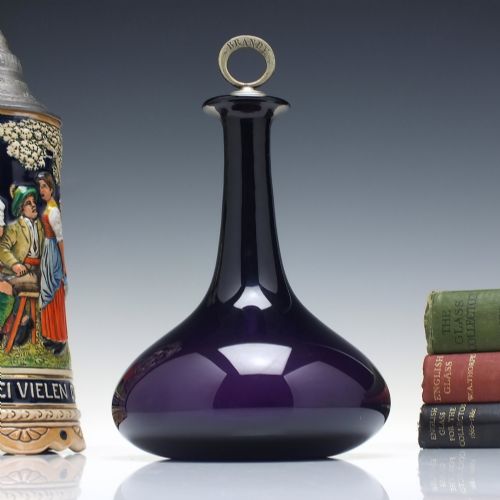
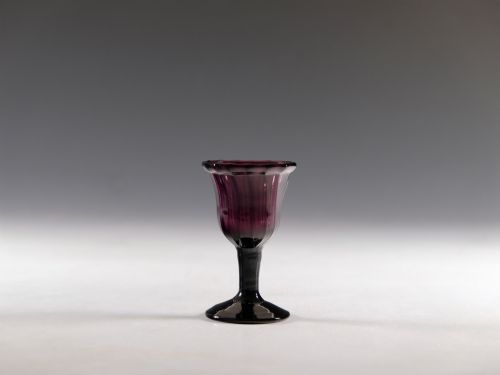
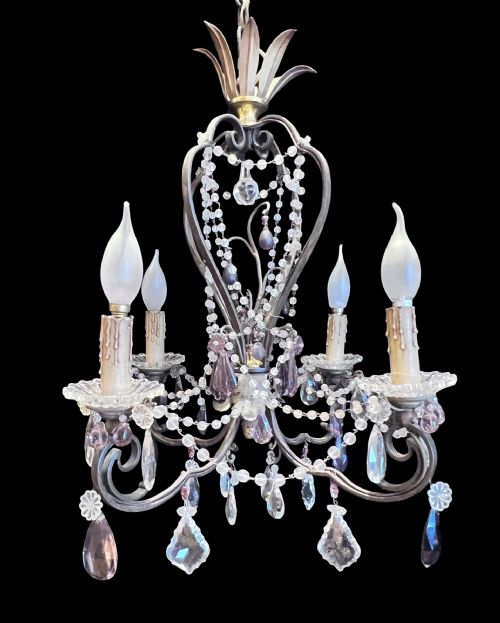
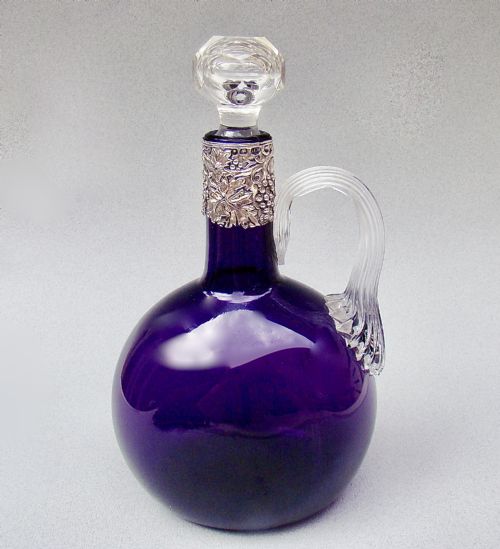
When searching for antique amethyst glass, you encounter a varied assortment of decorative vessels and personal ornaments spanning the Georgian, Victorian, and Art Deco periods. The selection includes drinking vessels, decanters, scent bottles, and chandeliers alongside jewellery set with purple glass and paste.
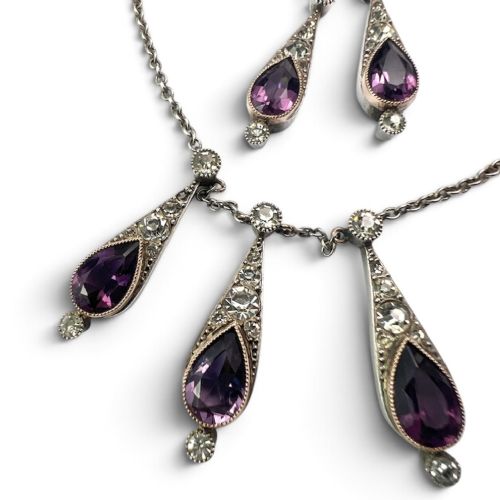
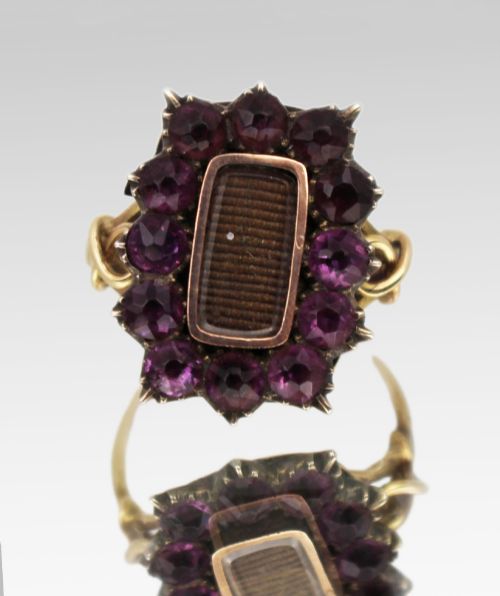
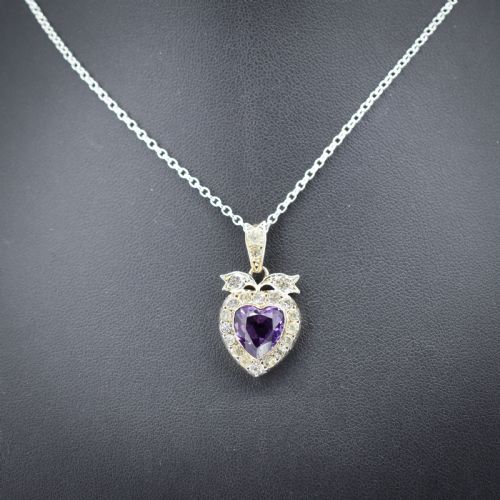
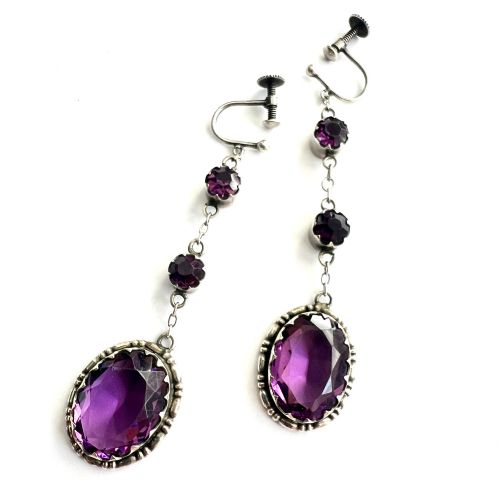
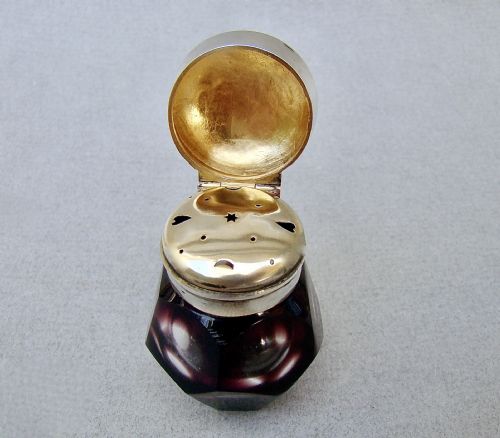
Vessels range from wine roemers and carafes with tumblers to scent bottles mounted in silver and overlay glass. Jewellery forms include mourning rings, cocktail rings, pendants, charms, and earrings incorporating gold, silver, and paste stones.
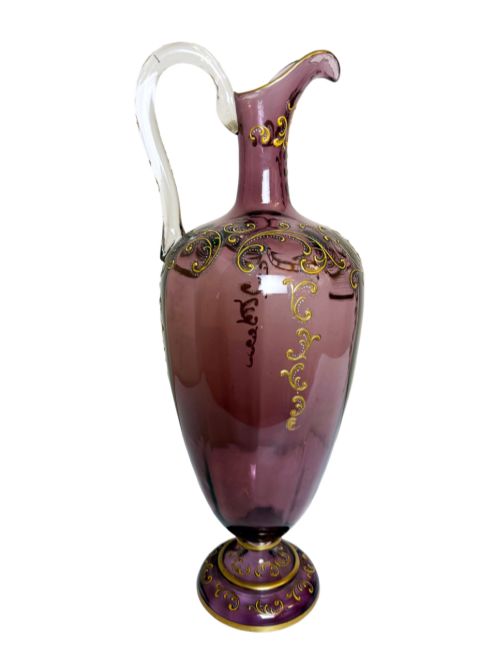
Most items originate from English and French makers, stretching from the early nineteenth century through to the 1920s and 1930s. The material appears in deep purple tones, sometimes paired with hand-painted gilt applique, enamel decoration, or amber bowls.
Materials and methods
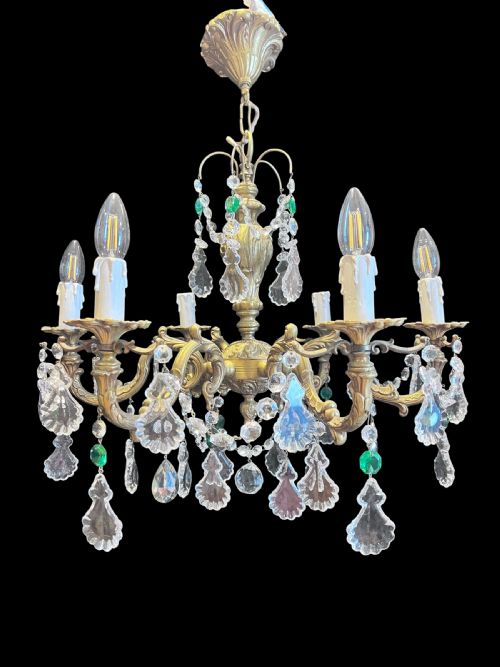
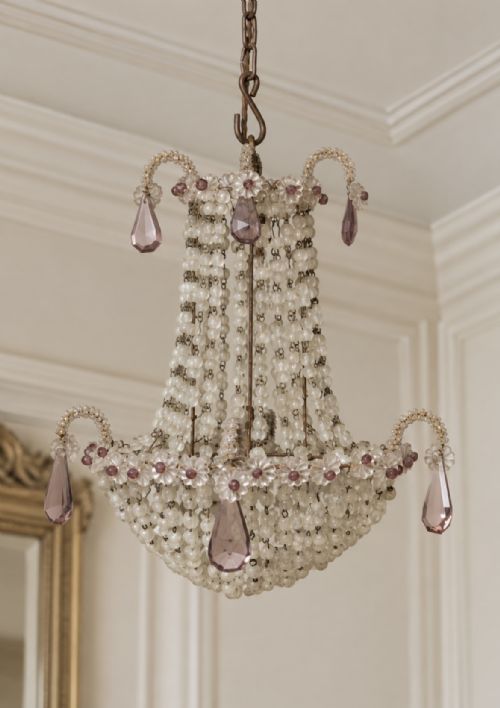
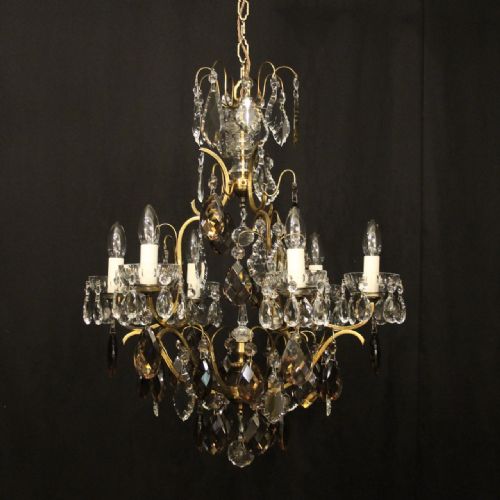
Glass production involves blown and cut techniques to shape decanters, pitchers, and wine glasses, often finished with hand-painted gilt applique or enameled wild roses. Overlay glass incorporates layered colours, while crystal chandeliers combine metal frames with cut glass and coloured crystals.
Metal mounts utilise sterling silver, 18ct gold, 14ct gold, yellow gold, brass, and gilt metals to secure scent bottles, vinaigrettes, and rouge pots. Jewellery pieces employ silver and gold settings combined with paste glass and pearls to hold purple stones.
Antique Amethyst Glass Retail Price Guide 2026
Typical asking prices for amethyst glass among the pieces listed under this phrase on Sellingantiques today, from the lower quarter to the upper quarter. They describe what is for sale here now, not the wider market.
Some Victorian glass carafes come paired with a matching tumbler designed to sit directly upside down over the neck as a stopper.
Quality variations
Distinctions in quality rest on the precision of the glass cutting, the crispness of any engraved or enameled surface decoration, and the integrity of metal mounts in silver or gold. Hand-painted gilt details and overlay work demand steady execution that preserves clean lines across the purple ground.
Mounts by documented silversmiths or makers add distinction to glass decanters, vinaigrettes, and rouge pots through hallmarked precious metals. In jewellery, the setting work in gold or silver paired with old-cut paste stones dictates the overall standard.
Henry Matthews·La Mason Bagues
The Antique Amethyst Glass Glossary
- Paste glass
- A heavy flint glass with high refractive index, cut and polished to imitate gemstones in jewellery. It is found in rings, pendants, and earrings from the Georgian period onward.
- Roemer
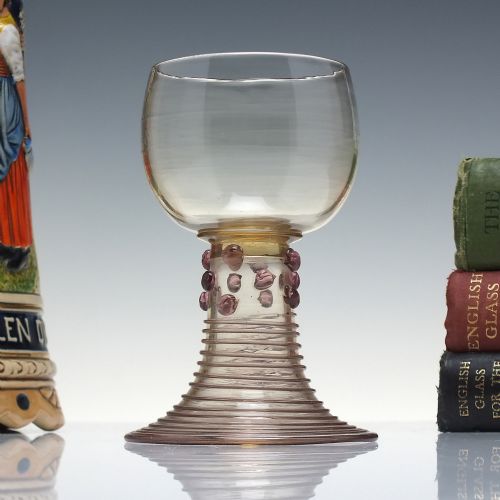
- A traditional Germanic wine glass with a large bowl resting on a ribbed or studded stem. Examples appear in amethyst glass with contrasting amber bowls.
- Vinaigrette
- A small ornamental box with a perforated inner grill used to hold a sponge soaked in aromatic vinegar. These portable containers were frequently mounted in silver.
- Overlay glass
- A technique where a layer of coloured glass is fused over a clear or contrasting base layer, then partially cut away to reveal the underlayer. This method creates decorative patterns on scent bottles and rouge pots.
Antique Amethyst Glass: Frequently Asked Questions
How do I date antique amethyst glass?
Dating relies on the object form, manufacturing technique, and any accompanying metal mounts or hallmarks. Georgian and Victorian pieces often show hand-blown irregularities and polished pontil marks.
Later items from the Art Deco period exhibit geometric silver mounts and machine-finished glass forms. Hallmarks on silver collars and scent bottles provide specific decades and assay office locations.
Are amethyst glass decanters safe for wine?
These historical vessels were made for serving wine and liquids during the nineteenth century. However, older glass formulations can contain trace elements.
Examine the interior for heavy staining or clouding before deciding on functional use. Many collectors prefer to keep them for display rather than daily service.
How should I clean antique glass chandeliers?
Maintenance requires gentle dusting with a soft cloth while the chandelier remains hung. For deeper cleaning, remove glass drops and crystals individually.
Wash them in lukewarm water with mild soap, rinse thoroughly, and dry immediately to protect metal pins and gilt brass frames.