







Antique Altar Lamp
These antique altar lamp pieces bring ecclesiastical presence into domestic rooms, offering brass and giltwood forms that began life as church furnishings.
Antique Altar Lamp
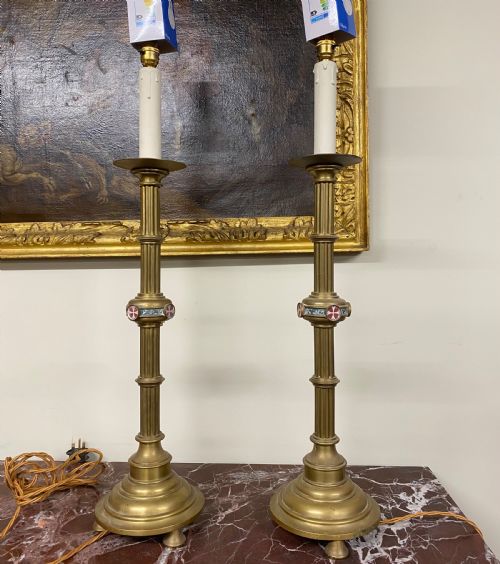
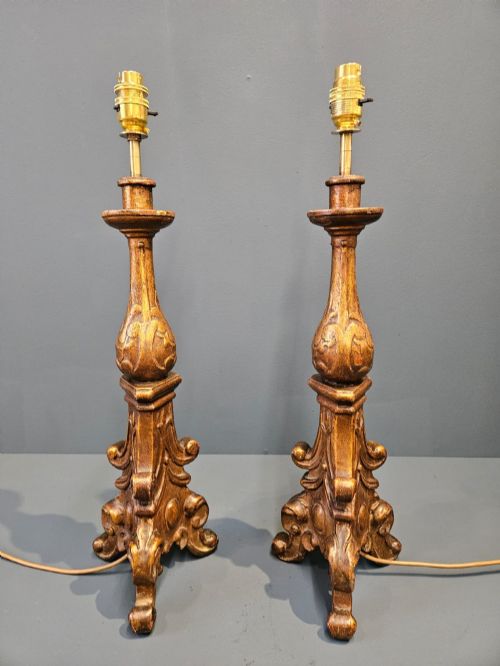
An antique altar lamp typically originates as a converted church candlestick, pricket stick or sanctuary light adapted for domestic illumination. Buyers encounter these pieces in forms ranging from heavy Gothic Revival brass to carved and giltwood continental standards.
The selection on this page draws heavily from nineteenth-century adaptations alongside eighteenth-century Spanish and Italian giltwood examples. Standard table lamps and taller floor-standing standard lamps predominate among the conversions.
Church furnishings of this nature serve both utilitarian and ceremonial functions within ecclesiastical spaces before finding new life in homes. The conversion process generally retains the original structural integrity of the metal or timber base.
Materials and construction methods
Brass and giltwood form the primary physical substance of these pieces, alongside carved timber, gesso and silver plate. Artisans shaped metal through casting and hammering, while wooden supports received elaborate hand-carving before receiving layers of gold leaf or paint.
Many items incorporate pricket spikes or sockets originally designed to hold wax candles or oil vessels. Subsequent conversion work involves channelling wiring through the historic core while preserving the outer decorative surface.
Antique Altar Lamp Retail Price Guide 2026
Typical asking prices for altar lamp among the pieces listed under this phrase on Sellingantiques today, from the lower quarter to the upper quarter. They describe what is for sale here now, not the wider market.
Listings feature items dated from the eighteenth century through to the Edwardian era, spanning styles from Italian Baroque to Gothic Revival.
Assessing quality in ecclesiastical lighting
Quality rests upon the depth and crispness of the hand-carving on wooden examples and the weight and casting quality of brass specimens. Pieces originating from Italian and Spanish workshops often display more flamboyant baroque flourishes compared to restrained English or French Gothic alternatives.
The degree of preservation in the original gilding or silver plating dictates the visual impact of the object. Heavy metal castings with intact patination command greater presence than lighter, later productions.
The Antique Altar Lamp Glossary
- Pricket stick
- A candlestick featuring a sharp metal spike at the top to secure the base of a candle. This form appears frequently in church lighting.
- Giltwood
- Timber that has been coated with a thin layer of gold leaf over a prepared gesso ground. It provides a luminous surface on baroque standards.
- Ecclesiastical
- Relating to the Christian Church or its clergy, describing items originally manufactured for use in places of worship. Many lighting conversions derive from this background.
- Ormolu
- Finely ground high-carat gold-bronze applied to metal objects. It creates a rich, bright finish seen on select continental pieces.
- Gothic Revival
- An architectural and decorative style drawing inspiration from medieval forms. This aesthetic dominates much nineteenth-century metalwork.
Antique Altar Lamp: Frequently Asked Questions
What is an antique altar lamp?
An antique altar lamp is a lighting fixture created by converting a historic church candlestick, pricket or sanctuary light for domestic electrical use. These pieces retain their original ecclesiastical character while serving as functional household lamps.
Most examples utilise heavy brass, carved oak or giltwood to achieve a commanding vertical presence in a room.
How do I identify a converted candlestick?
Converted candlesticks usually display a central metal rod or electrical cord running through a form that originally held a candle or oil reservoir. Evidence of the former pricket spike or wax drip pan often remains visible near the bulb fitting.
These alterations respect the historic body of the piece, allowing the original metal or timber base to remain untouched.
Where were these lamps made?
The pieces originate from workshops across Europe and Asia, with significant representation from nineteenth-century France, Italy, Spain and England. Regional styles range from Spanish baroque giltwood to Tibetan brass butter oil lamps.
Each geographic origin imparts distinct decorative traits, from ornate ecclesiastical carving to robust industrial metal casting.
How do I style an altar lamp at home?
Altar lamps suit placement on side tables, sideboards or desks where their height and sculptural silhouette can act as a focal point. Standard lamp variants function effectively as floor-standing reading lights in corners.
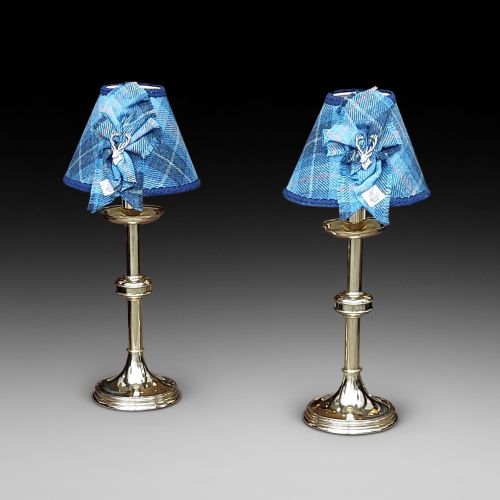
Pairing these items with simple fabric shades allows the historic metal or giltwood base to retain visual prominence in the interior scheme.