



Antique Alphabet Art
These antique alphabet art pieces are needlework samplers recording letters and numbers, offering a tangible link to domestic education and needlecraft from past centuries.
Antique Alphabet Art
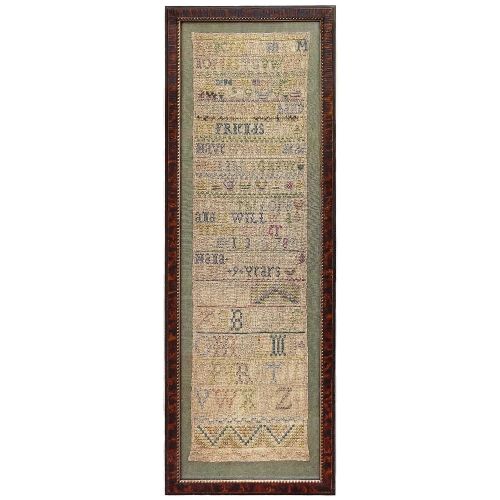
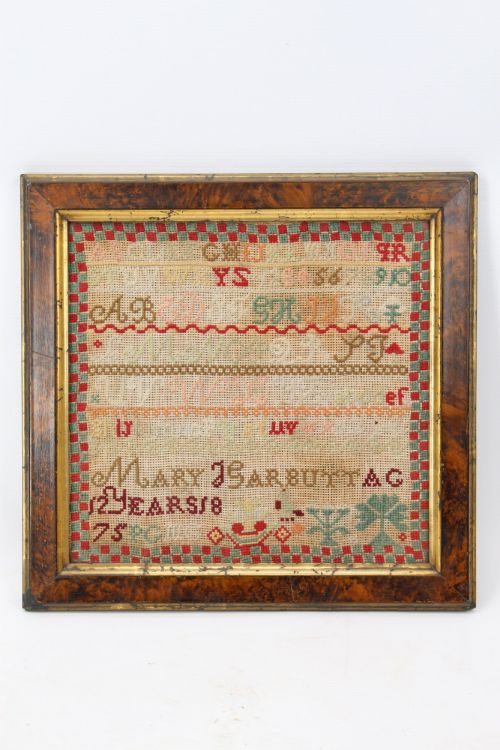
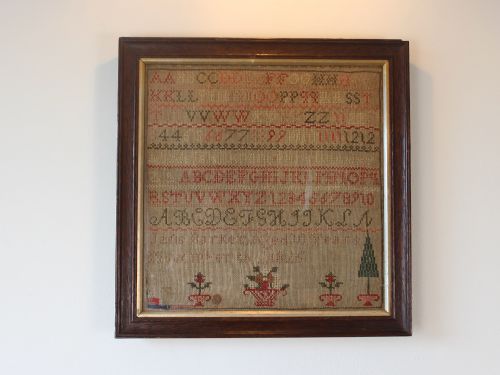
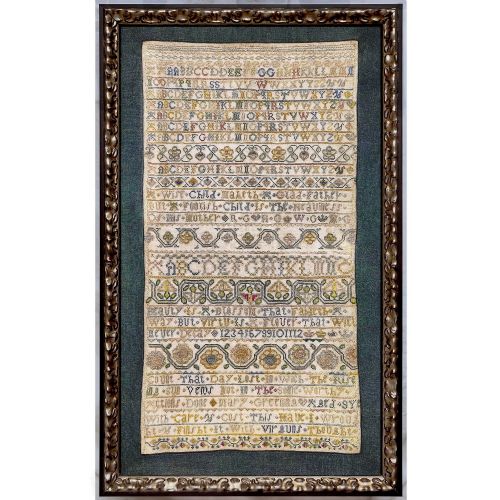
When you search for antique alphabet art, you are looking at historical needlework samplers produced across the Georgian, Victorian, and late seventeenth to eighteenth centuries. The most common examples on this page are nineteenth-century needlework samplers worked by young girls, often displaying their age alongside alphabets, numbers, and pious verses.
These textile pieces take the form of framed wall art and embroidered panels, originating mainly from English and Scottish schools and households. Makers such as Mary J Garbutt, Mary Greening, and Jane Wettmore record their names and dates directly into the linen or wool background, preserving domestic social history.
How they were made
Makers stitched these samplers using silk thread, wool, and linen, employing various embroidery stitches to form the letters and motifs. The ground fabric is typically hand-woven linen, providing a stable grid for counted-thread embroidery.
Needleworkers applied threads with precision to build up alphabets, numerals, borders, and pictorial elements like flora and fauna. These handmade panels were subsequently framed to protect the delicate textiles for display on walls.
Antique Alphabet Art Retail Price Guide 2026
Typical asking prices for alphabet art among the pieces listed under this phrase on Sellingantiques today, from the lower quarter to the upper quarter. They describe what is for sale here now, not the wider market.
One Scottish sampler from around 1880 proudly preserves a stitch error made by young Maggie Muir.
What varies in quality
The finesse of the needlework and the regularity of the stitching define the standard of an individual sampler. Superior pieces demonstrate exceptional control over tension and intricate detailing within the alphabet and surrounding decorative motifs.
Condition and legibility also separate examples, as light exposure and material degradation affect the survival of the threads. Samplers that retain clear lettering, original maker details, and vibrant silk or wool thread command greater appreciation.
Mary J Garbutt·Mary Greening·Jane Wettmore·Elizabeth Horn·Ann Hodson·Margaret Ann Blackow·Maggie Muir·Sarah Baker·Ann B Gilies·Martha Hall·Rachel·Emma and Hannah Barnes·Eleanor Grady
The Antique Alphabet Art Glossary
- Sampler
- A piece of needlework produced as a demonstration or test of skill in various stitches. These historic textiles frequently feature alphabets, numbers, and moral verses.
- Band sampler
- An early form of needlework where various stitch patterns are arranged in horizontal bands across a long strip of linen. They date primarily from the seventeenth and eighteenth centuries.
- Needlepoint
- A type of canvas work embroidery where yarn is stitched through a stiff open-weave canvas. It creates a dense, durable surface completely covering the background fabric.
- Counted-thread embroidery
- A technique where stitches are counted over a specific number of threads in the linen ground. This method ensures symmetrical letters and geometric motifs.
- Embroidered panel
- A decorative textile piece worked with needle and thread, often framed for interior display. These panels preserve the handiwork of historic makers.
Antique Alphabet Art: Frequently Asked Questions
What is antique alphabet art?
Antique alphabet art consists of historical needlework samplers created by young learners to practise stitching letters and numbers.
These textile pieces document domestic education from the Georgian and Victorian eras, often including the maker's name and age.
How were samplers used historically?
Makers used samplers as practical reference guides for needlework techniques and as proofs of proficiency in domestic skills.
Once completed, households frequently framed these embroidered panels to adorn parlour walls as decorative and moral reminders.
How do I date an antique sampler?
Many samplers include embroidered dates, maker names, and ages that provide a direct timeline for the piece.
When dates are absent, stylistic clues such as the choice of linen ground, framing materials, lettering fonts, and border motifs help narrow the period.
How should I care for framed needlework?
Protect antique textiles by hanging them away from direct sunlight and high humidity to prevent fading and fibre degradation.
Ensure framing uses conservation-grade materials that keep the delicate silk, wool, and linen threads safely behind glass without pressing directly against the fabric.