
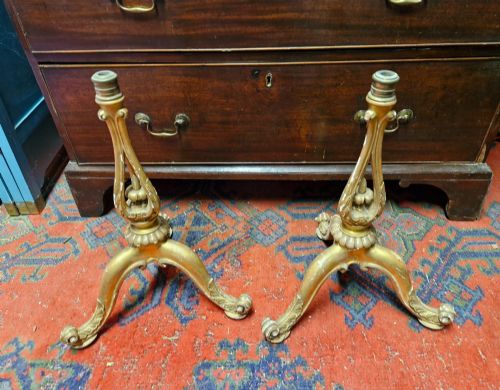


Antique Acanthus Table Lamp
An antique acanthus table lamp brings classical botanical relief to a room, offering warm illumination through carved foliage and cast metalwork.
Antique Acanthus Table Lamp
An antique acanthus table lamp takes the form of a column, tripod base, or sculptural light featuring carved or cast leaf ornamentation. The selections span the Victorian, Edwardian, and early twentieth-century periods, capturing revivalist movements from neoclassical to French Rococo.
Most examples function primarily as table lamps and lamp bases, constructed from materials such as brass, gilt bronze, mahogany, and carved wood. Buyers frequently encounter classical column designs alongside ornate gilded tripod mounts and figural bronze lights.
The aesthetic draws heavily on classical architectural motifs, translating stone temple carvings into domestic lighting. These pieces sit comfortably on side tables, cabinets, and desks, providing both direct task light and ambient glow.
How they were made
Metal versions rely on foundational casting techniques, utilising brass, gilt bronze, and silver plate to shape intricate acanthus capitals and fluted columns. Artisans chased the metal surfaces by hand to sharpen the leaf details and create contrasting textures.
Wooden examples demonstrate traditional joinery and hand carving, employing mahogany, giltwood, and painted finishes to achieve rich surface depth. Gilding was applied using thin metal leaf over a prepared ground, while hand-carved wooden stems received meticulous detailing.
Many designs incorporate mixed media elements, pairing cast metal columns with marble plinths or incorporating faux lapis lazuli sections. Electrical fittings were frequently added later to adapt these original oil or candle lights for modern use.
One enthusiastic nineteenth-century maker evidently decided a simple column just needed a faux lapis lazuli finish to truly shine.
What varies in quality
The depth and crispness of the acanthus leaf carving or casting separate standard production from superior work. Finer examples retain sharp, undercut foliage that catches the light, whereas lesser pieces feature soft, shallow relief with blurred botanical edges.
Proportion and material integrity dictate the overall standing of a piece, particularly in how columns align with their bases and capitals. High-grade items utilise substantial materials like heavy bronze and dense mahogany rather than thin plating or lightweight substitutes.
The Antique Acanthus Table Lamp Glossary
- Acanthus
- A classical ornamental motif modelled after the Mediterranean plant of the same name, featuring lobed, spiky leaves. It appears frequently on the capitals of Corinthian columns and along furniture legs.
- Corinthian Column
- An architectural support characterised by a slender fluted shaft and an ornate capital decorated with rows of acanthus leaves. This form serves as the primary silhouette for many classical table lamps.
- Gilt Bronze
- A metal object cast in bronze and treated with a thin layer of gold, often referred to asormolu. This technique provides a durable metallic sheen that resists tarnishing over decades.
- Tripod Base
- A three-legged support structure designed to give stability to tall or heavy lighting fixtures. These bases often incorporate claw feet, scrollwork, or animal-inspired motifs.
Antique Acanthus Table Lamp: Frequently Asked Questions
What periods do these lamps come from?
The pieces span the nineteenth and early twentieth centuries, encompassing Victorian, Edwardian, and William IV eras. Design influences draw heavily from earlier neoclassical and baroque revivals.
Craftsmanship from these periods typically employs solid cast metals or hand-carved hardwoods, reflecting the prevailing revivalist aesthetics of each decade.
How do I choose the right size?
Consider the surface where the lamp will rest, such as a side table or a heavy desk, and measure the available vertical clearance. Taller column designs require more substantial furniture to maintain visual balance.
Proportion is key to ensuring the lamp functions effectively as both a light source and a decorative object within the room.
Were these originally electric?
Most antique lamps started as oil lamps, gas fixtures, or candle holders before being converted for modern electrical use. This conversion process usually happened mid-century or later.
Original burners and fonts are frequently replaced with modern wiring components to meet safety standards while preserving the outer antique housing.
How do I care for gilt and brass surfaces?
Dust the metalwork gently with a soft, dry cloth to prevent the accumulation of grime in the recessed acanthus carvings. Avoid using abrasive commercial metal polishes that can strip thin gilt layers.
Maintaining a stable room temperature and low humidity helps protect both the metal finishes and the underlying wood or marble components.