

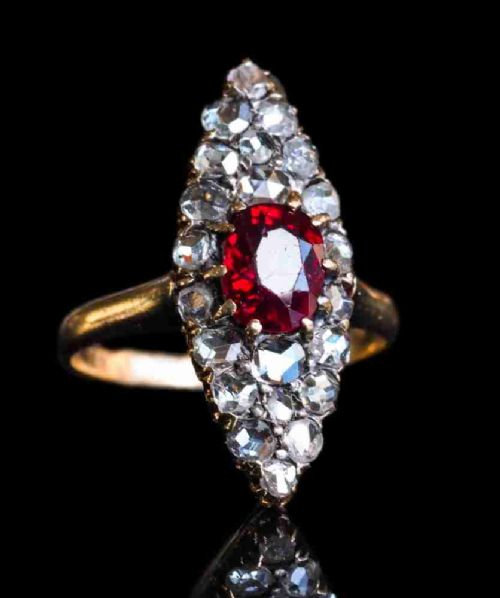


Antique 18k Ring
An antique 18k ring spans richly worked Victorian bands, delicate Edwardian diamond clusters, and geometric Art Deco designs set in white gold.
Antique 18k Ring
When searching for an antique 18k ring, a buyer encounters high-carat gold jewellery dating from the nineteenth century through the mid-twentieth century. The selection spans distinct eras, encompassing Victorian sentimental bands, Edwardian gemstone clusters, and Art Deco geometric creations.
Most pieces on this page take the form of engagement rings, dress rings, or traditional bands. Alongside standard finger rings, the selection includes related items such as French spring ring charm connectors.
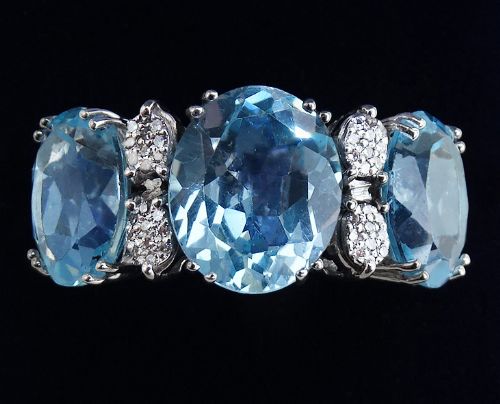
The aesthetic shifts visibly across the periods represented. Early examples often display ornate yellow gold or silver-topped settings, while later twentieth-century pieces favour crisp white gold mounts framing diamonds, rubies, sapphires, and emeralds.
How they were made
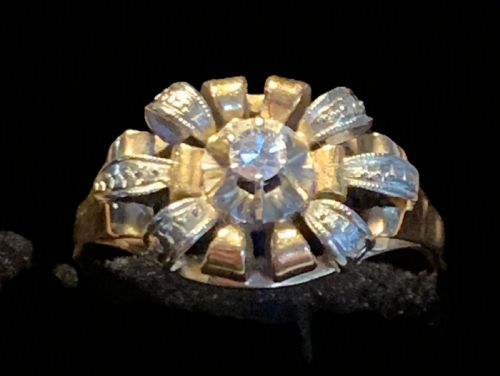
Goldsmiths utilised 18-carat yellow, white, and rose gold alongside platinum to fabricate durable yet malleable settings for precious gems. Silver was occasionally combined with gold in earlier Victorian mountings to enhance the brilliance of old-cut diamonds.
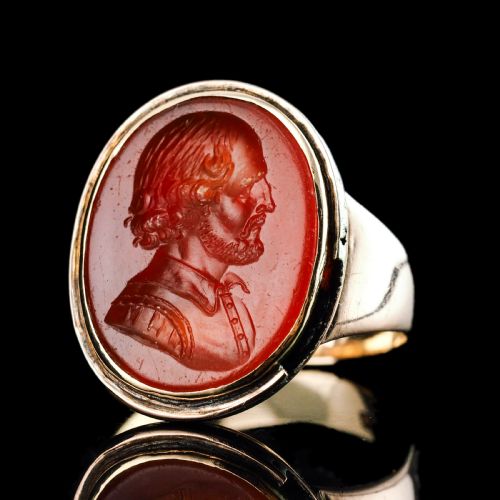
Gemstones including diamonds, rubies, sapphires, emeralds, aquamarines, opals, turquoises, carnelians, amethysts, and seed pearls were hand-set into cluster, solitaire, trilogy, and navette configurations. Artisans employed detailed engraving, channel work, and openwork galleries to define the character of each piece.
Antique 18k Ring Retail Price Guide 2026
Typical asking prices for 18k ring among the pieces listed under this phrase on Sellingantiques today, from the lower quarter to the upper quarter. They describe what is for sale here now, not the wider market.
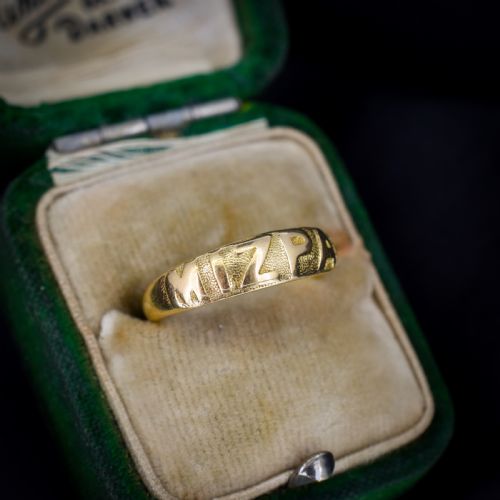
Several rings conceal secret messages, including Mizpah bands designed to keep distant lovers close to the heart.
What varies in quality
The calibre of an antique 18k ring rests upon the fineness of the metalwork and the specific selection of set stones. Superior examples demonstrate crisp hand-engraving, secure claw or bezel settings, and well-matched natural gemstones with strong colour saturation or high clarity.
Construction techniques also distinguish standard production from finer craftsmanship, seen in the structural integrity of pierced galleries and the preservation of original proportional balance. Rings retaining their uncompromised shank thickness and sharp decorative detail command greater appreciation.
The Antique 18k Ring Glossary
- Old-cut diamond
- A diamond cut by hand before modern machinery standardised facets, typically featuring a smaller table and a higher crown that produce a softer, candlelight sparkle.
- Navette
- A boat-shaped ring setting that elongates horizontally across the finger, popular in Georgian, Victorian, and Edwardian jewellery designs.
- Trilogy ring
- A ring featuring three main gemstones set in a row, traditionally symbolising the past, present, and future.
- Cabochon
- A gemstone shaped and polished with a smooth, rounded surface rather than faceted with flat planes, often used for opals and turquoises.
- Mizpah band
- A sentimental piece of jewellery exchanged between loved ones, typically inscribed with biblical Hebrew text denoting an emotional bond while apart.
Antique 18k Ring: Frequently Asked Questions
How do I care for my antique 18k ring?
Clean your jewellery gently using warm soapy water and a soft brush, avoiding harsh chemical dips that damage delicate gems like opals and pearls. Store each piece separately in a fabric-lined box to prevent scratching.
Have settings checked periodically by a professional jeweller to ensure claws remain secure around older stones.
Can antique rings be resized?
Most gold and platinum bands can be adjusted by a skilled jeweller, though intricate shoulders or continuous channel-set stones require careful evaluation. Consult an expert who understands historical construction methods.
Resize cautiously to preserve original hallmarks, engravings, and structural shank integrity.
How do I identify the period of a ring?
Examine the overall design style, mounting metals, and gem-cutting techniques, such as old European cuts versus modern brilliants. Victorian pieces often feature rich yellow gold and sentimental motifs, while Edwardian items lean towards platinum and lace-like openwork.
Look for maker marks, purity stamps, or import hallmarks that offer direct clues to the date of manufacture.
Are these rings suitable for daily wear?
High-carat gold provides durability, but older mountings require mindful handling during rigorous physical activities. Softer stones like opals and turquoises demand extra care compared to harder gems like diamonds and sapphires.
Remove rings when swimming, gardening, or lifting heavy objects to protect fragile prongs and settings.