





Antelope Taxidermy Trophy
These antelope taxidermy trophy mounts bring the dramatic presence of early twentieth-century sporting rooms directly into a modern interior.
Antelope Taxidermy Trophy
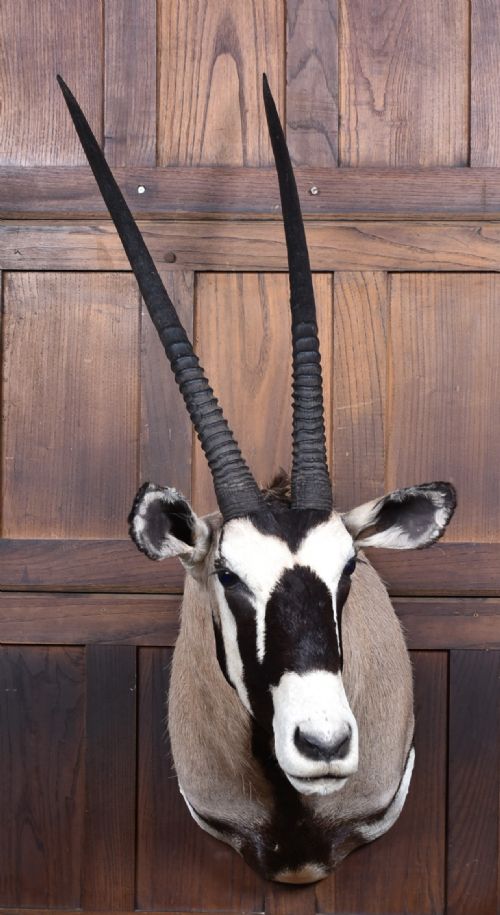
When you search for antelope taxidermy trophy, you are looking at preserved animal heads, horns and mounts that record a distinct era of natural history collecting. The pieces appearing here span the Edwardian period and the early decades of the twentieth century, capturing specific African antelopes such as the Thomson's gazelle, gemsbok, waterbuck, springbok, bushbuck, sable antelope, greater kudu, Coke's hartebeest and oryx.
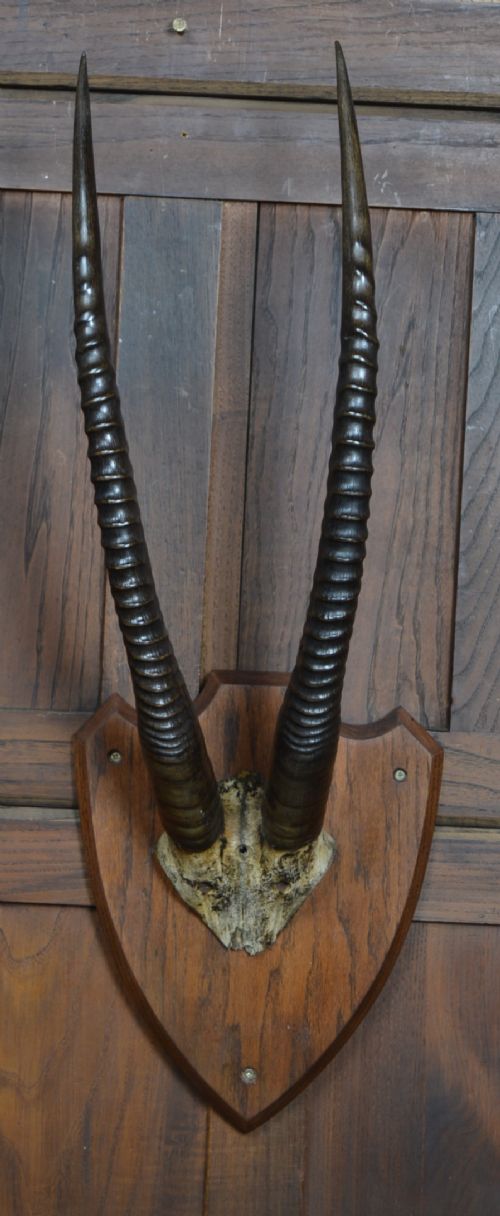
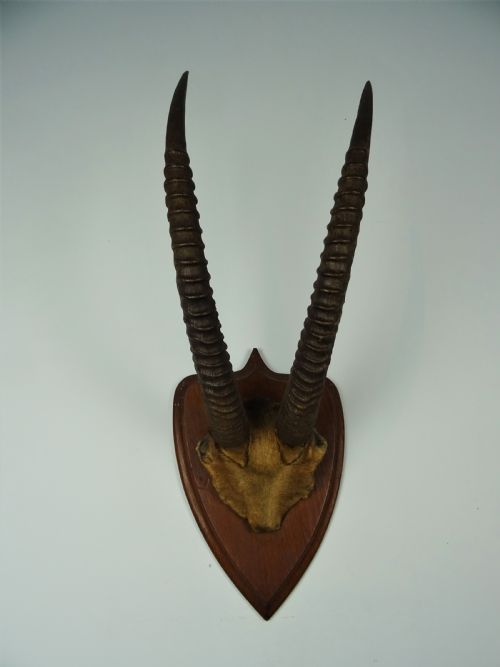
Most examples take the form of wall-mounted head trophies with taxidermy hide and long horns, or mounted horn pairs set onto wooden shields. They reflect the aesthetic of Victorian and Edwardian natural history and Highland hunting lodge displays, where game trophies served both as scientific study and domestic decoration.
How they were made
Taxidermists of the Edwardian period mounted prepared hide over sculpted forms of plaster, paper-mache or wood to recreate the lifelike contours of the living animal. Glass eyes were carefully set into the head to restore a realistic expression, while original bone and natural hide preserved the tactile qualities of the specimen.
The horns, whether mounted on whole head mounts or presented as standalone horn trophies, were attached to wooden backboards or shields, frequently made of oak. These wooden mounts were often shaped and polished to complement the natural curves and ridges of the horn.
Antelope Taxidermy Trophy Retail Price Guide 2026
Typical asking prices for antelope taxidermy trophy among the pieces listed under this phrase on Sellingantiques today, from the lower quarter to the upper quarter. They describe what is for sale here now, not the wider market.
Some springbok heads wear their gazelle classification quite proudly, reminding us that Victorian taxonomists loved a good labeling debate.
What varies in quality
The standard of a taxidermy trophy rests on the skill of the original taxidermist in capturing the correct anatomical proportions and alertness of the living creature. Master taxidermists achieved convincing facial expressions and secure hide preservation that resisted excessive slipping or hair loss over decades.
Provenance and documentation also distinguish finer examples, particularly pieces bearing the stamp or attribution of established firms such as Edward Gerrard & Sons. The quality of the supporting woodwork, from carved oak shields to neatly finished backing boards, completes the hierarchy of these specimens.
Edward Gerrard & Sons
The Antelope Taxidermy Trophy Glossary
- Taxidermy mount
- The art of preparing, stuffing and mounting the skin of animals for display. This process preserves the physical form for study or decoration.
- Edwardian natural history
- The aesthetic and scientific movement spanning the reign of King Edward VII, focusing on the collection and display of fauna. It influenced how sporting trophies were mounted and exhibited in domestic interiors.
- Shield mount
- A taxidermy head or set of horns fixed to a shaped wooden plaque for wall hanging. Oak was frequently utilised for these supportive backboards.
- Taxidermy hide
- The preserved skin of the animal retaining its original hair and coloration. Its condition depends on historical tanning methods and subsequent environmental care.
Antelope Taxidermy Trophy: Frequently Asked Questions
What species of antelope appear in these trophies?
The selection includes prominent African game animals such as the Thomson's gazelle, gemsbok, waterbuck, springbok, bushbuck, sable antelope, greater kudu, Coke's hartebeest and oryx.
Each species displays distinct horn formations, from the spiraled horns of the kudu to the sweeping curves of the sable and gemsbok.
How do I date an antique taxidermy trophy?
Dating relies on stylistic clues from the wooden mounts, taxidermy techniques, and occasional handwritten inscriptions or maker labels on the reverse of the backboards.
Pieces originating from this selection date primarily between 1900 and 1920, reflecting Edwardian sporting and natural history conventions.
Are these whole head mounts or horn pairs?
The inventory encompasses both complete taxidermy head mounts with hide and glass eyes, and horn-only trophies mounted on wooden shields.
Full head mounts provide a more immersive natural history display, whereas horn mounts focus strictly on the cranial appendages.
How should I hang a heavy taxidermy mount?
Due to the combined weight of the wooden backing, plaster armature, and bone, these pieces require secure wall fixings directly into masonry or wall studs.
Using heavy-duty picture hooks or concealed brackets ensures the weight is safely distributed across the wall.