





African Antelope Taxidermy
African antelope taxidermy brings the scale and shape of the savannah indoors through historical mounts and horn trophies.
African Antelope Taxidermy
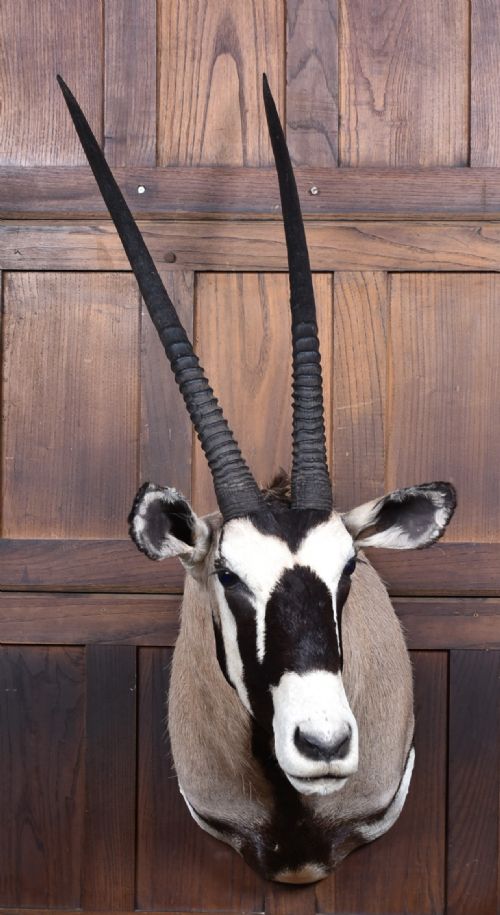
African antelope taxidermy comprises historical mounts, trophy heads, and horn displays shaped by sporting collections from the late nineteenth and early twentieth centuries. These pieces record species such as the Thomson's gazelle, gemsbok, waterbuck, springbok, bushbuck, sable antelope, koodoo, Coke's hartebeest, and oryx.
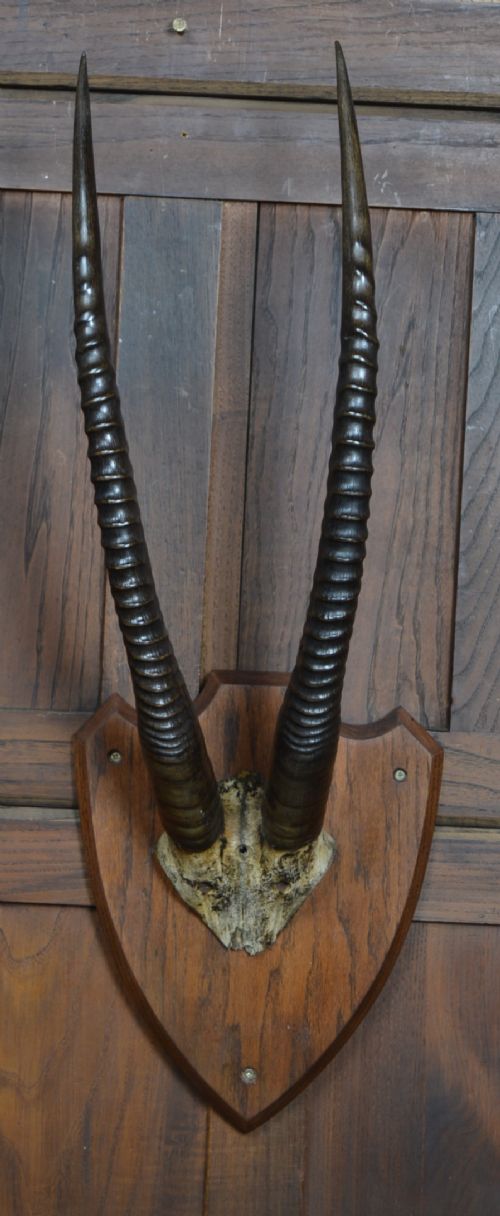
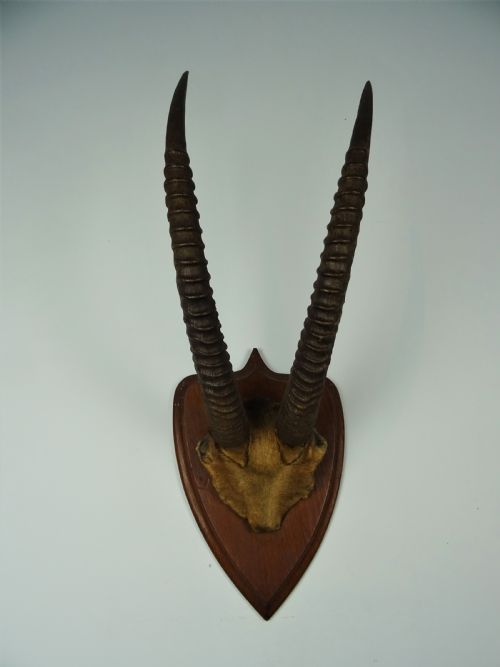
The objects stem predominantly from the Edwardian period and the early twentieth century, carrying the stylistic hallmarks of Victorian natural history and highland hunting lodge displays. Buyers meet both full head mounts with natural hide and glass eyes, and wall-mounted horn trophies fastened to wooden shields.
Each specimen captures the anatomical structure of distinct antelope species through preserved hide, bone, and horn. They serve as historical artefacts of early twentieth-century expeditions and interior decoration trends.
Materials and construction
Taxidermists utilised natural hide stretched over carved forms, fitted with glass eyes to replicate the living gaze of the animal. Horns and bone structures were cleaned, treated, and integrated securely into the head mounts or fitted directly onto wooden shields.
Mounts from this era rely on oak and assorted timber for backing boards and support shields, providing a stable platform for heavy horn trophies. Hide preservation involved traditional tanning methods of the period to maintain the pelts of species such as the springbok and bushbuck.
African Antelope Taxidermy Retail Price Guide 2026
Typical asking prices for african antelope taxidermy among the pieces listed under this phrase on Sellingantiques today, from the lower quarter to the upper quarter. They describe what is for sale here now, not the wider market.
Springboks bring an unexpected bounce to the wall, even after a century of quiet observation.
Assessing quality
Quality rests upon the anatomical accuracy of the taxidermy work and the condition of the natural hide. Skill in preservation prevents hair slip and maintains the lifelike posture of the animal's head and neck.
The integrity of the horns, the stability of the wooden mounting boards, and the retention of original glass eyes distinguish superior specimens. Work by documented establishments demonstrates greater refinement in taxidermic modelling.
Edward Gerrard and Sons
The African Antelope Taxidermy Glossary
- Taxidermy mount
- The preserved skin of an animal mounted over a form to recreate its natural appearance. This term covers both full head displays and horn trophies.
- Trophy head
- A wall-mounted display featuring the head and neck of an animal, often complete with horns. These items were traditionally gathered during sporting expeditions.
- Glass eyes
- Artificial eyes utilised in taxidermy to restore a lifelike expression to the mounted specimen. Their quality and setting influence the realism of the piece.
- Natural hide
- The untreated or tanned skin of the animal retaining its original hair and coloration. It forms the primary exterior surface of head mounts.
- Horn
- The permanent hollow sheath of keratin over bone found on antelopes. Specimens often consist solely of mounted horns affixed to wooden panels.
African Antelope Taxidermy: Frequently Asked Questions
What periods do these pieces date from?
The available listings span the Edwardian era and the early twentieth century, specifically covering items dated between 1898 and 1920. These dates align with the height of historical natural history collecting.
Earlier pieces often reflect Victorian natural history aesthetics, while later items belong firmly to the Edwardian sporting tradition.
How were these mounts originally displayed?
Taxidermy mounts and horn trophies were typically hung upon the walls of country houses, libraries, and hunting lodges. Wooden shields and backing boards provided secure wall fixings for heavy specimens.
Today, they continue to function as wall-mounted focal points within studies and period interiors.
What species are commonly found in these listings?
The selections record various African antelope species including Thomson's gazelle, gemsbok, waterbuck, springbok, bushbuck, sable antelope, koodoo, Coke's hartebeest, and oryx. Each species exhibits distinct horn shapes and coat markings.
Some listings consist entirely of paired horns rather than full head mounts.
How do full head mounts differ from horn trophies?
Full head mounts incorporate the preserved skin, glass eyes, and neck structure of the animal alongside its horns. They present a complete anatomical representation of the beast.
Horn trophies feature only the cranial bone plate and horns mounted directly onto a wooden board, omitting the hide.