


Anglo Indian Wooden Tray
An anglo indian wooden tray brings intricate colonial craftsmanship and rich timber into a room, offering both a practical surface and a striking focal point.
Anglo Indian Wooden Tray
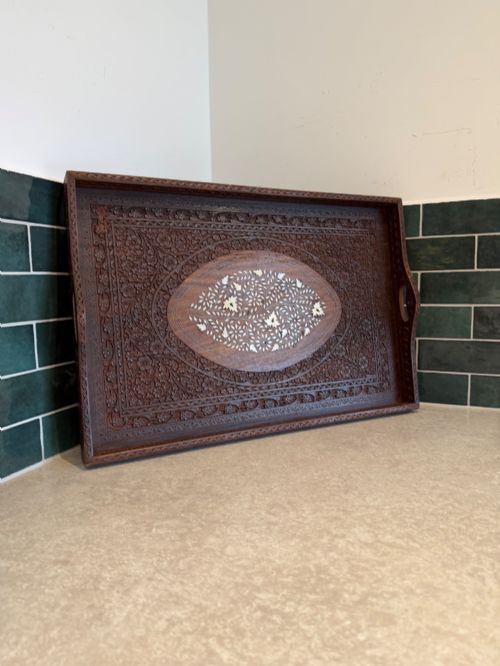
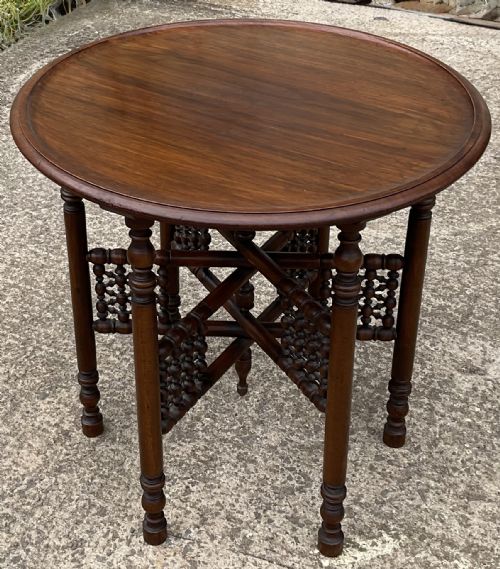
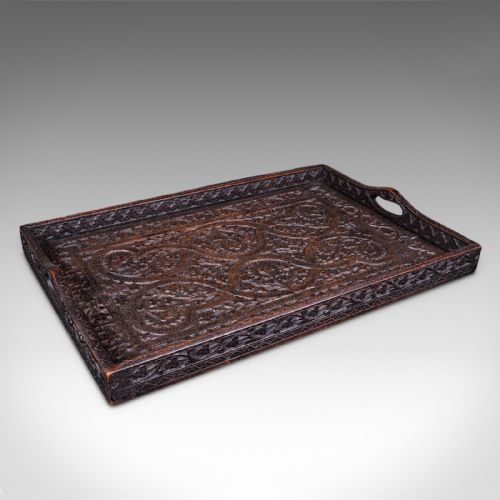
An anglo indian wooden tray combines traditional South Asian carving techniques with British colonial forms, typically taking the shape of serving trays, platters, or foldable table tops. These items emerge from various periods including the Victorian era, the nineteenth century, and the early twentieth century.
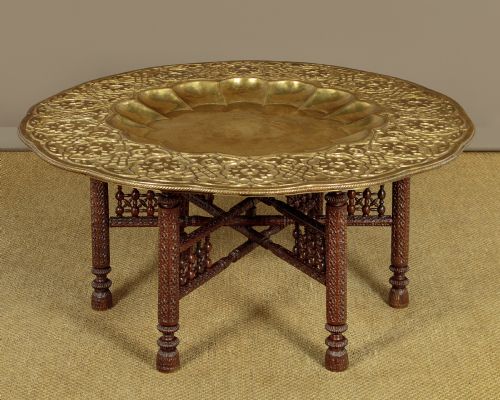
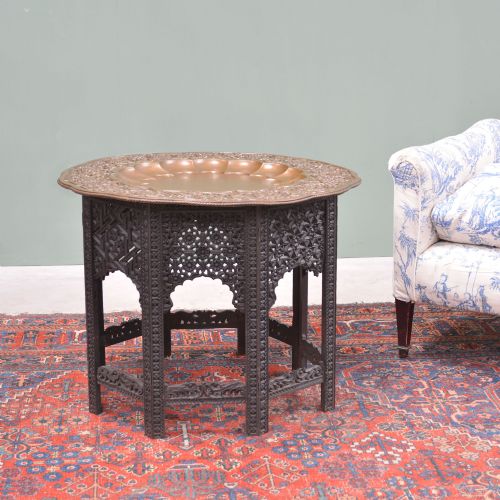
Forms range from octagonal folding coffee tables with removable brass or copper tops to deep carved hardwood platters. Each piece reflects the cross-cultural exchange of design during the height of the British Empire in India.
Materials and construction methods
Artisans built these pieces using dense tropical timbers such as teak, mahogany, walnut, and general hardwoods. These stable woods provided the ideal dense foundation for deep, intricate hand-carving without splitting.
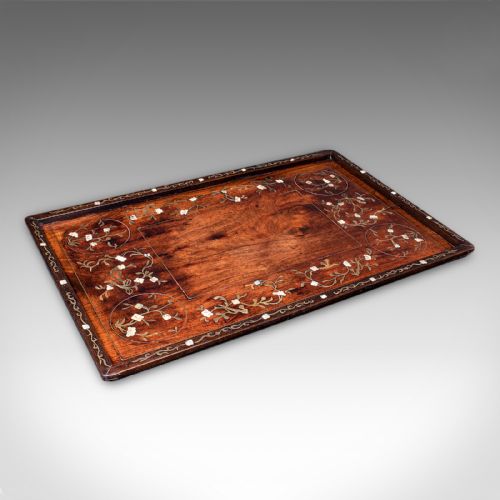
Surface decoration frequently incorporates contrasting materials, utilising inlaid bone or geometric bone work alongside hand-beaten metal inserts in brass and copper. Folding frames rely on clever wooden hinges and collapsible structures that allow the tables to be easily stored or moved.
Some folding tables arrive with complete vintage brass tea services, ready for an impromptu Victorian gathering.
Assessing quality and execution
The depth and sharpness of the hand-carving separate superior examples from simpler production pieces. Crisp relief work in the hardwood and precise placement of bone inlay indicate a higher level of artisan skill.
The integrity of the timber joints and the quality of the metal integration, particularly how neatly brass or copper tops fit their wooden frames, determine the overall execution. Well-preserved surfaces retain their original rich timber grain and polished patination without excessive dryness.
The Anglo Indian Wooden Tray Glossary
- Hoshiarpur
- A city in Punjab renowned for its intricate wooden inlay and carving work. Pieces from this tradition often feature dense geometric patterns using bone and dark hardwood.
- Tray table
- A piece of furniture consisting of a removable serving tray resting on a collapsible or fixed stand. These versatile tables served colonial households for afternoon tea and casual dining.
- Bone inlay
- A decorative technique where small pieces of animal bone are embedded into recesses in the wooden surface to create contrasting patterns. It appears frequently on finer tables and decorative trays from the period.
- Occasional table
- A small, movable table designed for a specific, intermittent use rather than central placement. In this selection, these often feature foldable bases and removable metal or wooden tops.
- Persian style
- A design influence characterised by flowing floral motifs and metalwork integration. These items reflect the broader trade and cultural connections across the region during the nineteenth and early twentieth centuries.
Anglo Indian Wooden Tray: Frequently Asked Questions
How do I care for an anglo indian wooden tray?
Dust the carved wooden surfaces regularly with a soft, dry cloth to prevent dirt accumulation in the recessed areas. Avoid using harsh chemical polishes or excessive moisture, especially on pieces that combine wood with bone inlay or metal tops.
Condition the timber occasionally with a suitable natural wax to maintain the grain and prevent the wood from drying out. Keep the tray away from direct heat sources and strong sunlight to protect the finish.
Were these trays used for tea service?
Many of these pieces functioned directly in colonial households for serving afternoon tea or hosting social gatherings. The deeper serving platters and afternoon tea slides were designed specifically to carry cups, teapots, and refreshments.
Larger versions with foldable stands allowed servants to set up tea service quickly in different rooms. Today, they transition easily into modern living spaces as decorative coffee tables or serving accessories.
How can I tell the age of a carved wooden tray?
Examine the timber closely for signs of age, such as hand-cut joinery, natural wear patterns, and the deep patination that develops over decades of handling. Pieces from the Victorian period and the late nineteenth century often display denser, more meticulous hand-carving than later twentieth-century iterations.
Reviewing the specific materials, such as heavy teak or genuine bone inlay rather than synthetic alternatives, also helps anchor the piece to its historical production window between eighteen-sixty and nineteen-thirty.
What is the difference between Kashmiri and Hoshiarpur pieces?
Kashmiri pieces frequently utilise walnut and highlight floral or painted elements alongside traditional carving. They often showcase the natural grain of the wood with softer, rounded relief motifs.
Hoshiarpur work is defined by extensive geometric patterns and the prominent use of bone inlay set into dark hardwoods. The surface decoration is typically much busier and covers almost every square inch of the wooden structure.