
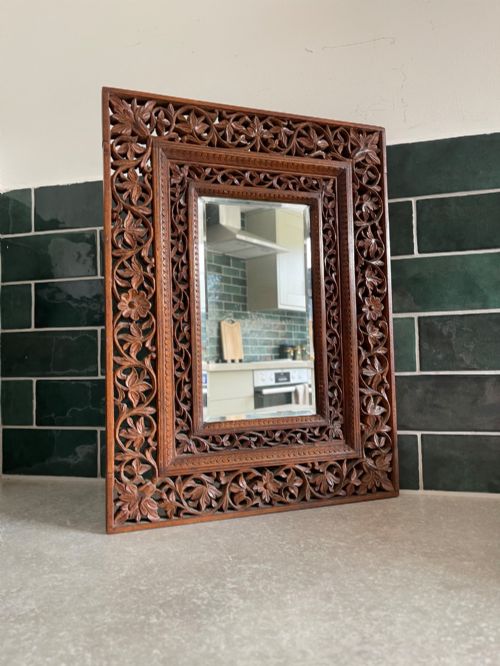
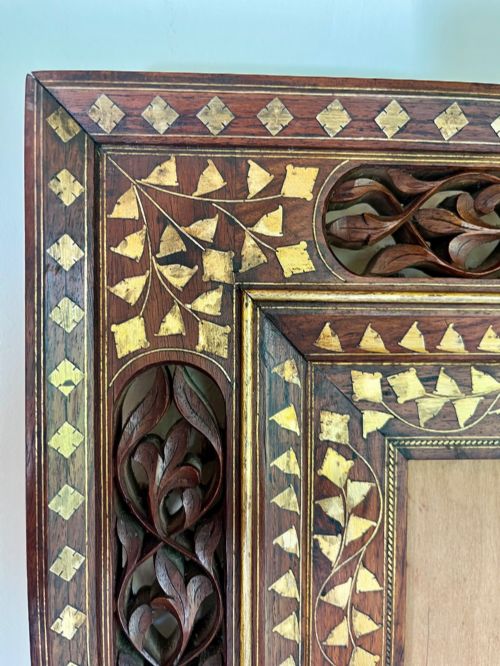


Anglo Indian Carved Frame
An anglo indian carved frame brings intricate colonial craftsmanship into a room, offering deep relief woodwork and rich timber character.
Anglo Indian Carved Frame
An anglo indian carved frame represents a fascinating intersection of traditional South Asian woodworking techniques and British colonial interior tastes. These pieces emerge predominantly from periods such as the nineteenth century, eighteen eighty, eighteen ninety, nineteen hundred, and nineteen twenty, reflecting distinct eras of craftsmanship.
The selections on this page span mirror frames and picture frames, frequently showcasing elaborate ornamentation that defines the style. Makers utilised regional timbers and distinct carving traditions to produce objects that served both functional and decorative purposes within colonial households.
Styles range from straightforward Anglo-Indian and British Colonial to specific regional aesthetics like Kashmiri and Hoshiarpur work, often incorporating contrasting materials. Buyers encounter items that demonstrate deep relief carving, geometric pierced edges, and occasionally brass inlay work.
Materials and construction methods
Artisans constructed these frames using dense, durable timbers native to the region, including teak, hardwood, sheesham, rosewood, walnut, and ebony. These woods provided the necessary stability for intricate, deep relief carving without compromising the structural integrity of the object.
Surface decoration frequently involved meticulous hand-carving alongside brass inlay techniques, particularly in pieces originating from workshops in Hoshiarpur. Artisans embedded fine brass wire and sheet into the timber to create contrasting geometric and floral patterns that caught the light.
Construction methods relied on traditional joinery suited to tropical hardwoods, allowing frames to withstand varied climates while maintaining their ornate surface decoration.
Some folding book stands and Savonarola chairs share the exact same carved vocabulary as the wall mirrors.
Assessing craftsmanship and detail
Quality in an anglo indian carved frame rests primarily on the depth, crispness, and complexity of the hand-carved ornamentation. Finer examples display undercut foliage and geometric motifs with sharp relief, whereas lesser pieces feature shallow, hurried incisions that lack dimension.
The selection of timber significantly influences the overall character and durability of the piece, with dense woods like ebony and rosewood supporting finer detail than coarser alternatives. Additionally, the precision of brass inlay work distinguishes standard production from exceptional craftsmanship.
The Anglo Indian Carved Frame Glossary
- Anglo-Indian
- Pertaining to the cultural and artistic synthesis resulting from British presence in India during the colonial period. This aesthetic blends European furniture forms with traditional South Asian decorative techniques.
- Hoshiarpur
- A town in Punjab renowned for its distinctive woodwork and inlay traditions. Artisans here specialised in intricate wood carving combined with brass wire inlay.
- Deep relief
- A sculptural technique where the carved motifs project substantially from the background surface. This method creates pronounced shadows and a strong three-dimensional effect on wooden frames and panels.
- Pierced work
- Openwork ornamentation created by cutting entirely through the timber to form intricate patterns. This technique adds a delicate, lace-like quality to heavy wooden frames.
Anglo Indian Carved Frame: Frequently Asked Questions
How do I hang a heavy carved wooden frame?
These dense hardwood frames require secure wall fixings distributed evenly to support their substantial weight safely. Utilising appropriate wall plugs and heavy-duty picture hangers ensures the piece remains stable.
Professional installation is often advisable for larger mirrors to protect both the timber structure and the wall surface.
How should I clean carved timber and brass inlay?
Dust the intricate recesses regularly using a soft-bristled brush to prevent buildup in the carved details. Avoid liquid polishes that can discolour unsealed timber or loosen delicate brass wire inlay.
Gentle treatment preserves the natural patina and protects the historic surface materials from unnecessary wear.
What is the difference between Kashmiri and Hoshiarpur frames?
Kashmiri pieces frequently highlight walnut timber with flowing floral and foliate carving styles native to the northern region. Hoshiarpur items typically incorporate dense hardwoods combined with precise geometric brass inlay work.
Recognising these regional traits helps collectors identify the specific origin and workshop tradition behind a piece.
Can these frames be placed in modern interiors?
The rich timber tones and intricate textures provide a striking focal point when contrasted against minimalist contemporary walls. Their architectural presence allows them to function as standalone artworks within diverse interior schemes.
Careful placement ensures the ornate carving complements rather than overwhelms surrounding furnishings.