




Anatolian Runner Rug
An anatolian runner rug brings warmth and historic pattern to a corridor, offering enduring charm through traditional weaving methods.
Anatolian Runner Rug
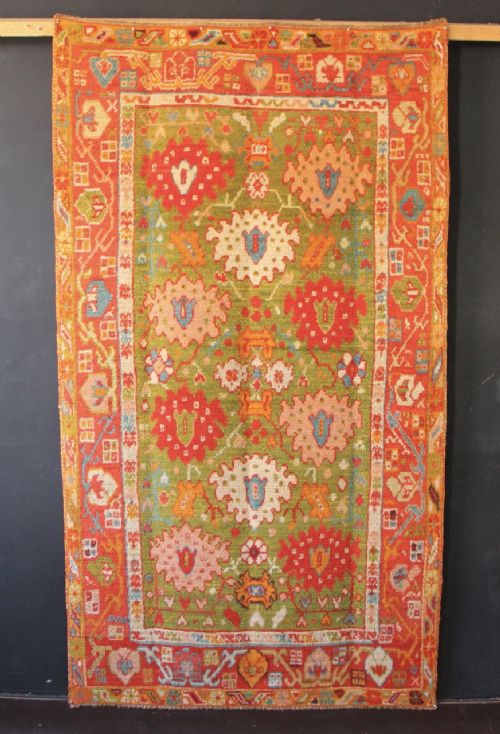
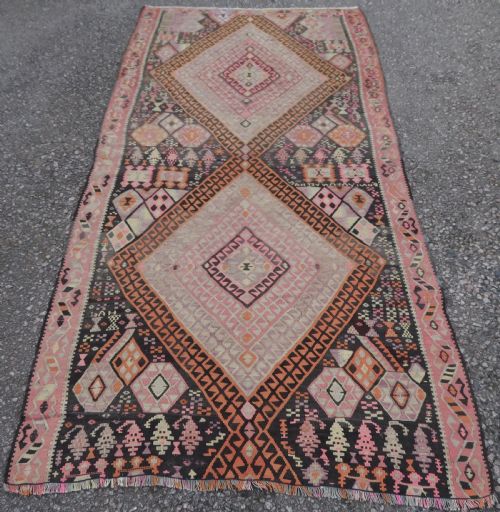
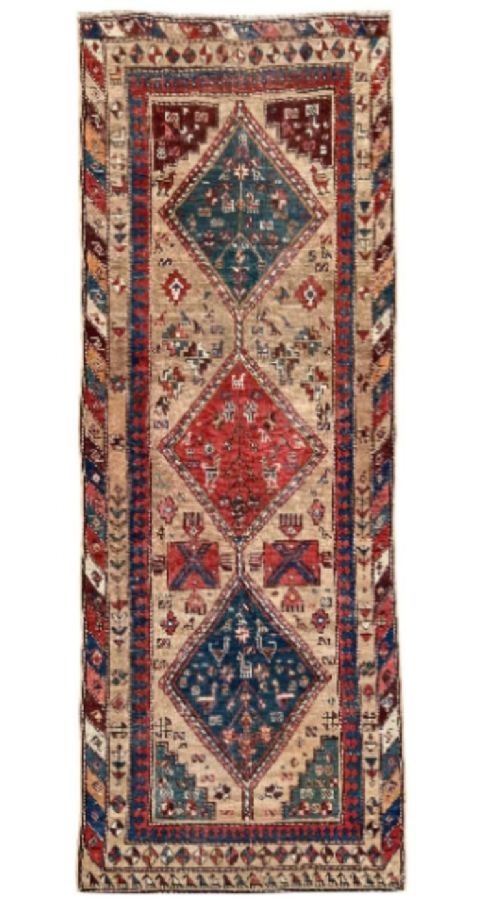
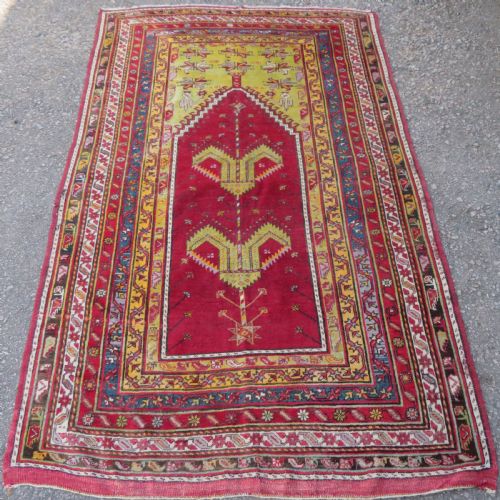
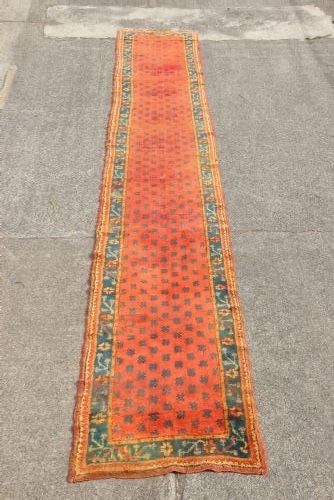
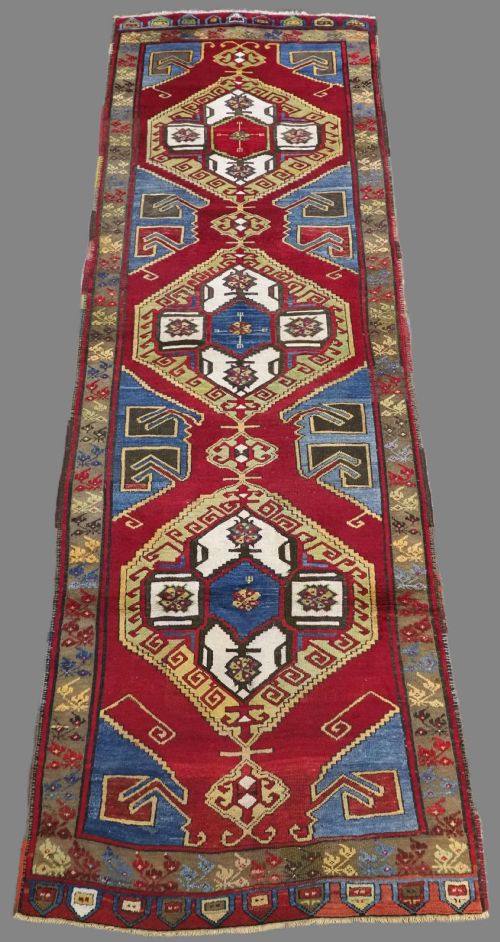
An anatolian runner rug spans long, narrow formats designed for corridors, alongside village and tribal pieces originating from nineteenth and early twentieth century Turkey. Buyers encounter formats bearing regional designations such as Ushak, Konya, Kirsehir, and Milas, created for domestic interiors.
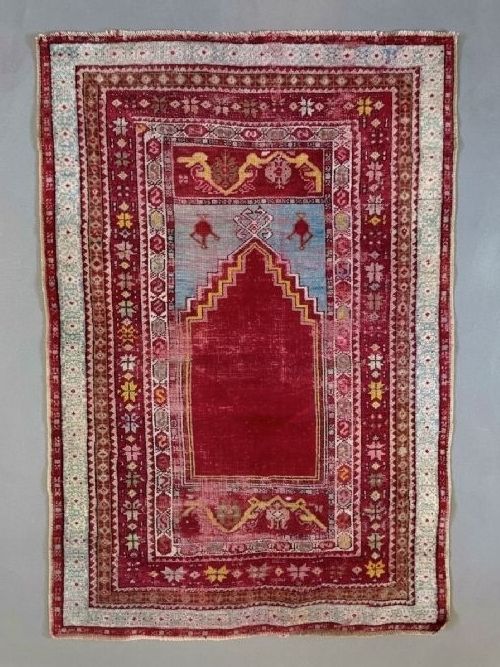
The selections range from flatwoven kilims to pile carpets and prayer rugs, reflecting the diverse weaving traditions of central and eastern regions. Long narrow formats dominate the runner category, accompanied by village rugs and tribal pieces displaying distinct geometric or floral motifs.
Materials and construction
Makers utilised wool, hand-spun wool, and angora wool for pile carpets, providing durability and texture to the surface. Cotton foundations frequently support these pile weaves, whilst specific pieces incorporate art silk or mercerised cotton details.
Flatwoven examples employ wool and cotton in slit-weave or related techniques, creating lighter floor coverings without pile. Artisans knotted or wove these textiles by hand, integrating natural materials that aged with distinct patinas.
Anatolian Runner Rug Retail Price Guide 2026
Typical asking prices for anatolian runner rug among the pieces listed under this phrase on Sellingantiques today, from the lower quarter to the upper quarter. They describe what is for sale here now, not the wider market.
Some runners are woven in distinct halves and joined later, a practical solution for village looms.
Distinctions in quality
The finesse of the knotting and the handling of materials dictate the structural integrity of each piece. Tighter knot counts and well-prepared wool yield greater resilience in heavy traffic areas.
Artisanal execution in design symmetry and the clarity of regional motifs distinguish finer weaving. The consistency of hand-spun fibres and the depth of dye work separate standard domestic items from exceptional examples.
The Anatolian Runner Rug Glossary
- Kilim
- A flatwoven textile produced without a pile, often featuring geometric patterns and lightweight structures. These pieces serve as versatile floor coverings or wall hangings.
- Prayer Rug
- A specialised format featuring a mihrab design or niche motif indicating a direction for prayer. These rugs typically scale smaller than full room carpets.
- Oushak
- A weaving style originating from the town of Ushak, known for softer palettes and large-scale floral or geometric designs. These carpets often utilise wool on cotton foundations.
- Angora Wool
- A soft fibre sourced from angora goats or sheep, utilised in specific antique rugs for a lustrous handle. This material adds distinctive texture to the pile.
Anatolian Runner Rug: Frequently Asked Questions
Where should I place an anatolian runner rug?
These narrow formats suit hallways, corridors, and narrow entryways where linear floor coverage enhances the space. Their proportions navigate transitional areas effectively without overwhelming the floor plan.
Placing them in moderate traffic zones preserves the pile while displaying the historic patterns clearly. Protection underlays help secure the flatweave or pile structure on smooth flooring.
How do I clean an antique rug?
Gentle surface cleaning and regular light vacuuming without a rotating brush help maintain the wool fibres. Professional textile conservators should handle deep washing to protect natural dyes.
Avoiding harsh chemical treatments ensures the longevity of hand-spun wool and cotton foundations. Immediate attention to spills prevents staining on antique pile and flatwoven surfaces.
What is the difference between kilim and pile rugs?
Kilims are flatwoven textiles constructed by interlocking warp and weft threads without forming a raised pile. This technique creates a lighter, reversible floor covering with sharp geometric designs.
Pile rugs feature knotted vertical strands clipped to create a plush surface texture. This construction allows for greater detail and depth in regional floral or tribal motifs.
How do I identify regional rug styles?
Regional types often display distinct structural palettes, such as the soft tones of Ushak or the geometric discipline of Kirsehir. Examining the border arrangements and central medallions reveals specific village traditions.
Materials also offer clues, with certain districts employing angora wool or specific cotton foundations. Comparing motif structures against known regional archives assists in pinpointing origin.