

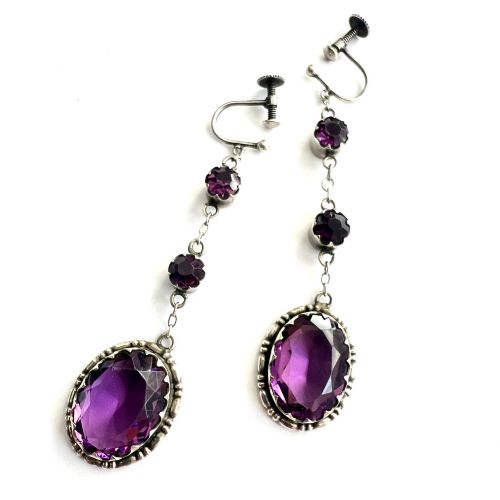


Amethyst Paste Jewellery
Amethyst paste jewellery brings the deep purple lustre of genuine amethyst through expertly crafted glass stones.
Amethyst Paste Jewellery
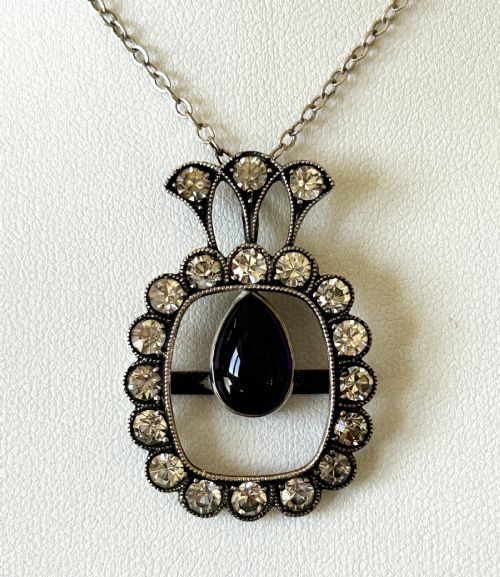
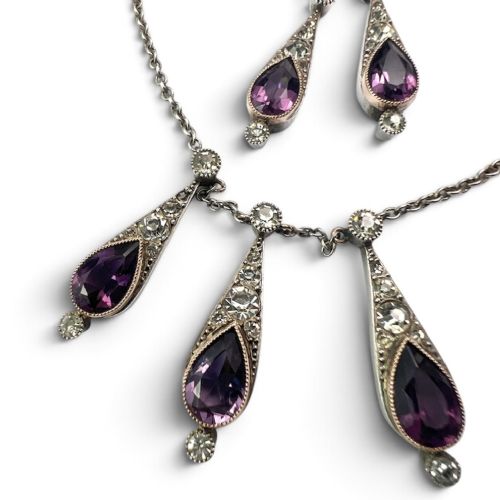
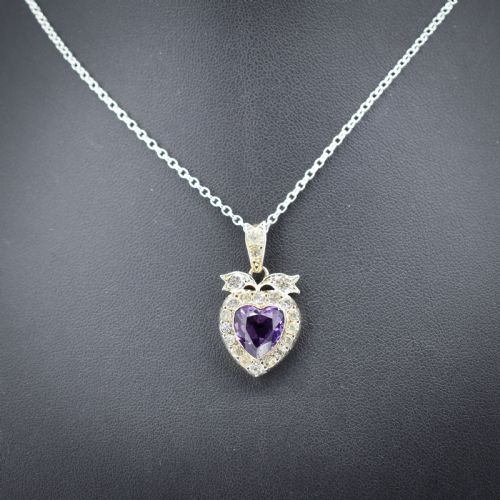
Amethyst paste jewellery comprises ornamental pieces set with purple glass designed to imitate natural amethyst. You will encounter various forms across this selection, including pendants, cocktail rings, and earrings.
The objects span multiple eras, showing examples from the Georgian period through to the Victorian era, the 1920s Art Deco movement, and 1940s Retro Modern styles. Pendants and rings dominate the available inventory, often paired with silver or gold settings.
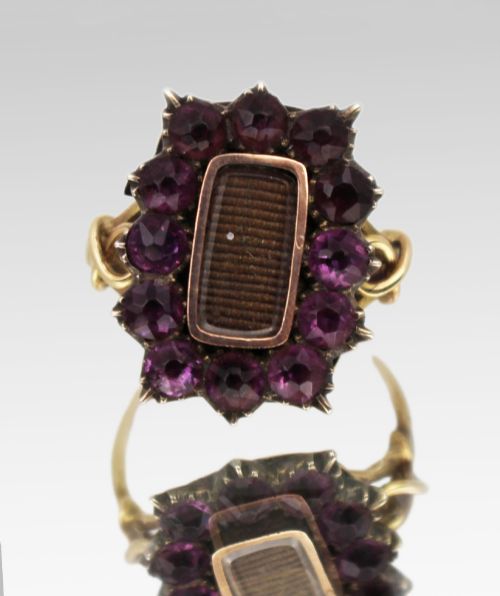
Mourning pieces and heart motifs appear among the earlier items, whilst screwback earrings and bold cocktail rings represent the later twentieth-century styles. Each piece demonstrates how jewellers used glass to replicate high-value gemstones for fashionable wear.
Materials and construction
Craftsmen set purple paste glass stones into mounts of silver, 14ct gold, and 18ct gold. Foil backing was frequently employed beneath the stones during earlier periods to enhance the depth of the purple colour.
Metalsmiths shaped precious metals into delicate wirework, solid bezels, and detailed settings such as halo pendants and cross designs. Hair was also incorporated into specific mourning pieces alongside the purple stones.
Amethyst Paste Jewellery Retail Price Guide 2026
Typical asking prices for amethyst paste jewellery among the pieces listed under this phrase on Sellingantiques today, from the lower quarter to the upper quarter. They describe what is for sale here now, not the wider market.
The inventory encompasses silver and gold items spanning the Georgian, Victorian, Edwardian, Art Deco, and 1940s Retro Modern periods.
Distinctions in quality
The sophistication of the stone cutting and the purity of the metal separate standard examples from finer work. Hand-cut old stones and heavier gold settings indicate superior workshops compared to lighter silver or mass-produced mounts.
The quality of the foil backing and the clarity of the paste glass determine how convincingly the stones mimic genuine amethyst. Exceptional pieces maintain vibrant colour depth and secure, intricate metal settings.
The Amethyst Paste Jewellery Glossary
- Paste glass
- Vitreous material moulded and polished to imitate gemstones. It has been utilised in jewellery manufacture for centuries to create affordable coloured stones.
- Foiled stones
- Gemstones or paste glass featuring a thin reflective metallic sheet placed beneath them in the setting. This technique brightened the internal reflection of the stone.
- Screwback earrings
- An ear fitting utilising a threaded post and a small rotating disc to secure the piece without pierced ears. This mechanism is common in mid-century designs.
- Mourning ring
- A commemorative piece of jewellery containing hair or dark stones to remember a deceased person. These items were particularly prevalent during the Victorian era.
- Halo pendant
- A central stone encircled by a border of smaller accent stones. This arrangement maximises visual impact and light reflection.
Amethyst Paste Jewellery: Frequently Asked Questions
What is amethyst paste jewellery?
Amethyst paste jewellery consists of decorative wearable items featuring purple glass stones designed to imitate natural amethyst. These pieces utilise glass set within precious metals like silver and gold.
Jewellers across the Georgian, Victorian, and mid-century periods utilised paste stones to achieve the appearance of costly gems. The resulting items offer a rich history of decorative lapidary work.
How do I date an antique paste pendant?
Dating a pendant involves examining the metalwork techniques, the cut of the paste stones, and the overall style. Georgian pieces often feature foiled stones and heavy silver cross designs, while Art Deco items display geometric symmetry.
Examining the type of gold or silver mount provides further chronological clues. Victorian examples frequently incorporate mourning motifs or pearl halos around the central stone.
How should I care for vintage paste jewellery?
Vintage paste jewellery requires gentle handling due to the delicate nature of glass stones and historical metal settings. Avoid submerging foiled pieces in water, as moisture can damage the backing behind the stone.
Store each item separately in a lined box to prevent scratches on the soft glass surfaces. Professional cleaning is recommended for antique settings to preserve the structural integrity.