



Amethyst Glass Jewellery
Amethyst glass jewellery brings together rich purple tones and precious or base metals across centuries of design.
Amethyst Glass Jewellery
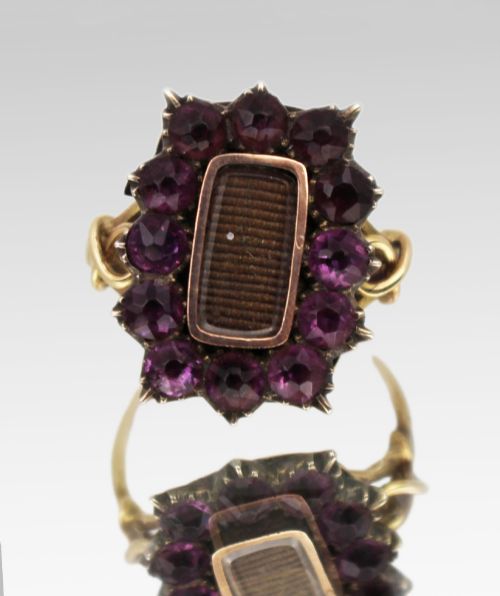
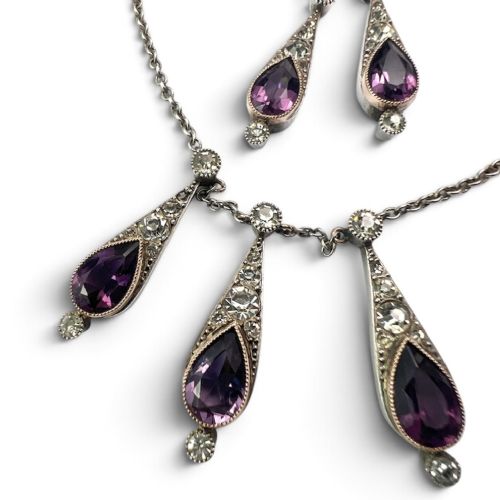
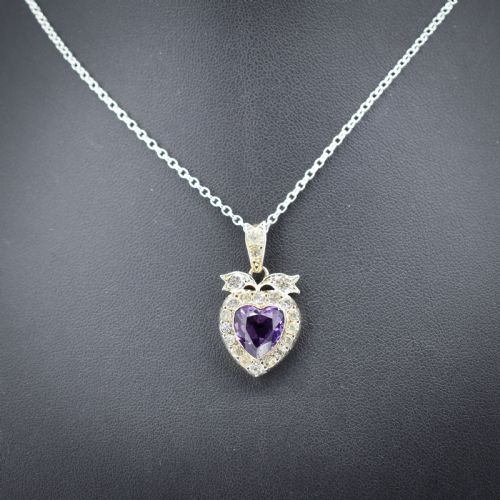
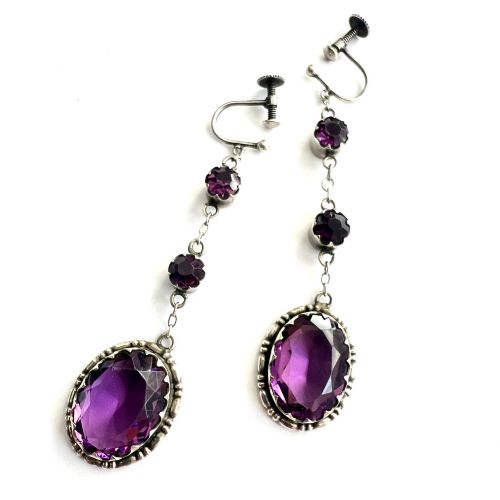
Amethyst glass jewellery encompasses rings, pendants, earrings, and dress buttons created using purple glass stones rather than natural mined gemstones. These pieces span multiple eras including the Georgian, Victorian, Edwardian, and Art Deco periods, alongside 1940s Retro Modern designs.
The most common examples encountered on this page feature paste glass or purple glass stones set into silver or gold, ranging from nine carat up to eighteen carat standards. Buyers frequently find heart pendants, cocktail rings, and matching jewellery sets displaying distinct stylistic markers of their respective decades.
How they were made
Makers utilised glass, often moulded or cut as paste, alongside precious metals like silver, gold, and fourteen or eighteen carat yellow gold. Foiled backs were frequently employed beneath the glass stones to enhance the depth and brilliance of the purple colour.
Assembly involved secure metal settings, including prongs and bezels, whilst specialised components such as screwback earrings or fitted necklace chains demonstrate the technical standards of each period.
Amethyst Glass Jewellery Retail Price Guide 2026
Typical asking prices for amethyst glass jewellery among the pieces listed under this phrase on Sellingantiques today, from the lower quarter to the upper quarter. They describe what is for sale here now, not the wider market.
Current listings feature items spanning the Georgian, Victorian, Edwardian, Art Deco, and 1940s Retro Modern periods.
What varies in quality
The calibre of amethyst glass jewellery rests on the precision of the stone cutting and the richness of the glass colour, which can range from pale lilac to deep violet. Superior examples display clean facets and secure integration with the surrounding metalwork.
Material choice also dictates the tier of the piece, with higher karat gold settings and intricate silver work representing more ambitious manufacture than standard base metal or simpler alloy mounts.
The Amethyst Glass Jewellery Glossary
- Paste glass
- Hand-cut and polished glass designed to imitate precious gemstones. It has been utilised for centuries in fine ornamental metalwork.
- Foiled back
- A thin reflective metallic sheet placed behind a glass stone to intensify its colour and light reflection. This technique is particularly common in Georgian examples.
- Cocktail ring
- A large statement ring featuring a prominent central stone, designed to draw attention. These gained significant popularity during the twentieth century.
- Fob charm
- A small decorative ornament originally attached to a pocket watch chain. Many now survive repurposed as pendant charms.
Amethyst Glass Jewellery: Frequently Asked Questions
How do I date amethyst glass jewellery?
Dating relies upon identifying the specific metal settings, gemstone cuts, and overall stylistic motifs characteristic of periods like the Victorian era or Art Deco years.
Examining the construction techniques of the clasp, pin, or screwback fittings often provides further chronological clarity.
What is paste glass?
Paste glass is a heavy, high-lead glass that is meticulously cut and polished by hand to replicate the appearance of genuine gemstones.
Artisans shaped these stones to fit precise jewellery mounts across the Georgian and Victorian periods.
Are these pieces made of real gold?
Many items feature genuine precious metals, ranging from sterling silver to fourteen carat and eighteen carat gold mountings.
Hallmarks or metal tests confirm the precise composition used by the maker.
How should I care for vintage glass jewellery?
These pieces require gentle handling, avoiding harsh chemical cleaners or ultrasonic baths that might damage foiled backs or delicate paste stones.
Storing each item separately prevents scratches to the glass surfaces and protects fragile metal settings.