
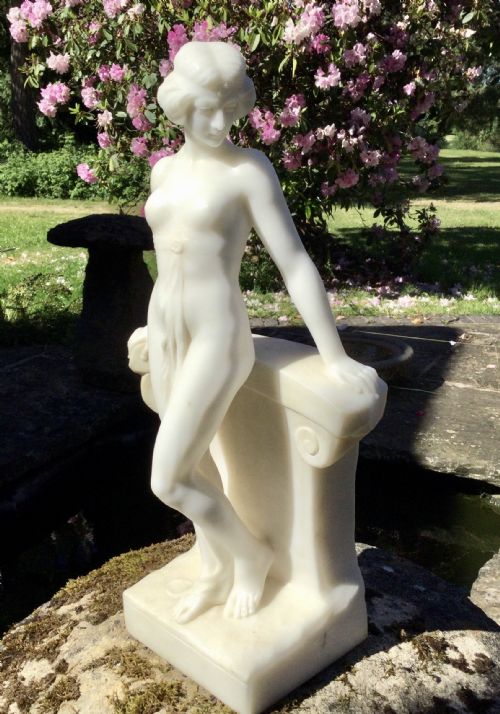
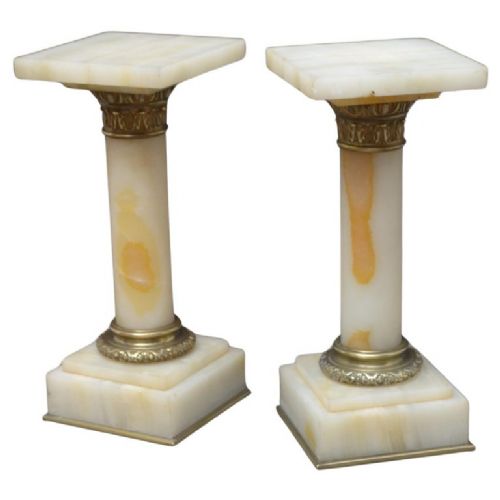
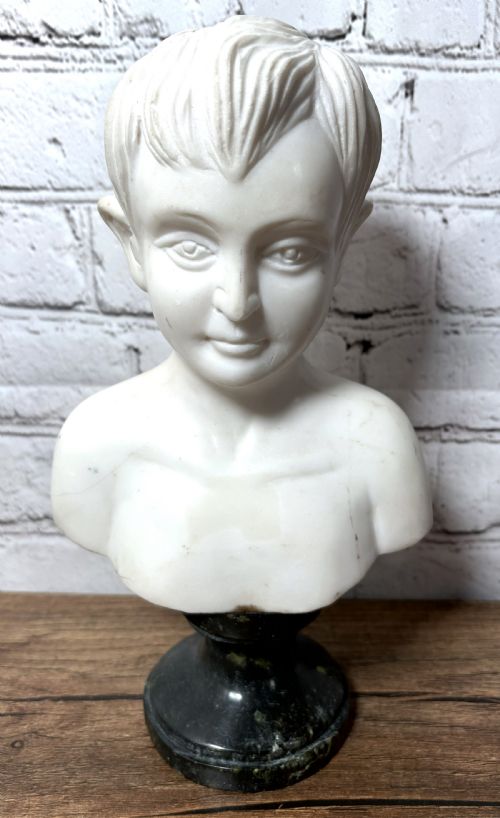


Alabaster Pedestals
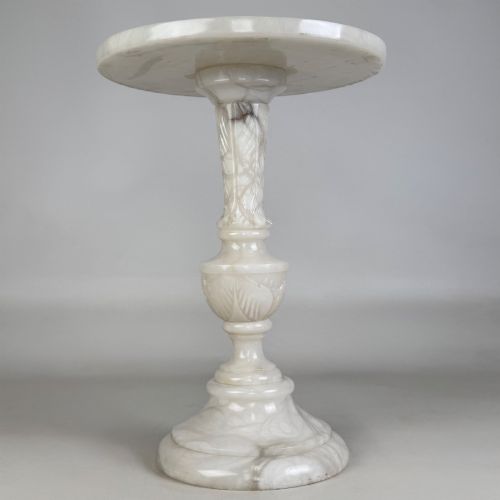
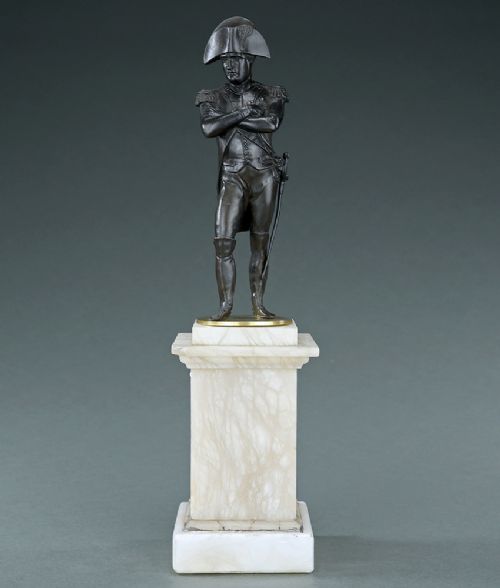
These alabaster pedestals are carved stone columns and plant stands designed to elevate sculpture or display objects with classical poise.
Alabaster Pedestals
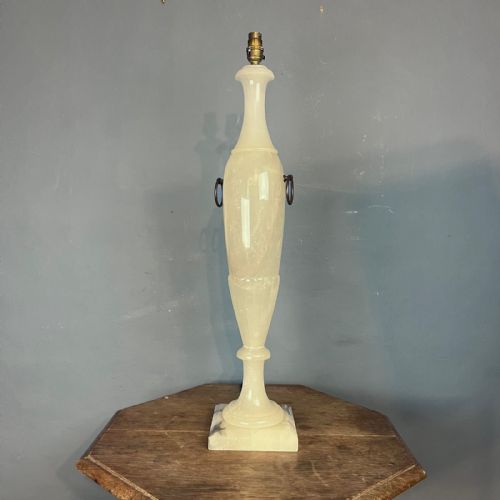
The selection here encompasses antique columns, plant stands, and lamp-bearing pillars. Neoclassical and Grand Tour influences dominate the aesthetic, frequently pairing carved stone with marble or brass elements.
Buyers are most likely to encounter nineteenth-century Italian carvings and early twentieth-century architectural columns. Many pieces function dually as plant stands or display surfaces for busts and urns.
How they were made
The construction relies upon carving dense natural stone, utilising alabaster alongside marble for columns and pedestals. Artisans shaped the material on lathes or by hand to achieve smooth cylindrical shafts and decorative capitals.
Many examples incorporate mixed media, mounting the carved stone upon black marble block bases or integrating brass and bronze details. Pietra dura mounts and fabric elements appear on related comports and lamps associated with these forms.
Listings span the nineteenth century, Victorian era, and the 1920s to 1930s, utilising alabaster, marble, brass, and bronze.
What varies in quality
The refinement of the carving separates standard supports from exceptional sculptural examples. Depth of figure work and the intricacy of neoclassical detailing dictate the visual weight of each column.
The choice of mineral figuration within the stone affects the overall presence of the piece. Highly figured alabaster and contrasting marble bases demonstrate superior material selection by the maker.
The Alabaster Pedestals Glossary
- Alabaster
- A fine-grained mineral, often translucent, used for carving ornamental objects, lamps, and architectural columns.
- Grand Tour
- Nineteenth-century souvenirs and works acquired by travellers in Italy, frequently reproducing classical antiquities in miniature or scale.
- Neoclassical
- A style reviving classical Roman and Greek architectural motifs, visible in the fluted columns and capitals of these pedestals.
- Pietra dura
- An artistic technique using cut and fitted inlaid coloured stones to create geometric or figurative designs.
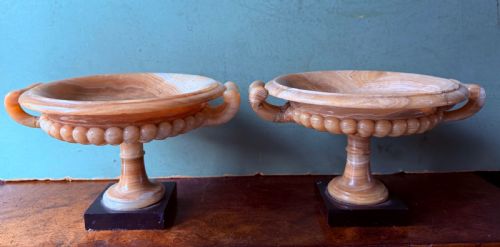
- Tazza
- A shallow cup or saucer-like ornamental vessel elevated on a stem and foot, seen in carved stone souvenirs.
Alabaster Pedestals: Frequently Asked Questions
How do I clean alabaster pedestals?
Alabaster is a soft and water-soluble stone that requires gentle dry dusting with a soft cloth. Moisture damages the polished surface permanently.
Avoid chemical polishes and water entirely when maintaining these carved columns.
Can these pedestals support heavy sculptures?
Most antique columns and plant stands are structurally robust enough to hold busts, urns, and heavy decorative bowls. The weight capacity depends on the base diameter and stone thickness.
Centring the load properly ensures stability on uneven flooring.
Are these pedestals suitable for outdoor use?
These decorative columns are designed strictly for interior display environments. Exposure to moisture and frost causes the soft stone to degrade rapidly.
Keep them inside away from direct weather elements.
How do I distinguish nineteenth-century pieces?
Nineteenth-century examples often carry Grand Tour provenance, featuring highly-figured stone work and association with Italian workshops. Tool marks and patination indicate age.
Comparing the neoclassical proportions helps separate older European turns from later revivals.