

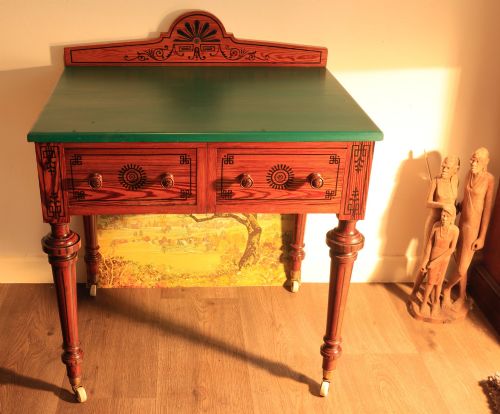


Aesthetic Movement Dressing Table
An aesthetic movement dressing table brings disciplined design and rich timber into the bedroom, offering a masterclass in nineteenth-century surface decoration.
Aesthetic Movement Dressing Table
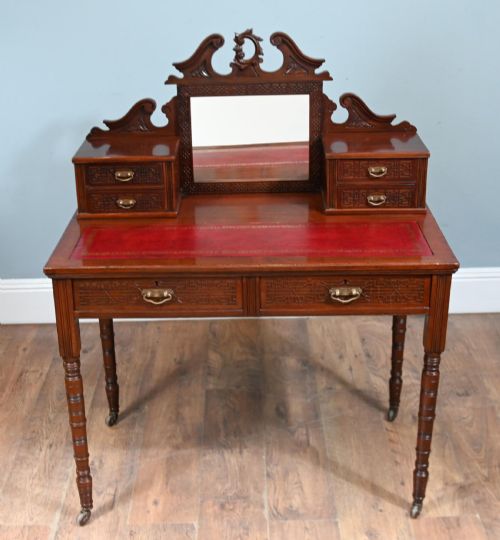
An aesthetic movement dressing table represents a distinct shift in nineteenth-century domestic furniture, moving away from heavy Victorian gloom toward lighter, more artistic forms. These pieces frequently appear in walnut, ebonised wood, mahogany, ash, and satinwood, often incorporating brass hardware and ceramic tile details.
Buyers encountering this furniture will find forms spanning from compact kneehole dressing tables to larger dressing cabinets and complete bedroom suites. The design vocabulary draws heavily on Anglo-Japanese motifs, painted geometric details, and parcel gilt flourishes typical of the late Victorian era around eighteen-eighty.
How they were made
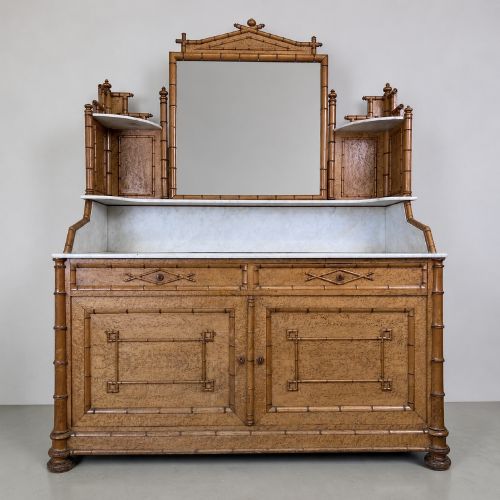
Cabinetmakers utilised a variety of fine timbers, contrasting dark ebonised wood with lighter satinwood or ash, and sometimes employing faux-bamboo turning. Surfaces frequently received inlaid decoration, painted geometric panels, and parcel gilt highlights to catch the light.
Structural elements incorporated fitted mirrors, marble tops on washstand variants, and delicate brass handles or fittings. Joinery followed traditional nineteenth-century workshop practices, ensuring rigidity while accommodating complex geometric and curved forms like kidney shapes.
Aesthetic Movement Dressing Table Retail Price Guide 2026
Typical asking prices for aesthetic movement dressing table among the pieces listed under this phrase on Sellingantiques today, from the lower quarter to the upper quarter. They describe what is for sale here now, not the wider market.
Listings feature various timbers including walnut, mahogany, satinwood, ash, and ebonised wood, frequently paired with marble and ceramic tiles.
What varies in quality
The distinction between standard production and superior craftsmanship rests in the execution of decorative details, such as hand-painted geometric panels and precise wood inlays. Better examples demonstrate meticulous joinery around complex silhouettes, including kidney shapes and kneehole configurations, paired with high-grade hardware.
Makers known for exceptional output, such as Waring & Gillows, Collinson and Lock, or Urquhart & Adamson, elevated these tables through superior timber selection and harmonious proportions. Lesser pieces rely on simpler construction and minimal surface embellishment, lacking the refined balance of documented workshops.
Waring & Gillows·Collinson and Lock·Urquhart & Adamson·A.W. Taylor and Sons
The Aesthetic Movement Dressing Table Glossary
- Aesthetic Movement
- A late nineteenth-century design philosophy prioritising art for art's sake over rigid moral utility. It favoured clean lines, Japanese influences, and stylised natural motifs.
- Ebonised Wood
- Timber treated to resemble ebony through staining or painting. This dark finish provided a stark, dramatic contrast against inlaid details and gilt work.
- Kneehole
- A desk or dressing table configuration featuring a central recess for the legs, flanked by pedestals of drawers. This layout allowed the user to sit closer to the mirror.
- Parcel Gilt
- Partial gilding applied to specific carved or raised details on a wooden surface. It highlights architectural lines without covering the underlying timber grain.
- Satinwood
- A durable, highly prized hardwood known for its golden-yellow sheen and lustrous grain. It served as a premium surface timber in fine nineteenth-century cabinetmaking.
Aesthetic Movement Dressing Table: Frequently Asked Questions
What defines an aesthetic movement dressing table?
These pieces are characterised by late nineteenth-century artistic styling, often featuring ebonised finishes, satinwood, inlaid details, and forms inspired by Japanese design. They reject heavy revivalist bulk in favour of lighter, more thoughtful composition.
Surfaces frequently incorporate painted geometric patterns, brass hardware, and integrated mirrors, marking a distinct departure from standard Victorian furniture.
How do I date an aesthetic movement dressing table?
Most examples date from the late nineteenth century, specifically around eighteen-eighty, aligning with the height of the aesthetic movement in Britain. Construction methods, such as nineteenth-century drawer dovetailing and timber preparation, help confirm this period.
The presence of specific stylistic markers like ebonised wood, bamboo-turning, and painted geometric decoration further anchors the piece to the late Victorian era.
How should I care for timber surfaces?
Protect the wood and any parcel gilt highlights by keeping the table away from direct sunlight and fluctuating heat sources. Regular dusting with a soft, dry cloth prevents particulate accumulation.
Avoid commercial silicone sprays or abrasive cleaners, utilising traditional beeswax sparingly to nourish walnut, mahogany, or satinwood when the finish appears dry.
Were these tables part of larger suites?
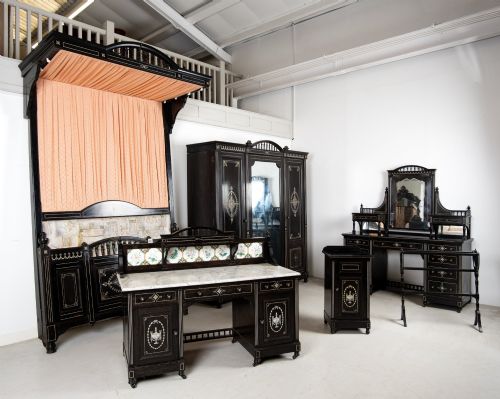
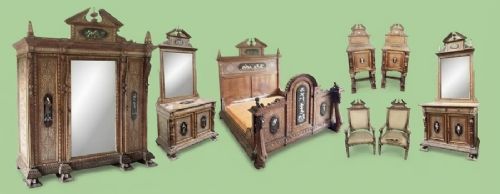
Many dressing tables were originally produced as components of multi-piece bedroom suites, which could include matching wardrobes, washstands, and side tables. Surviving suites demonstrate a uniform approach to timber and decorative motifs.
Individual tables are equally common, having been acquired separately or separated from their original bedroom groupings over time.