










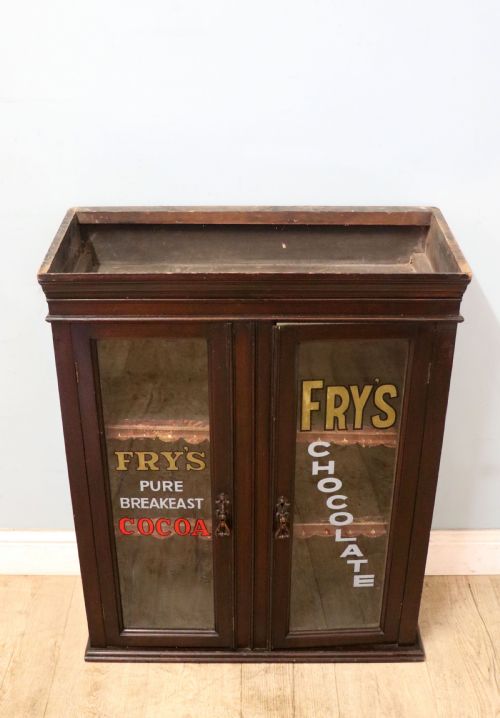
Advertising Display Sign
An advertising display sign carries the commercial history of the high street in wood, metal, glass, and paint.
Advertising Display Sign
An advertising display sign encompasses trade signs, shop display models, and commercial figures designed to draw custom from the pavement. When searching for an advertising display sign, a buyer encounters forms ranging from Victorian painted boards and Edwardian chairs to shopfitting cabinets and trade figures.
The material record spans the eighteenth, nineteenth, and early twentieth centuries, drawing heavily on Victorian and Edwardian commercial output. Pieces such as butcher signs, tobacco figures, and glazed cabinets reflect the everyday retail trade of past decades.
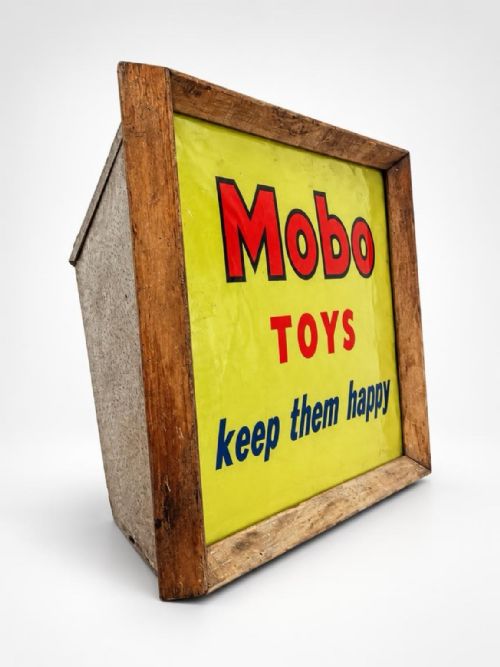
Many survivors combine functional shop fittings with later hand sign-written decoration for household names like Fry's Chocolate, Hovis Bread, and Cadburys. This blend of original utility and applied commercial messaging defines the category.
Materials and construction
Makers utilised traditional timbers including mahogany, oak, walnut, pine, and hardwoods to build cabinets, cupboards, and backing boards. Iron, brass, and composition materials appear in figures, barometers, and structural elements.
Surface decoration relies on skilled paintwork, often applied directly to wood, iron, or glass within original frames. Hand sign-writing transforms functional furniture and display models into direct commercial agents.
Advertising Display Sign Retail Price Guide 2026
Typical asking prices for advertising display sign among the pieces listed under this phrase on Sellingantiques today, from the lower quarter to the upper quarter. They describe what is for sale here now, not the wider market.
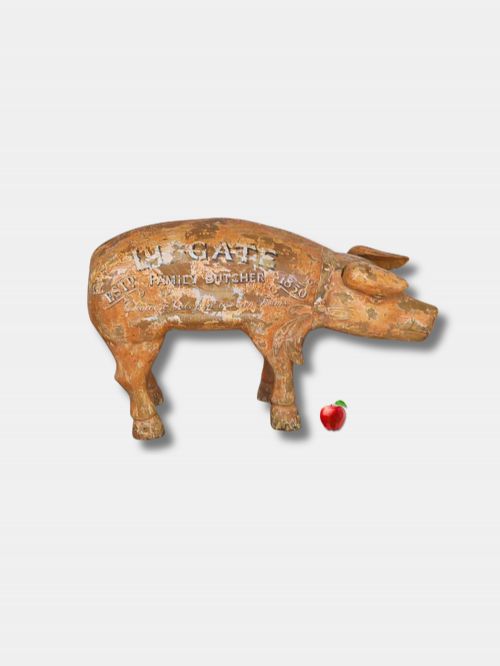
A sixteen-kilogram iron pig once watched the high street from a butcher's window.
Assessing quality
Quality rests on the integrity of the original form and the crispness of the painted or sign-written lettering. Pieces retaining undisturbed original surfaces hold greater visual weight than those with unsympathetic overpainting.
The skill of the carver or sign-writer dictates the character of trade figures and painted boards. Bold typography and well-modelled three-dimensional forms separate standard commercial utility from exceptional folk art.
Josef Herzog·Robert West·Aitchison
The Advertising Display Sign Glossary
- Trade sign
- A board, figure, or object hung or mounted outside a shop to indicate the trade conducted within. These items rely on bold pictorial or written imagery to catch the eye of the passing public.
- Shop display model
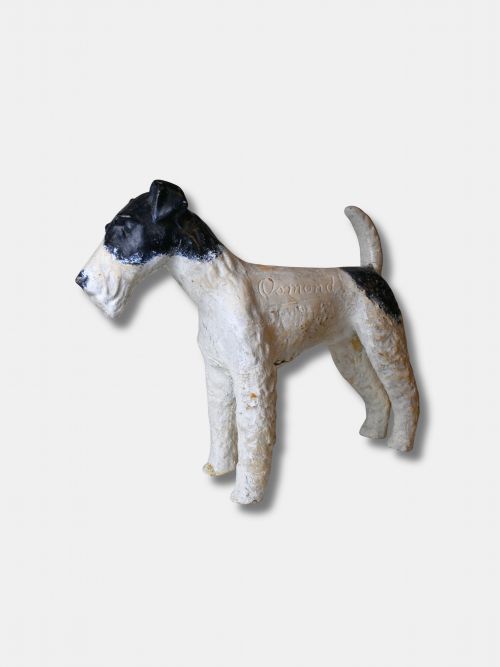
- A three-dimensional representation of goods or characters used to promote specific products on a counter or in a window. Examples include loaves of bread, figures, and animals.
- Sign-written
- Lettering applied by hand using sign-writer's paint directly onto wood, glass, or metal surfaces. This technique was used to add commercial branding to cabinets, mirrors, and boards.
- Composition
- A moulded material made from mixtures such as pulp, resin, or plaster, used to form trade figures and advertising displays. It allowed makers to produce detailed three-dimensional shapes efficiently.
- Folk art
- Utilitarian objects and figures made by tradesmen or local artisans without formal academic training. These pieces exhibit strong individuality and direct visual expression.
Advertising Display Sign: Frequently Asked Questions
What is an advertising display sign?
An advertising display sign is a vintage object created to promote goods or services in a commercial setting. These items include painted boards, trade figures, and glazed shop cabinets.
They served as silent salesmen on nineteenth and twentieth-century high streets, combining practical utility with bold branding to attract customers.
How were trade figures used?
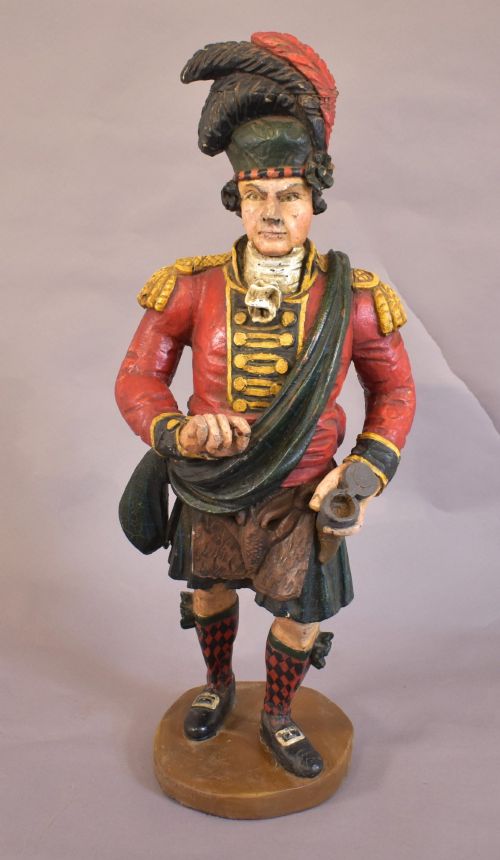
Trade figures stood outside shops or upon interior counters to identify the business or advertise specific wares. Figures of highlanders, animals, and historical characters caught the eye of pedestrians.
Their three-dimensional presence added a theatrical element to retail displays before modern mass marketing took hold.
How do I care for a painted sign?
Painted signs and sign-written cabinets require stable indoor environments away from direct sunlight and excessive moisture. Dusting gently with a dry cloth preserves the original surface.
Avoid chemical cleaners or abrasive materials that might damage historic paint layers or hand-lettered advertising.
Are later sign-written cabinets authentic?
Many shop cabinets and pieces of furniture were repurposed with commercial lettering for brands like Fry's or Cadbury. This practice reflects how retailers updated existing fittings with new advertising.
Such pieces combine solid period woodwork with vintage commercial graphics, forming an established category of decorative antiques.