

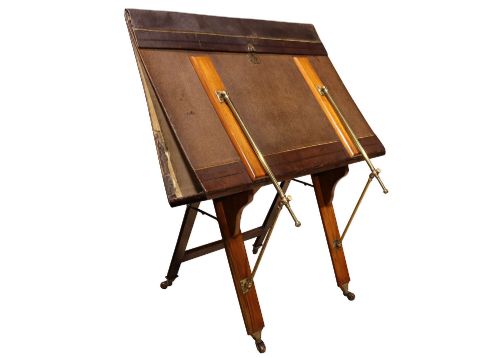
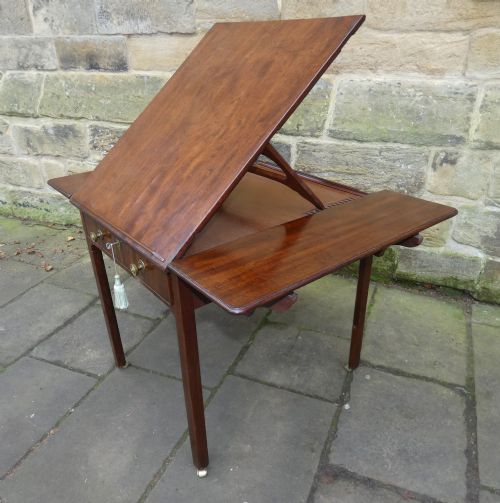
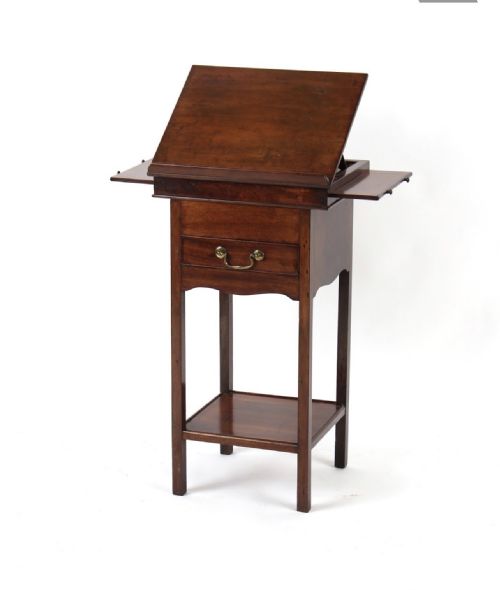
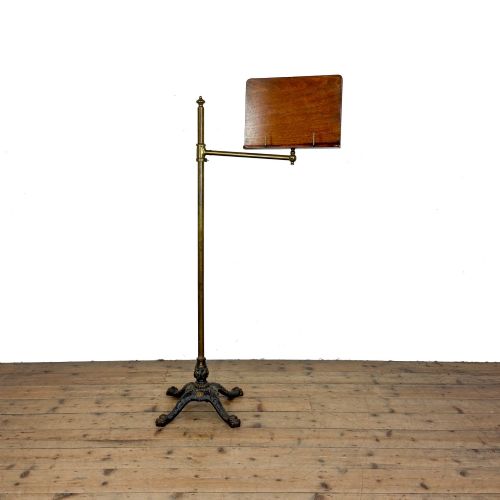


Adjustable Reading Easel
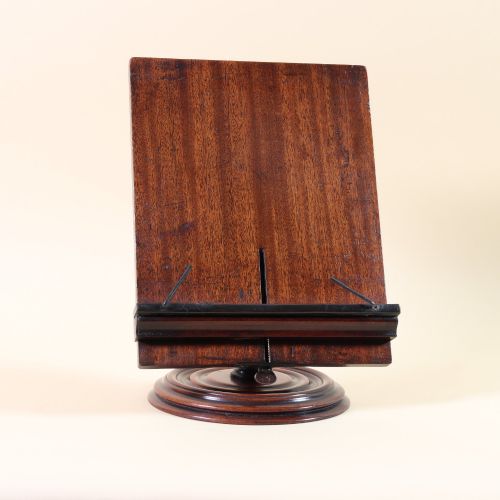
These adjustable reading easel pieces are practical surfaces for books and folios, built to tilt and hold texts at comfortable working angles.
Adjustable Reading Easel
When you search for an adjustable reading easel, you encounter versatile stands and desks designed to support books, music, or drawings at adjustable angles. These items serve readers, musicians, and writers by bringing text or paper closer to eye level.
On this page, you are most likely to meet pieces from the Victorian, Regency, and Georgian periods, alongside items from around nineteen-ten. Forms include dedicated reading stands, music stands, and specialised desks with tilting surfaces.
Materials span rich timbers like mahogany, rosewood, oak, and walnut, frequently combined with brass mechanisms or cast iron bases. These pieces originate from nineteenth-century workshops and later makers, reflecting enduring utility in libraries and studies.
How they were made
Cabinet makers constructed these stands using dense hardwoods such as mahogany, rosewood, and oak, often selecting figured veneers for table tops and reading slopes. Carpenters employed sturdy joinery to withstand the constant adjustment of heavy volumes.
Metal components in brass and cast iron form the ratchets, hinges, and heavy bases that allow the reading surface to tilt and lock securely into position. These mechanical parts provide the essential functionality for altering the height and angle of the desk.
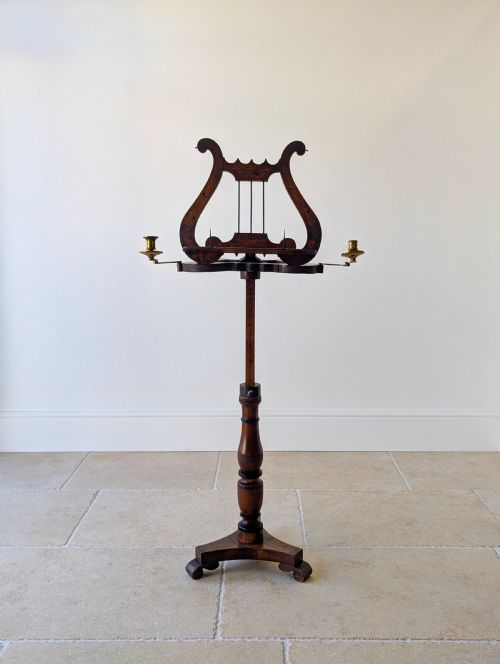
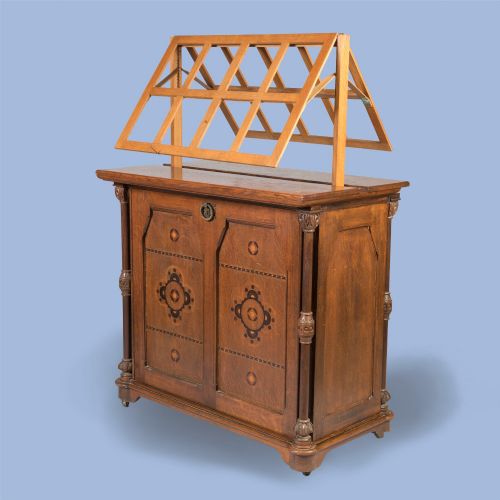
Fine detailing includes carved lyre forms, inlay work, and Gothic Revival mouldings that integrate the mechanical adjustment mechanisms seamlessly into domestic furniture.
Adjustable Reading Easel Retail Price Guide 2026
Typical asking prices for adjustable reading easel among the pieces listed under this phrase on Sellingantiques today, from the lower quarter to the upper quarter. They describe what is for sale here now, not the wider market.
Some nineteenth-century readers apparently needed iron-weighted pedestals so their heavy poetry books would not overthrow the furniture during moments of high passion.
What varies in quality
The sophistication of the mechanical adjustment mechanism dictates much of the quality, separating simple desktop book rests from fully adjustable floor-standing lecterns with complex brass ratchets and iron supports. Smoother movement and robust locking actions indicate superior engineering.
Timber selection and cabinet-making craftsmanship drive the distinction between standard production pieces and finer examples featuring figured mahogany, rosewood veneers, or intricate lyre-form pedestals. The integrity of the joints and the finish of the wood surface reveal the maker's hand.
Carters Of London·Benjamin Taylor And Sons
The Adjustable Reading Easel Glossary
- Ratchet
- A mechanical device consisting of a notched wheel or bar and a pawl that allows motion in only one direction. This component permits the reading slope to hold multiple fixed angles.
- Lectern
- A tall stand with a slanted top designed to hold a book or speech for a standing reader. These often feature adjustable stems or rotating bases.
- Lyre-form
- A furniture design shaped like an ancient Greek lyre, frequently utilised in the central pedestal of nineteenth-century music stands and tables.
- Gothic Revival
- An architectural and decorative style popular in the nineteenth century, characterised by pointed arches, heavy oak construction, and medieval motifs.
- Folio Cabinet
- A specialised piece of furniture designed to store large sheets of paper, prints, or architectural drawings flat, often paired with an adjustable top surface.
Adjustable Reading Easel: Frequently Asked Questions
What is an adjustable reading easel used for?
These pieces support heavy books, sheet music, or folios at slanted angles to make reading and working more comfortable.
They allow users to adjust the height and tilt of the surface depending on whether they sit or stand.
How do you adjust the reading angle?
Most pieces utilise an internal or external brass ratchet mechanism attached to the back of the reading slope.
Lifting the shelf engages different teeth on the ratchet to secure the desired slant.
Are these stands suitable for modern heavy books?
Solid mahogany, oak, and rosewood construction provides the structural strength required to hold large reference volumes.
The metal hinges and cast iron bases offer steady support for daily use.
How do I identify a Victorian reading stand?
Victorian examples often feature dark hardwoods like walnut or mahogany, combined with brass adjustment fixtures and decorative carving.
Stylistic cues range from heavy Gothic Revival oak to elegant turned pedestals.