



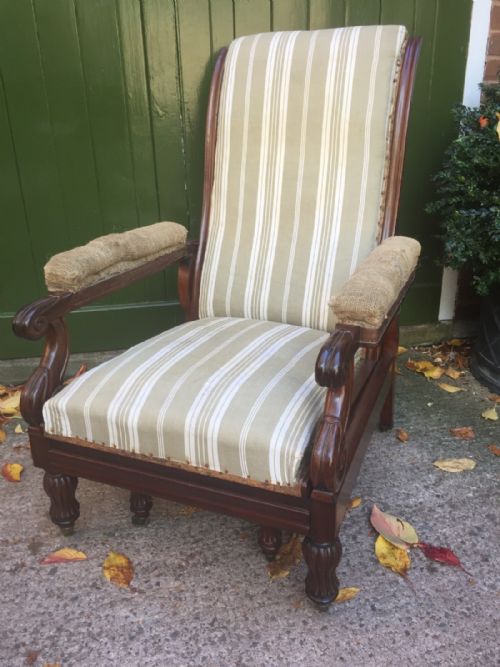


Adjustable Reading Chair
An adjustable reading chair offers mechanical comfort for the an active book reader.
Adjustable Reading Chair
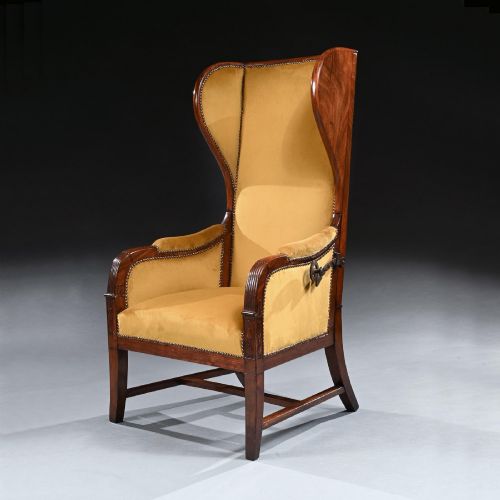
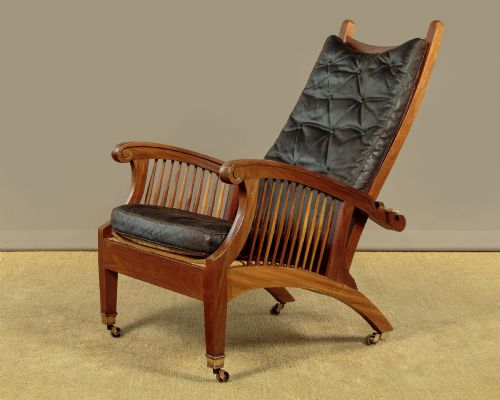
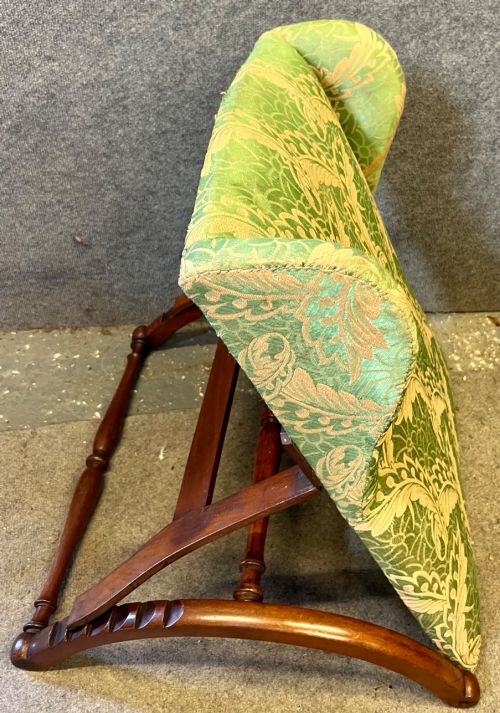
An adjustable reading chair provides a mechanical backrest or foot support for sitting with a book over long periods. When you search for an adjustable reading chair, you encounter pieces originating from the nineteenth and early twentieth centuries in forms such as armchairs, steamer chairs, and library wingbacks.
The materials span mahogany, walnut, oak, and teak, upholstered in leather, fabric, hessian, and canvas with brass fittings. Styles stretch across Victorian, Arts and Crafts, William IV, French Empire, Edwardian, and George IV eras.
Most examples rely on wooden frames with hinged or ratchet mechanisms that alter the angle of the backrest or seat. These are pieces designed for domestic libraries, studies, and drawing rooms where prolonged reading demanded physical support.
Materials and construction
The framework of an adjustable reading chair relies on dense timbers like mahogany, walnut, oak, and teak. Cabinetmakers shaped these woods into robust armchairs and campaign frames capable of enduring regular mechanical movement.
Movable joints incorporate brass ratchets, rods, and castors to facilitate the reclining action. Upholstery utilises traditional stuffing materials covered in brown leather, woven fabric, hessian, or heavy cotton.
Adjustable Reading Chair Retail Price Guide 2026
Typical asking prices for adjustable reading chair among the pieces listed under this phrase on Sellingantiques today, from the lower quarter to the upper quarter. They describe what is for sale here now, not the wider market.
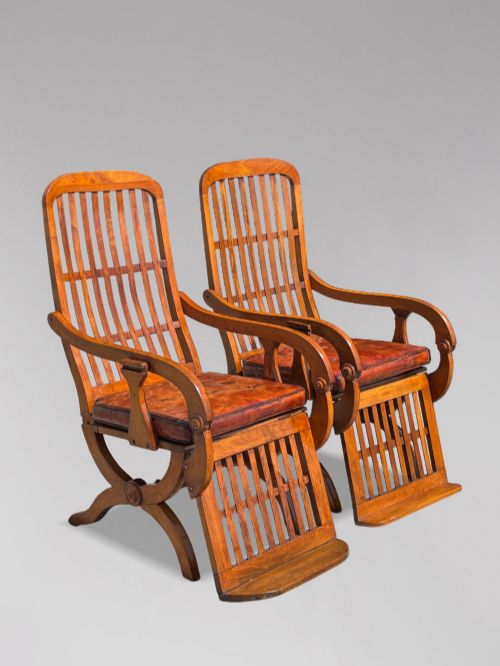
Some nineteenth-century readers required a built-in footstool extension to achieve maximum literary repose.
Assessing quality and construction
Quality rests in the precision and smoothness of the mechanical adjustment mechanism. A superior example operates cleanly through its ratchets or hinges without binding or slipping under pressure.
The secondary material choice and joinery also dictate value. Fine timber frames with well-executed carving and durable leather upholstery stand apart from simpler utility pieces.
Philip Webb·Heals Of London·Robert Daws·Foot And Sons
The Adjustable Reading Chair Glossary
- Ratchet mechanism
- A notched metal bar and catch that holds the adjustable backrest at chosen angles. This device allows the user to alter the seating position securely.
- Campaign chair
- Portable folding furniture designed for travel and military use. These often feature clever folding X-frames or knockdown joints.
- Steamer armchair
- A reclining wooden chair with a slatted ladderback and extending footrest. They were originally used on ocean liners and verandas.
- Wingback
- An armchair with high sides attached to the back upholstered to shelter the sitter from drafts. In reading chairs, this form combines with reclining actions for extra comfort.
Adjustable Reading Chair: Frequently Asked Questions
How do the reclining mechanisms work?
Most adjustable reading chairs utilise a metal ratchet system fitted into the arms or back supports. Lifting or tilting the backrest engages a bar into specific slots to hold the angle.
Some campaign or metamorphic designs incorporate folding struts or extending footrests that slide out from beneath the seat frame.
Where were these chairs used?
These pieces were built primarily for domestic libraries, studies, and drawing rooms where owners spent hours reading. Steamer variants also saw service on covered porches and ocean liner decks.
Campaign versions were constructed for travel, allowing officers and gentlemen to pack comfortable seating into portable trunks.
How do I care for leather upholstery?
Antique leather requires gentle cleaning with a damp cloth and occasional application of traditional leather dressing to prevent drying. Avoid placing the chair near direct heat sources or strong sunlight.
Check the mechanical brass joints periodically and keep them free of dust to ensure the reclining action remains smooth.
How do I date an adjustable reading chair?
Dating relies on timber choices, leg styles, and the sophistication of the hardware. Regency and William IV pieces often display heavy mahogany and turned legs, while Victorian examples introduce leather upholstery and brass castors.
Arts and Crafts and Edwardian items favour exposed oak or teak frames with simpler, functional lines and linen or hide coverings.