

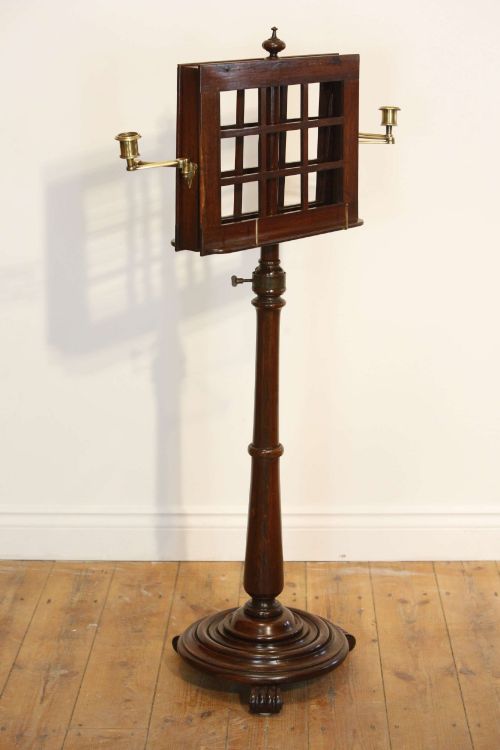
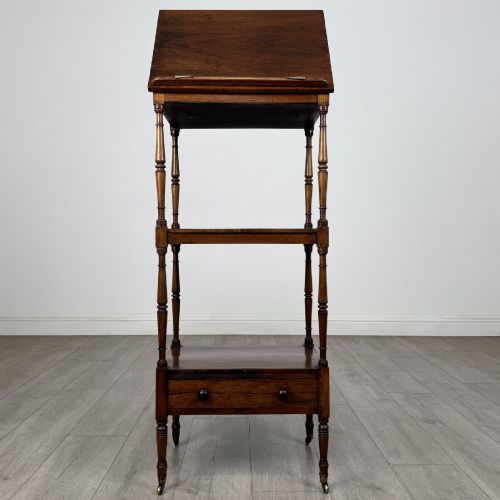
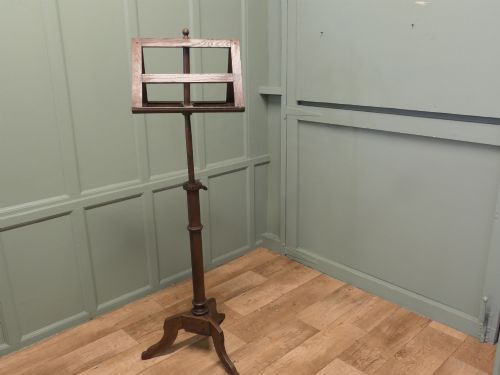
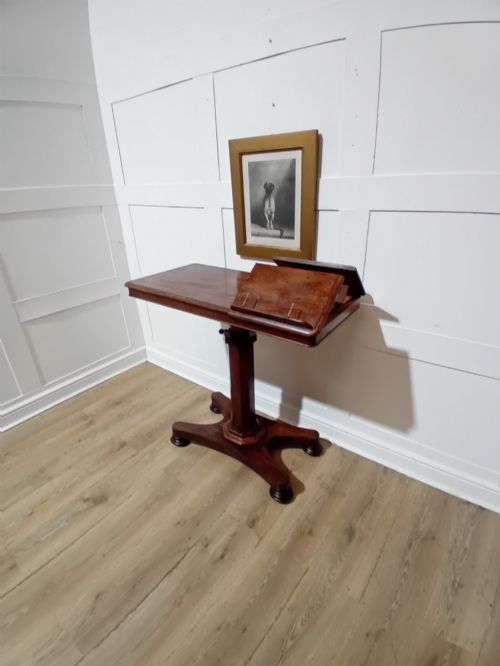

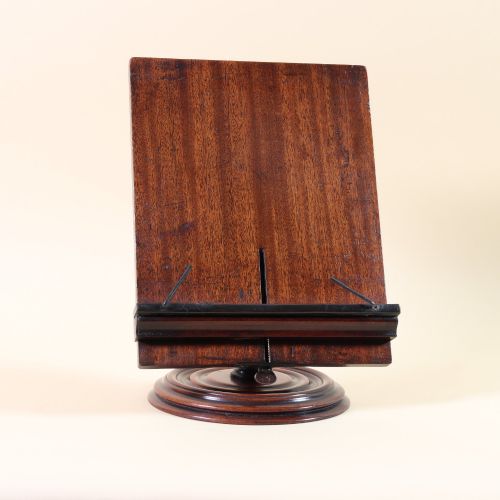
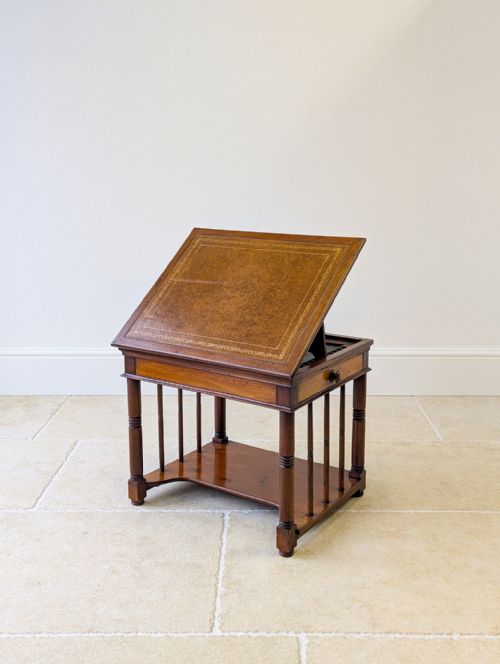

Adjustable Desk Stand
An adjustable desk stand alters its height or angle to hold books, music, or writing materials comfortably.
Adjustable Desk Stand
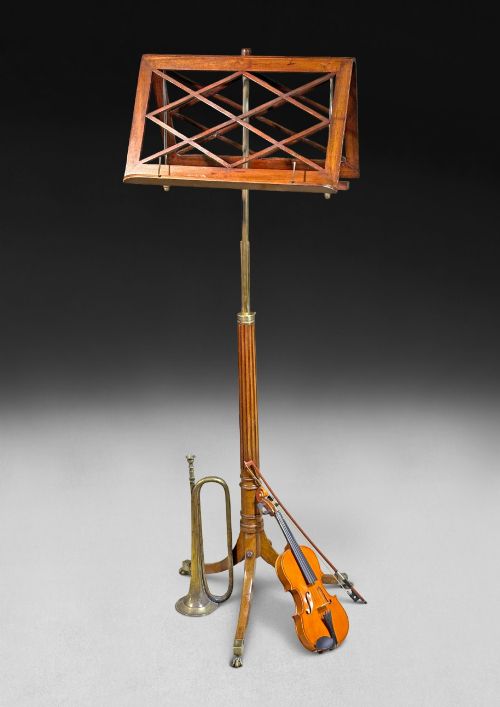
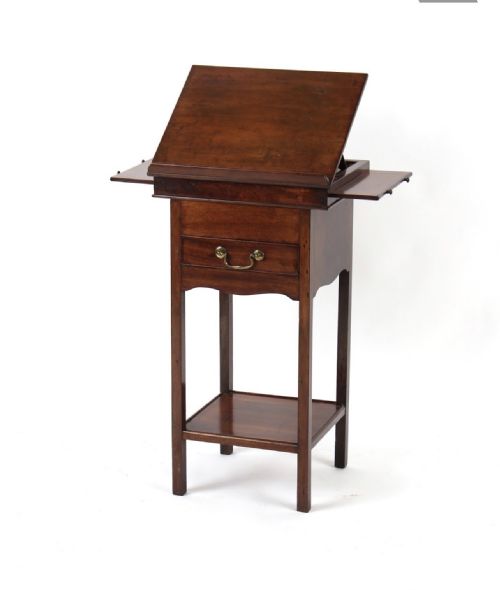
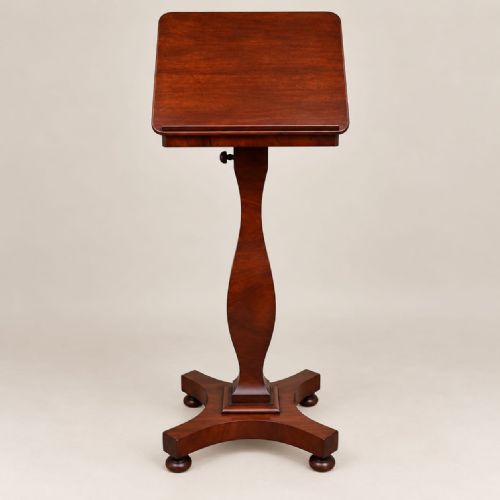
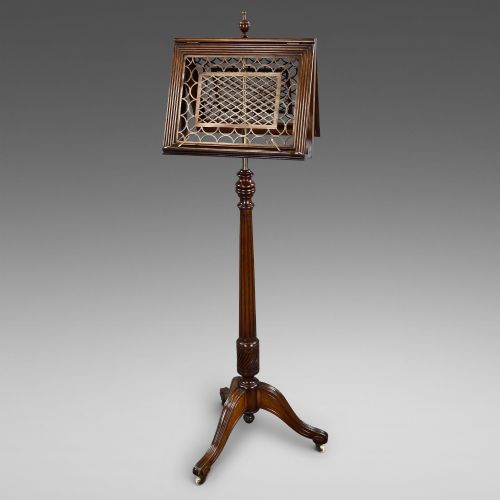
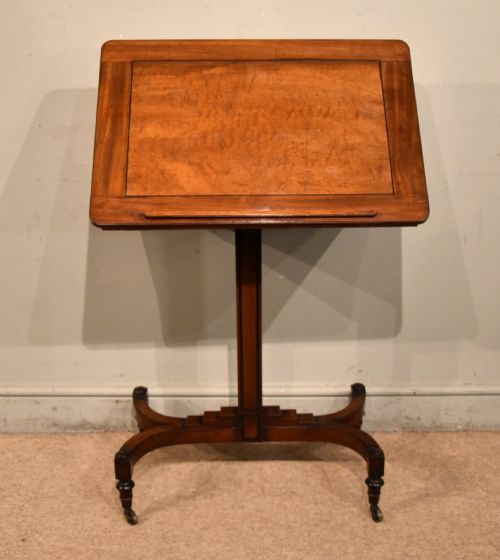
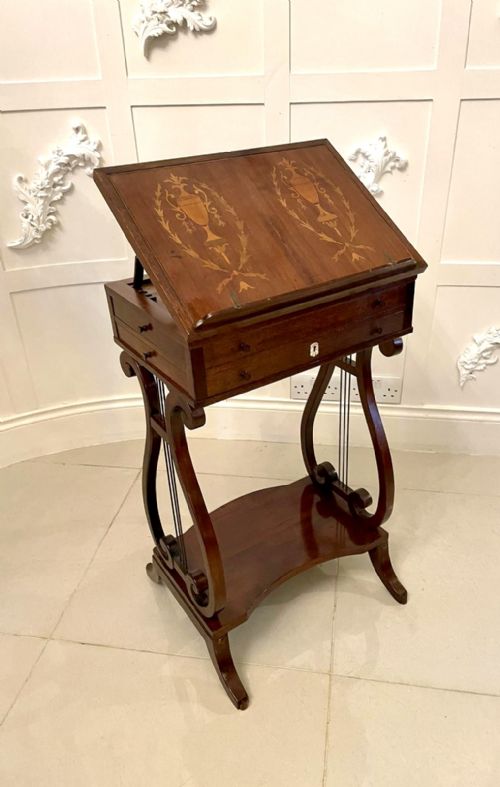
When you search for an adjustable desk stand, you encounter pieces designed to alter their height, tilt, or position for reading, writing, and music making. The selection on this page centres on mahogany, rosewood, and oak pieces spanning the Georgian, Regency, Victorian, and Edwardian periods.
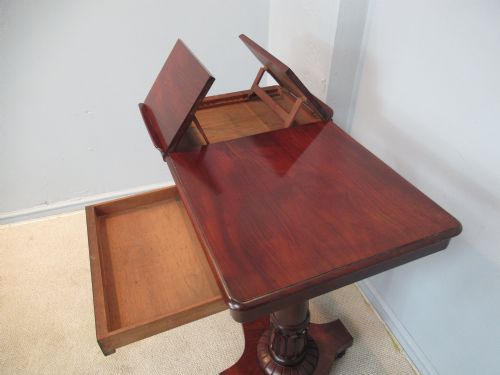
You are most likely to meet reading tables, music stands, and desk-top book rests that utilise clever mechanical ratchets, screws, and pivots. These items served scholars, musicians, and writers who required a stable surface that could adapt to different angles throughout the day.
The objects range from simple tabletop book slides to elaborate floor-standing reading tables and heavy cast iron medical or library pieces. Each version reflects the specific domestic or institutional demands of its original period.
Materials and construction
Cabinet makers relied heavily on rich timbers such as mahogany, rosewood, and walnut, often selecting figured veneers or solid planks for reading desks and music stands. Brass and cast iron supplied the structural brackets, ratchets, and telescopic columns that permitted movement.
Makers integrated mechanical brass fittings into wooden frames with precise joinery, ensuring that sliding book slides and tilting desk tops operated smoothly. Heavy cast iron bases provided necessary counterweights for tall architectural risers and library lights.
Adjustable Desk Stand Retail Price Guide 2026
Typical asking prices for adjustable desk stand among the pieces listed under this phrase on Sellingantiques today, from the lower quarter to the upper quarter. They describe what is for sale here now, not the wider market.
Judging the work
Quality reveals itself in the smoothness of the adjustment mechanism and the integrity of the timber used for the main body and supports. Finer examples display thoughtful secondary woods, clean brass casting, and robust ratchets that hold their position securely under the weight of heavy folios.
Simpler pieces rely on basic wooden pegs or straightforward screw threads, whereas top-tier works incorporate patent mechanisms by makers like Carters alongside sophisticated folding brackets and finely turned columns.
Carters Of London·AFC·Gillows
The Adjustable Desk Stand Glossary
- Ratchet stand
- A reading stand featuring a notched wooden or brass arm that engages with a catch to support the desk at various angles.
- Duet stand
- A wide music stand or lectern designed to accommodate two scores simultaneously for shared playing.
- Book slide
- An extending desk accessory with sliding ends used to keep upright books in place on a table or bureau.
- Riser desk
- A tall, adjustable desk designed for standing work, often utilised by architects and cartographers.
- Lectern
- A slanted stand that holds a book or notes at a height suited for a standing speaker or reader.
Adjustable Desk Stand: Frequently Asked Questions
How were reading tables used?
Reading tables and stands were placed beside library chairs, desks, or beds to hold heavy folios, Bibles, and correspondence. Their pivoting tops and extending arms kept texts at eye level without requiring the reader to hold them.
In musical households, similar stands held heavy bound scores for instrumentalists and vocalists practicing in the parlour.
How do I date an adjustable stand?
Dating relies on timber choices, brass casting techniques, and the complexity of the mechanical adjustments. Regency and William IV pieces often showcase rosewood and bold brass detailing, whereas Victorian and Edwardian examples introduce cast iron and patent ratchets.
Examining the screw threads, hinges, and secondary woods provides further clues to the exact decade of manufacture.
Can I use these with modern books?
These stands accommodate modern books, tablets, and laptops just as effectively as nineteenth-century folios. The adjustable ledges and sturdy brass brackets support considerable weight without slipping.
Care should be taken with delicate antique mechanisms to ensure they are adjusted gently according to their original design.